There is a quiet but consequential conversation beginning to take shape in global policy circles. As the 2030 deadline for the UN Sustainable Development Goals (SDGs) approaches, attention is turning, inevitably, to what comes next.
The instinctive response, particularly within multilateral institutions, is familiar. If the goals are not fully achieved, extend them. If new challenges have emerged, add to them. If ambition appears to be waning, restate it more forcefully.
But there is a growing sense, particularly from the Global South, that this reflex might no longer be sufficient. The real problem with the global development framework is not that it lacks ambition. It is that it lacks credibility.
Over the past decade, the SDGs have provided a powerful normative framework. They have shaped policy discourse, aligned national strategies and created a shared language of development. But as implementation has progressed, a deeper tension has emerged, between what is promised and what is delivered. It is in this gap that trust in the multilateral system has begun to erode.
Nowhere is the tension more visible than from an African vantage point. Africa has consistently been among the strongest supporters of a global sustainability framework. Not because it is ideologically attached to multilateralism but because it has a practical interest in it.
For many African states, global cooperation is not an abstract principle. It is a necessity, whether in climate finance, trade access, technology transfer or debt sustainability.
But the support has never been unconditional. There is a growing recognition that a post-2030 framework cannot simply be an extension of the current one, nor a more elaborate version of it. It must confront a more uncomfortable question: not what we aspire to achieve but how we intend to achieve it.
In other words, the next phase must be less about goals and more about the bargain that underpins them. Because what has become increasingly clear is that the fault line in global sustainability is no longer between ambition and inaction. It is between commitment
and delivery.
Take, for example, the question of actors. It is often assumed that the main divide will be between those who support a global framework and those who oppose it. But the reality is more nuanced.
The strongest supporters of a post-2030 framework will probably remain Africa, much of the Global South and a group of middle powers that see value in a rules-based international order. But their support will be conditional.
They are unlikely to endorse a framework that expands ambition without strengthening delivery, particularly in areas such as climate finance, global taxation, debt restructuring and fair representation in international financial institutions.
At the same time, resistance might not come only from outright sceptics. It might also come from actors who are comfortable with aspirational frameworks but reluctant to engage in binding commitments on implementation. This is where the next phase of global sustainability becomes politically contested.
The question, then, is not whether there will be a framework beyond 2030. It is what form it will take.
From a South African and broader African perspective, the answer is unlikely to lie at either extreme. There is little appetite for a complete reset that risks undoing years of negotiated consensus. But there is equally little support for a simple rollover of the framework.
What is emerging instead is a preference for disciplined revision. Keep the architecture. Retain universality. But strengthen the mechanisms of implementation, finance, accountability, localisation and institutional alignment.
In practical terms, this means fewer new promises and more enforceable delivery.
It also means better alignment between global frameworks and regional agendas. Africa, for example, operates within the strategic horizon of Agenda 2063. A post-2030 global framework that fails to align with such regional visions risks creating parallel policy systems that dilute, rather than strengthen, development outcomes.
But perhaps the most important shift required is not structural but procedural.
The legitimacy of the SDGs was, in part, a product of how they were negotiated, through an unusually inclusive and participatory process. The legitimacy cannot be taken for granted in a more fragmented and polarised global environment. If the next framework is perceived as being state-driven but society-disconnected, it will struggle to command the same level of ownership.
This suggests that the process must be both inclusive and structured. Inclusive, in that it meaningfully engages local government, civil society, research institutions and the private sector. But structured, in that it avoids the common trap of broad participation without political traction.
One possible innovation is a two-track negotiation process, one focused on goals and priorities, the other on implementation arrangements. Too often, the conversations have been separated. Values are negotiated in one room, financing in another. The result is predictable: ambition without delivery.
Reuniting the tracks might be essential to restoring credibility.
Which brings us, ultimately, to the question of alliances, because if there is to be a meaningful post-2030 framework, it would require coalitions that cut across traditional divides.
One such coalition could be built around a simple but powerful idea: fairness. Fairness in climate finance. Fairness in global taxation. Fairness in access to technology. And fairness in representation within global institutions. This is not merely a moral argument. It is a practical one. Without a sense of fairness, there can be no sustained cooperation.
A second, equally important narrative is that of resilience. The global challenges we face, climate shocks, food insecurity, debt distress and technological disruption, are no longer contained within national or regional boundaries. They are systemic. Framing the next development agenda as a form of global risk management, rather than a system of aid, might prove more unifying.
But perhaps the most decisive alliance will be one that is only beginning to take shape, a coalition for delivery.
Led by Africa, supported by middle powers and open to reform-minded partners, such a coalition would shift the centre of gravity in global negotiations. Its message would be simple: no new framework without a new implementation deal. No expansion of ambition without clarity on financing. No new commitments without credible mechanisms of delivery.
This is not a rejection of multilateralism. It is an attempt to restore it. At its core, the challenge facing the global sustainability agenda is not one of vision. It is one of trust. And trust, once lost, is not rebuilt through declarations. It is rebuilt through delivery.
In the end, the world does not need a longer list of goals. It needs a more honest bargain.
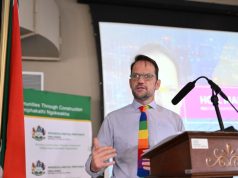
Daryl Swanepoel is the chief executive officer of the Inclusive Society Institute and a research fellow at the School for Public Leadership, Stellenbosch University. The article draws on his contribution at the global policy. dialogue on a sustainability framework beyond 2030 convened by the German Institute of Development and Sustainability and the Hamburg Sustainability Conference.
The real problem with the UN Sustainable Development Goals is not that they lack ambition. It is that they lack credibility