
A name often forgotten in the lexicon of South Africa’s liberation stalwarts yet carries so much gravitas and reverence.
I regard the attempted erasure of Mangaliso Robert Sobukwe’s legacy as paradoxical to his contributions in South Africa and the greater continent’s emancipation struggle.
Perhaps Sobukwe’s life story as an anti-apartheid political activist was a precursor to his afterlife where not a single audio of his speeches has ever been divulged. I posit the latter with reference to Sobukwe’s banishment to Galashewe in Kimberly upon his release from Robben Island where he was kept in solitary confinement under the Sobukwe Clause for six years.
His banishment was accompanied by an administrative decree that sought to completely alienate him from society entailing a set of restrictive orders that inter-alia ordered him not to write anything for publication, not to give any educational instruction to anyone except his children, nor communicate in any manner with other banned people or anyone from a banned organisation.
At a time when there are contested narratives about our country’s history and where we often witness the aggrandizement of other liberation heroes, Robert Sobukwe’s illustrious legacy is worryingly eroding. Amid these ordeals, we ought to ask the question Who is Sobukwe? As rhetorical and simple as it may sound, the imperativeness of this question is that it elicits the necessity of a deeper understanding of Sobukwe’s life and the ideals that he embodied.
In commemoration of what would’ve been Mangaliso Robert Sobukwe’s 101st anniversary last Friday, I reflect on the life of this noble Pan-Africanist giant, scholar and fearless freedom fighter who was too insurmountable for the apartheid regime to handle. I also juxtapose his ideas with the current political dispensation.
Mangaliso Robert Sobukwe was born on 5 December 1924 in the small town of Graaf Reinet in the Karoo region of the Eastern Cape to parents Hubert and Angelina Sobukwe. It is without a doubt that Sobukwe’s embodiment of Pan-Africanism stemmed from his multicultural identity, with his father originally from what is today Lesotho and his mother a Pondo woman from the Eastern Cape.
Having grown up in a religiously conservative environment that was Methodist-oriented, Sobukwe, just like some of his counterparts in the liberation struggle who embraced religion in their upbringing, including amongst others Oliver Tambo, would later in his life follow the same trajectory as them where politics took precedence over anything else.
This phenomenon ultimately led to Sobukwe quitting his job as a lecturer at Wits University to an extent where he even rejected a job offer by Rhodes University to focus on the anti-apartheid struggle and the organisation he founded, the Pan-Africanist Congress of Azania (PAC).
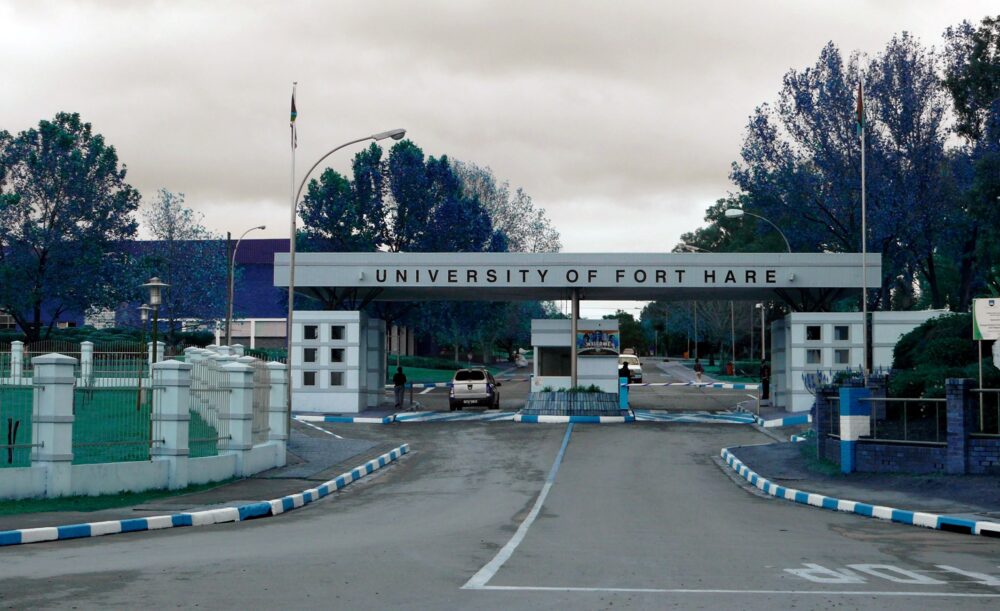
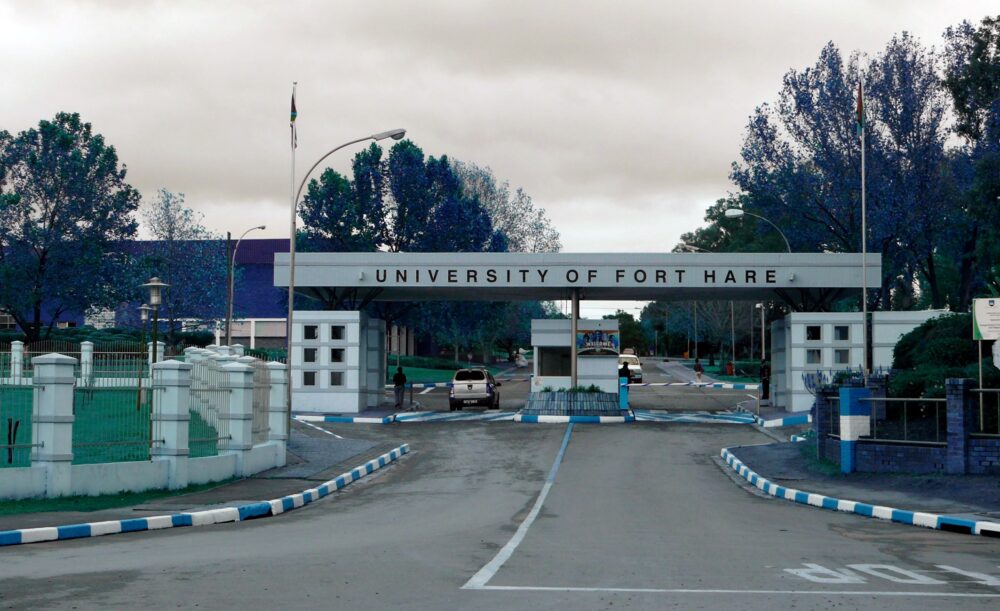
His baptism into activism was at the University of Fort Hare, an institution during the 20th century which for many, including post-colonial leaders like Nelson Mandela, Robert Mugabe and Seretse Khama, was not just an academic institution but a hotbed for political activism and a factory for brewing future African leaders and pioneering African nationalism.
This was corroborated by Sobukwe’s valediction speech as outgoing SRC president in 1949 where he denoted that “Fort Hare must become the centre of African Studies to which students in African Studies should come from all over Africa”.
He further contended by saying “Fort Hare must be to the African what Stellenbosch University is to the Afrikaner. It must be the barometer of African thought”.
These are principles that shaped Sobukwe’s political trajectory and remained central to the cause he believed in and championed all his life as a Pan-Africanist leader and anti-apartheid activist.

Sobukwe’s ideals in South Africa’s current political dispensation
The outcome of South Africa’s 2024 general election led to the formation of a government of national unity (GNU). This decision emanated from the ANC’s approach to include everyone, a similar approach it used 70 years ago in the lead up to the adoption of the Freedom Charter as opposed to one where they could have opted to choose who they want to co-govern with based on mutual fundamental principles.
This was a déjá vu moment for both the ANC and the PAC whose founding leaders like Sobukwe, AP Mda and Potlako Leballo were still members of the ANC and were part of a faction (the Africanists) that was vehemently opposed to the Freedom Charter at the time of its adoption in 1955.
The rejection of the Freedom Charter by Sobukwe and his cohort was underscored by the ANC’s insistence on non-racialism, a concept Sobukwe regarded as flawed because of his firm belief that Africans should bring about their own freedom without the assistance of whites because he believed that they wouldn’t share the struggle honestly with oppressed Africans since they were quasi beneficiaries of the same racially oppressive system that they claimed to oppose.
Contrary to what I believe Sobukwe wouldn’t have conceded to given his stance on non-racialism and antagonist attitude towards the Freedom Charter, the PAC opted to form part of the GNU whose posture and character is akin to that of those actors that were involved in the adoption of the Freedom Charter.
Did this position signal a diversion from the PAC’s historic values and Sobukwe’s ideals on Pan-Africanism? Has South Africa’s multiparty system inadvertently pushed formations like the PAC and other Pan-Africanist movements to the periphery of the current political landscape?
Maybe we should look into the very essence of Pan-Africanism to help us understand why Sobukwe deemed it central to the liberation of Africans. Essentially, Pan-Africanism speaks to the unification of Africans to achieve total emancipation across all spheres of life (politically, economically and culturally).
Perhaps we can argue that the idea of a rainbow nation in South Africa’s democratic dispensation, which seeks to embrace diversity across all ethnic groups could be the rationale underpinning the hollowing out of Sobukwe’s ideals and the pan-African agenda in South Africa’s politics.
However, I believe that Mangaliso Robert Sobukwe’s ideals and principles of selfless leadership and resistance to injustices remain relevant in the current dispensation.
Fort Hare must be to the African what Stellenbosch University is to the Afrikaner