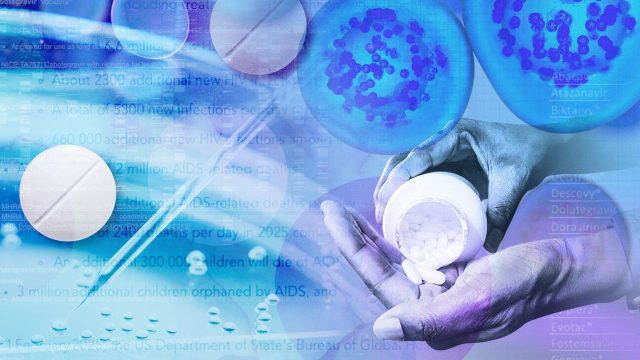
A man has been declared HIV-free, in a case that “upends our understanding of what’s required” for a cure, according to The New Scientist. He was the seventh patient found to be clear of the virus after receiving a stem cell transplant – and, significantly, the second of the seven to receive stem cells that were not actually HIV-resistant. If HIV-resistant cells aren’t necessary to destroy the virus, then scientists have greater options in their search for an effective but less risky cure.
And yet, just as medics make such leaps forward in HIV/Aids treatment, access to both preventive care and medicine for infected patients “remains far from universal”, said The Guardian. Foreign aid cuts have shaken “to its core” the “complex eco-system that sustains HIV services in dozens of low to middle-income countries”.
How close are we to a cure?
The signs are increasingly positive. In addition to the stem-cell study, research released this week highlights another of “the paths scientists are pursuing towards finding an HIV cure”, said The Washington Post. The study, published in Nature, “shows a glimmer of hope” for controlling HIV without the current daily regimen of pills. A small group of patients were given a “experimental immunotherapies” and then taken off their pills; the majority were able to keep the virus “at a low level for months” afterwards.
The standard daily antiretroviral therapy has had a “transformative” effect on managing the virus since its nadir of the 1980s. It works by preventing the HIV from multiplying in the body. For many people with HIV, their “viral load” becomes so low as to be undetectable, hugely lowering the risk of them transmitting the virus to somebody else. But, although antiretrovirals can keep the disease in check, it is not a cure.
How have aid cuts impacted HIV/Aids treatment?
Multiple nations are cutting foreign aid funding, on which many lower-income countries depend to deliver health services. For 2025, “external health aid” is expected to have dropped by 30% to 40%, compared with 2023, said the World Health Organisation. “The impact of a sudden acceleration of cuts” to international HIV funding has had a “devastating” impact in the fight against the disease, said an UNAids report published, to mark World Aids Day, on 1 December.
Access to PrEP, a medication that reduces the risk of getting HIV when taken by people at high risk of exposure to the virus, has been “substantial”, said the report: 2.5 million people who used PrEP in 2024 lost access to it in 2025. The number of people treated with PrEP has fallen by 64% in Burundi, 31% in Uganda and 21% in Vietnam. Such failure to meet 2030 global HIV targets could see an additional 3.3 million new HIV infections between 2025 and 2030.
The massive cuts to global health spending made by the US, in particular, has “disrupted HIV/Aids care in many parts of the world”, said NPR. Since Donald Trump began his second presidential term and took an “America First approach”, his administration has slashed international aid programmes. This year was the first year that the US did not formally commemorate World Aids Day.
Scientific advances offer hopes of a cure but ‘devastating’ foreign aid cuts leave countries battling Aids without funds