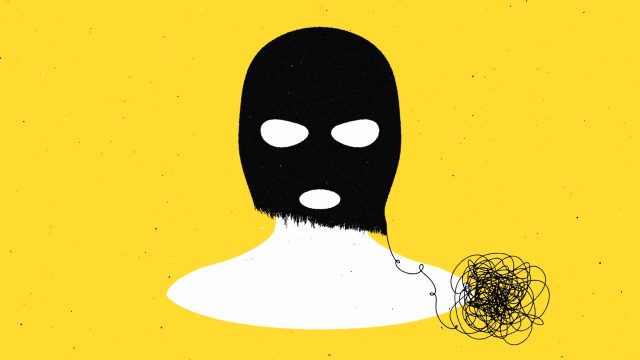
“There is only one reason that young people come into the city wearing balaclavas, and that is to conceal their identity to commit crime and intimidate members of the public,” said Nottinghamshire Police superintendent Chris Pearson earlier this month. “Not any longer. Your time is up.”
The city has become one of the first in the country to enact a ban on balaclavas, as part of a wider initiative, dubbed “Operation Reclaim”, to tackle youth anti-social behaviour across Nottingham.
Following masked anti-migrant protests on the south coast, other areas of the UK are looking to follow Nottingham’s lead, although opinion is divided on the extent and effectiveness of bans on face coverings.
Why is the balaclava so controversial?
Popularised by US drill rappers “wearing head coverings and ski-masks in videos”, the balaclava has become something of a transatlantic “urban fashion trend”, said The Telegraph. Ironically, the garment “is now marketed by British leisurewear outlets on the very high streets blighted by ‘ballie’ crime”.
The balaclava has traditionally been used by both “far-right” and “left-wing agitators” to conceal identities during protests, said James Hanson on LBC. But it is also a common accessory for street crime and anti-social behaviour, such as shoplifting sprees by “groups of balaclava-wearing youths”. “If you’re popping into Sainsbury’s in a balaclava, you’re hardly there to top up your Nectar points”.
The controversy over face coverings resurfaced following anti-migrant protests in Dover and Portsmouth earlier this month, in which balaclava-clad men blocked roads to try to prevent the movement of newly arrived migrants.
How will the ban work?
From today, Nottinghamshire police and council officers will be permitted to ask people to remove face coverings if they “reasonably believe” they are worn to conceal their identity, or to commit crime or anti-social behaviour. Those who refuse can be given a £70 on-the-spot fine and face referral to the Immediate Justice Programme, a scheme requiring community work including “litter picking or graffiti removal in the city centre”, said Nottinghamshire Police. If the individual is prosecuted, courts are able to impose a maximum fine of £1,000. Repeat offenders may also be issued with a criminal behaviour order, “which could ban them from the city centre indefinitely”.
Those wearing face coverings for religious, health, medical or work reasons or another legitimate purpose will not be affected by the ban.
The ban has been introduced following a public consultation in which more than 90% of 2,200 respondents supported police action. Authorities had identified around 180 city centre incidents involving face coverings or balaclavas between June 2025 and June 2026.
Are bans likely to spread?
Home Secretary Shabana Mahmood has told police chiefs in a private meeting that she expects them to “make full use of their powers to stop protesters wearing face coverings”, said The Independent. Current legislation already allows senior police officers to “declare a protest area where concealing one’s identity would be an offence”, but this power was not used during the Dover protests.
Other councils in the UK will be “carefully watching Nottingham’s progress”, said The Telegraph. A few areas have already adopted similar measures. In 2024, Wolverhampton City Council introduced powers allowing police to request the removal of face coverings worn with no reasonable purpose. The London borough of Hammersmith and Fulham introduced a similar policy in February this year, joined by Woking in July. “Even in leafy Cambridge”, an e-petition is calling for a Nottingham-style ban on balaclavas.
The city has taken targeted steps to tackle anti-social behaviour