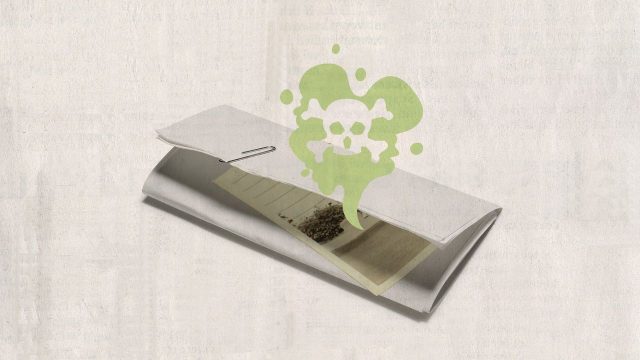
Many people might think of powdered or injectable drugs as being widespread items in jails and prisons. But an item far simpler has reportedly become ubiquitous. Correctional facilities across the United States have seen an uptick in drug-laced paper being smuggled into their complexes, causing concerns that these maneuvers are leading to deadly overdoses among inmates.
Why has drug-laced paper become a major problem?
At least 16 states have prosecuted individuals for introducing drug-laced paper into correctional facilities, according to The New York Times, with the issue stretching from “New York to Texas to Hawaii.” Paper is often seen as an easy way to bring drugs into these facilities because paper is a “lifeline in jail, a tether to parents, partners and children in the outside world.”
One of the most problematic institutions for this laced paper is Chicago’s Cook County jail. In 2023 alone, at least six inmates “died of overdoses, putting the jail at the vanguard of a new kind of drug war,” said the Times. Drug manufacturers are “churning out a dizzying array of synthetic drugs — not only fentanyl but also hazardous new tranquilizers, stimulants and complex cannabinoids.” These drugs are then “sprayed onto the pages of the most innocuous-seeming items: books, letters, documents, even photographs,” and they are then smoked.
But while Cook County is the epicenter of the problem, cases have been springing up across the country. A librarian in 2025 was “accused of smuggling sheets of paper infused with synthetic marijuana” as part of a “$65,000 drug ring” into a jail in Dartmouth, Massachusetts, said CBS News. This year, an attorney in Houston claimed he was “tricked into smuggling drug-laced paper into the Harris County jail,” said KTRK-TV Houston. Inmates are “taking advantage of lawyers that are trying to build trust with their clients,” Brent Mayr, the president of the Harris County Criminal Lawyers Association, told KTRK-TV.
How can this problem be solved?
The drugs themselves make this a difficult task since “as quickly as the authorities ban one substance, narco-chemists drum up novel, more potent variations that have not been outlawed,” said the Times. Simply ridding inmates of their access to paper would “rob them of what they missed most in lockup: human connection.” To “dismissively say we’re going to ban everything from coming in, it was just something that I didn’t want to do,” Cook County Sheriff Tom Dart told the Times.
But there have been efforts to crack down on drug-laced paper. Cook County jail “stepped up random searches and taught inspectors to master the natural touch and smell of paper,” said the Times. In Ohio, officials with the state’s recreational department have “confiscated over 16,000 pieces of synthetic drug-laced paper,” said WOIO-TV Cleveland. Officials in Kansas cited the laced contraband being smuggled into prisons as the “reason for changing print newspaper subscription policies,” said the Kansas Reflector.
This sounds promising, but experts say there is a long way to go to eradicate these drugs. In 2024, Cook County jail officers found a single piece of paper with 10 different chemicals sprayed on it, a “mix of opioids, depressants, cannabinoids and stimulants,” said the Times, “all jumbled together on the same page, like a Rosetta Stone of synthetic drugs.”
Drug-laced paper has been smuggled into jails or prisons in at least 16 states