The field of Democratic hopefuls for the 2028 presidential campaign is expected to be massive and candidates have a wide variety of voter issues to address, but they will probably focus on the cost-of-living crisis and questions related to the strengthening of American democracy. Democrats will also be campaigning without President Donald Trump on the ballot for the first time in 12 years.
What are these issues?
Many Democrats who have been named as possible 2028 contenders, including 2024 nominee and former Vice President Kamala Harris, have “sought to hammer the issue of affordability, almost exclusively, as they seek to win back power in Washington,” said The Washington Post. But these candidates have also been “challenged to couple that with a more full-throated description of their civil rights agenda,” especially in an era when many in the party say democratic principles are under threat.
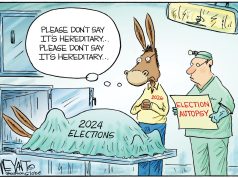
Some of these contenders have “shifted their views on border security, DEI, crime, climate change, Covid-era lockdowns and more,” said Axios. Party pundits believe they lost to Trump in 2024 largely because voters “didn’t like some of their left-leaning policies, not just how they were communicated,” and some have been arguing for a push back to the center. Others in the party have “openly questioned whether anyone other than a straight, white man can win the White House,” said Politico.
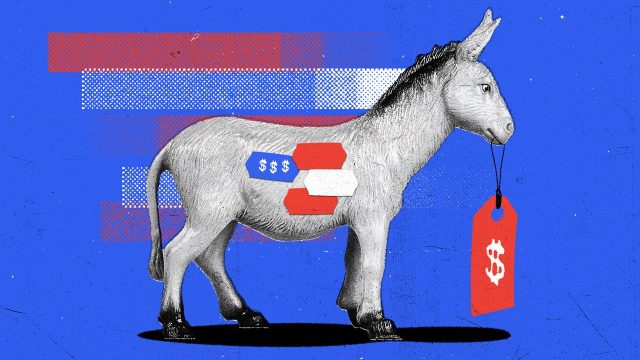
Lowering the cost of living will likely be the number one concern for voters heading to the polls. Several Democrats, including Sen. Cory Booker (N.J.), have proposed tax plan changes that would raise taxes for the ultra-wealthy, but “as actual solutions to the forces pinching Americans’ pocketbooks,” these plans “largely misread the problem,” said Slate. If Democrats “really want to allay the country’s anxieties about the cost of living, tinkering with the tax code probably isn’t the way to do it.”
How will candidates approach these issues?
Even with affordability at the forefront, Democratic bigwigs have largely agreed that the “restoration of civil rights should be central in the next presidential election,” said the Post. Maryland Gov. Wes Moore has “warned that Republicans are promoting voter suppression,” while Sen. Ruben Gallego (D-Ariz.) has “linked Trump’s aggressive immigration tactics to overall persecution of racial minorities.”
Former Transportation Secretary Pete Buttigieg “accused the Trump administration of a ‘seek and destroy’ effort to harm disadvantaged communities,” said the Post, and Harris has “argued that the United States is losing its moral authority to stand up for human rights around the globe.” Many have also noted that Democrats are pushing to reengage with Black and Latino voters the party lost in 2024, and some see Illinois Gov. JB Pritzker as a solution to this problem, as he would “likely do well among Black voters,” said Bloomberg. He has the “brawn, the billions and the blue-collar affect to make him a contender.”
To communicate with voters, any good candidate will need to “speak directly and honestly to the electorate with tangible political platforms” and “tangible messages that are simply about what we’re going to do for you,” Maya Handa, the campaign manager for New York City Mayor Zohran Mamdani (D), said at a Dartmouth University event. Democrats “should be recruiting candidates who are generationally talented communicators. But if we can’t, then I think we have to get more creative about it.”
Democrats are facing a new political arena without Trump as an opponent