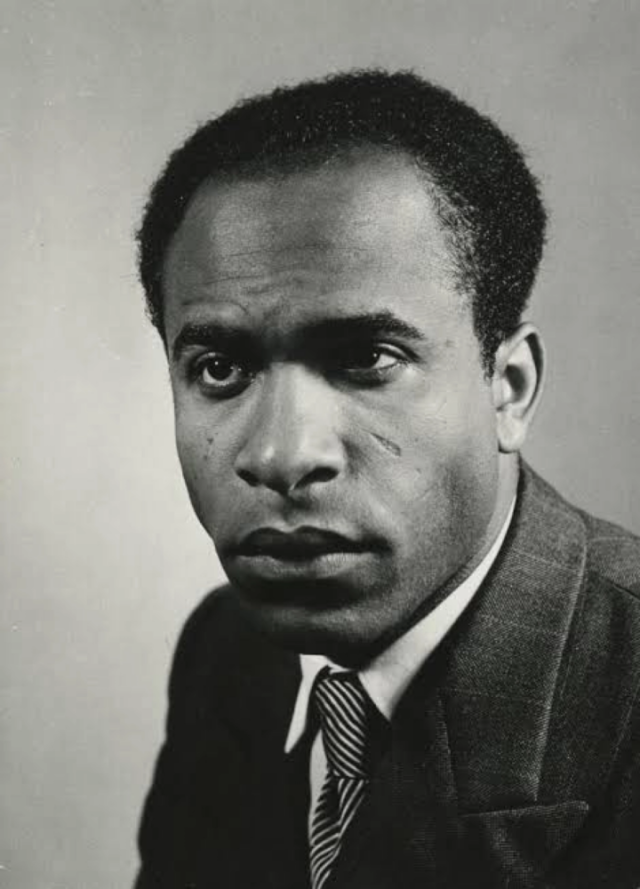
But the constancy of my love had been forgotten. I defined myself as an absolute intensity of beginning. So I took up my negritude, and with tears in my eyes I put its machinery together again. What had been broken to pieces was rebuilt, reconstructed by the intuitive lianas of my hands,” writes Frantz Fanon in 1962.
In 2003, Ghanaian philosopher, Ato Sekyi-Otu wrote that “after Fanon, African criticism cannot feign ignorance of history. But neither can they plead captivity to its consequences. Fanon is our pathfinder in that ‘conversation of discovery’ whose mission is to gather the voices of history and common dreams into the work of the critical imagination”.
Stacked to the side of an old, rustic-looking glass and wooden cabinet is a large pile of vinyl records. Positioned in the corner of our open-plan dining room is this cabinet and therein sits my mother’s prized gramophone.
Each Sunday, as the pot roast was thickening in flavour and the vegetables; coming alive to the steam of my mother’s Hart pot was the scratching of the gramophone pin as it moved from song to song. The room would be transformed by the raw quaver and deep register of Nina Simone.
I wish I knew how it would feel to be free/ I wish I could break all the chains holding me/ I wish I could I say all the things that I should say/ Say ‘em loud, say ‘em clear/ For the whole wide to hear/ Nina Simone sings in I Wish I Knew How It Feels To Be Free.
As Bill Taylor’s lyrics reverberated through the house in Simone’s melancholic plea for freedom, a shift would occur in my then-very-young political consciousness.
“The explosion will not happen today. It is too soon … or too late.” — Frantz Fanon
The words propel one into the multiple postcolonial dramas that Fanon unveils to the reader as they move from one devastating line to the next in his 1952 book Black Skin, White Masks. The opening gambit of the book is a dramatic entry into a consciousness searching for self within the postcolonial malaise. It is a consciousness launching its presence upwards and forwards, hoping to access the universal.

Cut to a more contemporary past.
“Balele/ balele/ balele omakhelwane,” intones Zoë Modiga with a syrupy vibrato on the opening track of her debut album, Yellow: The Novel. The reverberation of her voice paints a picture: the neighbours nestled in deep sleep as she summons the melodies that will colour her introspective aural autobiography.
But then an upbeat, jazzy track punctures the silence and Modiga’s mellifluous vocals float atop the bass rhythms foregrounded in her second song, Abounding Within. She starts:
I know that there’s a place/ Inside of all of us/ A place that’s made of love/ Where peace and truth abound/ It’s lying there away in its dormant state/ Waiting for our souls it sits and sighs aloud.
Draped in a Nao Serati bricolage-style two-piece and an elaborate yellow hat, Modiga repeats the lyrics as she descends a flight of stairs at Afrobru in Maboneng, Johannesburg, to a host of roaring fans. Modiga’s 23-track-album struck a chord with the crowd at her performance in late October. The audience echoed her lyrics as she crooned her way through her eclectic repertoire.
Born Palesa Nomthandazo Phu-melele Modiga, the musical virtuoso had developed a committed following in Johannesburg since the release of her album in March 2017.
She refers to the fans as her “yellow family”. “It’s not about me, it’s about you and your experience here tonight,” Modiga says to the audience clearly enamoured of her talent.
In 2026, Modiga teases a new album, The Vault. It is work she has held onto from her teen years to well into the end of her 20s. Those who have studied Yellow: The Novel and then her subsequent albums, Inganekwane and Nomthandazo, know that this upcoming album is the grown-up cousin of her debut. Sexy. Lamenting. Erotic. Heartbreaking and maximalist.
Speaking to New Frame in 2018, Modiga said: “My stories at this point are not always packaged in the most orthodox manner. Practically, they just aren’t verse, chorus, etc … To be able to exist in a space where everything is as it comes out of me is liberating.”
This is clear in her interpretation of Nina Simone’s Four Women. Set against the deep timbre of Simone’s voice, Four Women is sociopolitical commentary on the ways in which black women of differing colour gradations are treated in American society. Four women tell their stories in four different voices, in four verses.
In an article titled The Quadruple Consciousness of Nina Simone, artist Malik Gaines writes: “Simone used African-American musical, textual and theatrical strategies, elaborating a history in which blacks have transformed the locations of marginality and exclusion into improvised positions from which to speak.” Modiga covers Simone’s 1966 song with a similar performative sensibility.
Modiga seems to embody each woman. She balances her depiction of Aunt Sarah’s deep, chesty voice with a more delicate depiction of Saffronia. Sweet Thing’s verse is accompanied with a delicious set of runs and then Modiga wails over the backbeat, mimicking the licks of the accompanying bass and summoning the spirit of Peaches. She sings: My skin is brown/ My manner is tough/ I’ll kill the first mother I see/ My life has been too rough/ I’m awfully bitter these days/ Because my parents were slaves/ What do they call me?
And then, thunderously, she roars defiantly, with her fist in the air: “My name is Winnie!”
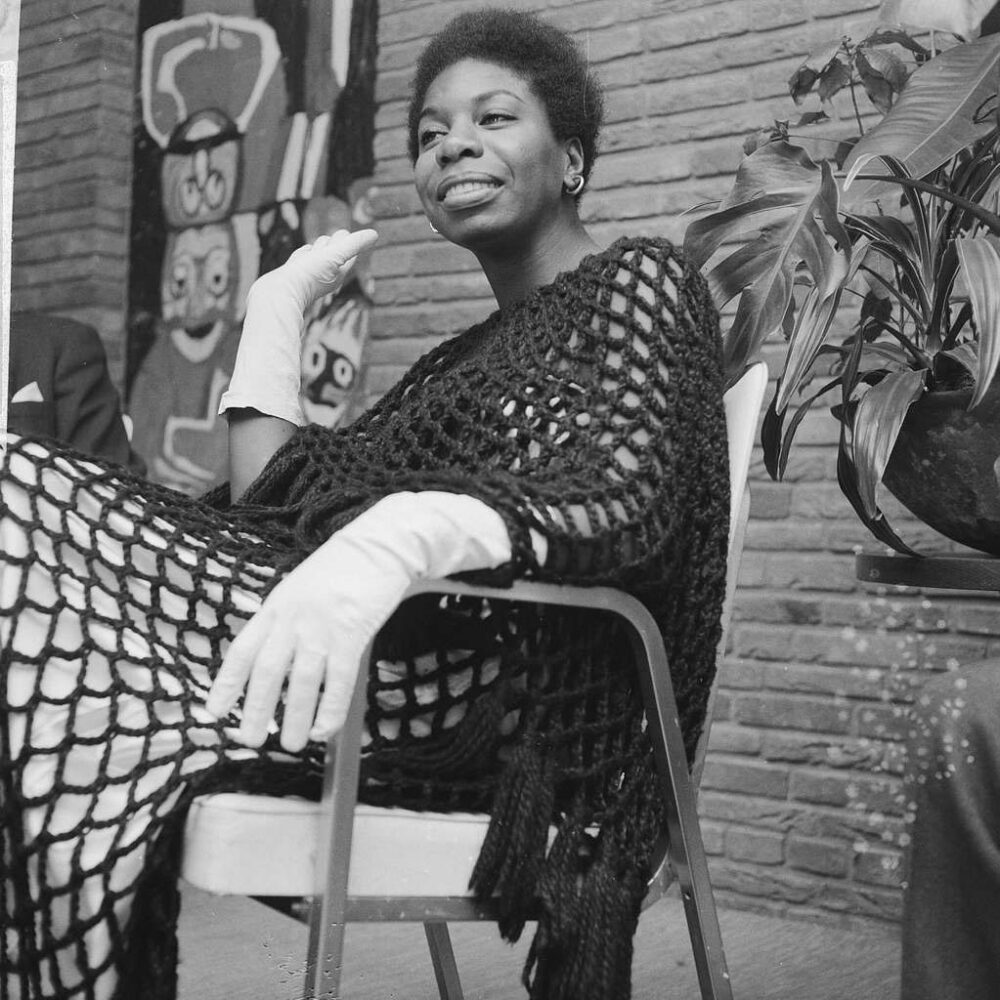
On 23 February 2026 Modiga released the first single of The Vault. She cheekily calls it Something New. It is a song of heartbreak but through the prism of a woman who is healed and healing. She now transforms heartbreak into an anthem. Into a song you can gyrate to while indulging in a glass of chardonnay and blocking your harmful ex. More than anything it is a signification of what is to come in the rest of the album — agape love, eros in love, justice meted out with romance.
This reminds us of Nina Simone’s Do I Move You? A deliberate meditation of her sexual prowess. An anti-colonial anthem for the desirability of black women in the Global South.
Although Simone was not necessarily stationed in Africa, until much later in life, the sentiments remain the same: Intellectuals and artists had to be stationed within the realities of their struggles first. It was through this intimate understanding of the struggle that they could create the stories and songs that could inform change within that context.
Through her involvement in the Civil Rights Movement and the Black Power Movement in the US, Nina Simone was then able to establish herself as wholly a native intellectual as prescribed by Fanon.
Simone was part of a tradition of artistic work which claimed political resistance and political work against the systemic segregation policies of the US at the time. Lorraine Hansberry (playwright and activist) and Langston Hughes (poet and activist) formed part of Simone’s core friendships in the ’60s.
She was part of a tradition which knew that it was not enough to write a revolutionary song; they knew to fashion the revolution with the people. Having lived through the segregation, prejudice and brutality of the time all the artists were able to produce work collectively that could speak to the material circumstances of black life in the US.
To be Young Gifted and Black, a poem initially written by Lorraine Hansberry, was turned into a political anthem by Simone. It was a song that was not only dedicated to those who stood up for justice and equality but also affirmed them in many ways. The song soon became a national anthem for black America and a song that was most synonymous with the Civil Rights Movement.
You are young, gifted and black/ We must begin to tell our young/ There’s a world waiting for you/ Yours is the quest that’s just begun/ When you feel really low/ Yeah, there’s a great truth that you should know/ When you’re young, gifted and black/ Your soul’s intact.
An album launch for The Vault will take place on 23 April Live at the Market Theatre, John Kani Stage
In this unorthodox piece, a lover of Beyoncé, Busi Mhlongo, Brandy and Miriam Makeba, reads the artistic contributions of Nina Simone and Zoë Modiga through the lens of Frantz Fanon