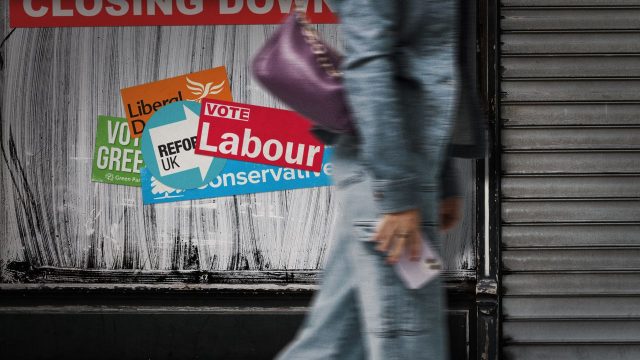
The “decrepitude” of many British high streets is leaving residents “angry and seeking change”.
They are either “shuttered or littered with garish kebab shops”, said The Sunday Times, and premises are struggling with the rise in online shopping, business rates and out-of-town retail parks. There is a “proliferation of cash-only retail businesses”, such as barbers, vape shops and minimarts, which have been “linked to organised crime”. Polling suggests that voters see the decline of the high street as their second-biggest concern.
But “to the evident frustration of many MPs and local councillors”, the issue “has not been anywhere near the top of the agenda” for either Labour or Conservative leadership. Their “relative silence” is worrying for local councils with “Reform snapping at their heels”.
‘Torrent of closures’
“Shoppers were stunned by a torrent of high-street closures and collapses in 2025,” said The Sun, including “iconic outlets” such as Claire’s, Poundland and WH Smith. Retailers have been “feeling the squeeze” since the pandemic, as energy costs rise, shoppers move online, and people cut their spending due to the “soaring cost-of-living crisis”. Last year 57 retailers went bust, resulting in the loss of more than 3,380 branches, according to the Centre for Retail Research (CRR).
The British Retail Consortium predicts that Labour’s increase to employers’ National Insurance contributions, which takes effect in April, will increase costs for retailers by £2.3 billion. “By increasing both the costs of running stores and the costs on each consumer’s household, it is highly likely that we will see retail job losses eclipse the height of the pandemic in 2020,” said Joshua Bamfield, the Centre’s director.
Another opportunity for Reform?
“The massed emptying-out of places has been going on since the crash of 2008,” said John Harris in The Guardian, “but the latest chapter of the story is dramatic.” In 2024, the UK lost about 37 shops a day, a 28% increase on 2023. Some were “archetypal local businesses that weathered plenty of past economic storms, but have now given up”.
It is also “mind-boggling” that before the latest U-turn, the government was set on putting up business rates by 76% for the average pub, compared with 4% for large supermarkets. And after years of cuts, local councils “can barely meet their most basic responsibilities, let alone lead the reinvention of the places they run”.
“Woven into the fate of town and city centres is something that a lot of progressives avert their eyes from,” said Harris. “As many high streets have become dead zones, organised criminals have moved in.”
This has “presented yet another opportunity” to Reform UK. Research suggests the party’s popularity “strikingly correlates with the state of town centres”.
In 2022, Richard Tice began campaigning against cash-only barber shops. During the election, he and Nigel Farage “doubled down”, said The Sunday Times, “declaring them fronts for money laundering and drug dealing”. After unprecedented raids by the National Crime Agency on thousands of “cash-intensive businesses” found “widespread criminality and tax evasion”, Reform “appears to have been proven right”.
The party has since promised to declare a “high-street emergency” and shut down illicit shops in a series of raids.
“The state of our high streets is such a visible sign [of decline],” said Luke Akehurst, Labour MP for North Durham. “Either we have to have visible progress on this or seats like mine will fall to Reform.”
Mass closure of shops and influx of organised crime are fuelling voter anger, and offer an opening for Reform UK