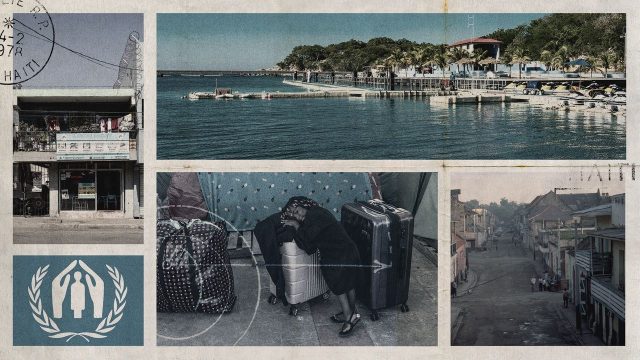
Hundreds of migrants, most of them from Haiti, left the southern Mexican city of Tapachula on foot last month, in search of better living conditions further north. These caravans “used to aim for the US border”, said The Associated Press. But many Haitians have “lost hope of making it to the US due to the restrictions that the Trump administration has placed on asylum seekers” and instead now seek to “settle down in large Mexican cities”.
Final destination
Mexico is “increasingly” becoming a destination for people “fleeing war, oppression, crushing poverty, gang violence or combinations of those problems”, said The Guardian.
As Haiti faces widespread violence, mass displacement and serious humanitarian issues, over one million people have been displaced and hundreds of thousands have fled the country to seek asylum, many of them in Mexico.
Many arrive after lengthy migration journeys that include stops in countries such as Brazil or Chile before crossing into Mexico via the Guatemalan border. Reaching the US has become harder under Trump, increasingly turning Mexico from another transit country into a destination.
According to Mexico’s national agency for refugees, 127,000 Haitians filed petitions for asylum in the country between 2020 and 2024, and Haitians account for around 25% of all asylum petitions filed in Mexico.
Because Mexico forbids asylum seekers from leaving the state where they first filed for protection, Chiapas – the country’s southernmost state, with the city of Tapachula only a few miles away from the border with Guatemala – receives 60% of Mexico’s asylum applications. However, substantial Haitian communities have also developed in Mexico City, and in the northern US-border city of Tijuana.
Legal limbo
Mexico’s asylum system is overwhelmed, and Haitians face particularly low approval rates. Around 62% of Haitian asylum claims are denied. Even for those who are approved, it can be a long wait. Although the asylum process is supposed to last just 45 business days, in reality “the wait can take more than one year”, said The Haitian Times.
This leaves many people in legal limbo, unable to fully settle or move forward with their lives. “Without documents, we can’t work, and we are people who strongly believe in working,” one Haitian refugee told the newspaper.
Those who are able to find work are usually restricted to low-paid, irregular jobs such as construction, food service, or street vending. The language barrier can often impose further limitations; many refugees only speak Haitian Creole or French, with limited Spanish.
But despite the challenges, many Haitian refugees have been able to build a better life in Mexico. “Haitians are very resilient,” Andrés Ramírez, coordinator of the Mexican Commission for Refugee Assistance, told Yucatán Magazine. “They can integrate into Mexican society, despite coming from quite a different culture.”
Giovanni Rotschild was forced to flee Haiti in 2022 after receiving threats against his life as armed groups took control of several neighbourhoods in the capital, Port-au-Prince, where he lived. Within months he was recognised as a refugee and later received permanent residency in Mexico. “In that moment I felt free,” he told the UNHCR. “For the first time, I could live without fear, without stress. Now, I can do everything legally, and that makes me incredibly happy.”
Now, he wants to use his nursing skills to help others, and plans to start a health initiative in Mexico.
Many refugees end up in legal limbo but others feel ‘free’ in their new home