
The internet is awash with jokes about the reflecting pool in front of the Lincoln Memorial in Washington, which is now riddled with algae.
The Trump administration spent more than $14 million (£10.5 million) draining the pool and painting the bottom “American flag blue” in time for the 250th anniversary of US independence. The president had described the reflecting pool – the scene of Martin Luther King’s 1963 “I have a dream” speech – as “filthy” and “dirty”, and promised to transform it into something “beautiful”. Instead, residual algae has “proliferated” in warm weather, said The Guardian, turning the pond “Wicked” green.
But beyond the schadenfreude, toxic algae blooms are a worldwide phenomenon that can harm humans and devastate marine life. And as the climate crisis warms the water, the problem is growing.
‘Underwater phantom’
“Algal blooms are a rapid, explosive growth of algae,” said pharmacology researcher Ian Musgrave on The Conversation. Blue-green algae, known as cyanobacteria, naturally occur in inland waters, estuaries and the sea. They often contain multiple species, some of which produce toxins. The “bewildering variety” can cause many effects in humans, from nausea and skin irritation to increased asthma symptoms and even liver failure. Those that don’t produce toxins can “suffocate fish” by damaging the gills and reducing oxygen.
For a year now, a toxic algal bloom in South Australia has had “devastating effects” on wildlife. “At my local beach, walks were a sad parade of dead sea life,” said Musgrave.
Since last March, algae have “flared at hotspots” along the coastline, causing “stinging eyes, coughing, rashes, headaches and breathing difficulties” among surfers, said ABC. One swimmer was hospitalised with severe gastroenteritis. “It was like razor blades in my gut,” he said. “I was rolling around on the floor in the emergency room, coughing and spewing blood.”
Along the “jagged coastline”, it has become “an underwater phantom”, and researchers are “not entirely sure why”, said The New York Times. Beachgoers are “horrified by the dead animals washing ashore”. Since February last year, a crowdsourced platform has recorded more than 100,000 instances of dead sea life. “It was literally just like an underwater bushfire,” said a recreational fisherman.
Recent citizen science data suggests the bloom affected nearly 8,000 square miles. Last October, state agency scientists estimated the algae had impacted about a third of South Australia’s coasts. The psychological effect is enormous: in a survey of South Australians last July, nearly 70% said “they were repeatedly thinking about the bloom”, said researcher Brianna Le Busque, from Adelaide University. Some compared seeing the washed-up marine life to “the death of a loved one”.
‘Visible from space’
Harmful algal blooms stalk shores far beyond Australia. In Southern California last year an “unprecedented, multi-toxin event” killed hundreds of seabirds, sea lions and dolphins, said the Public Policy Institute of California.
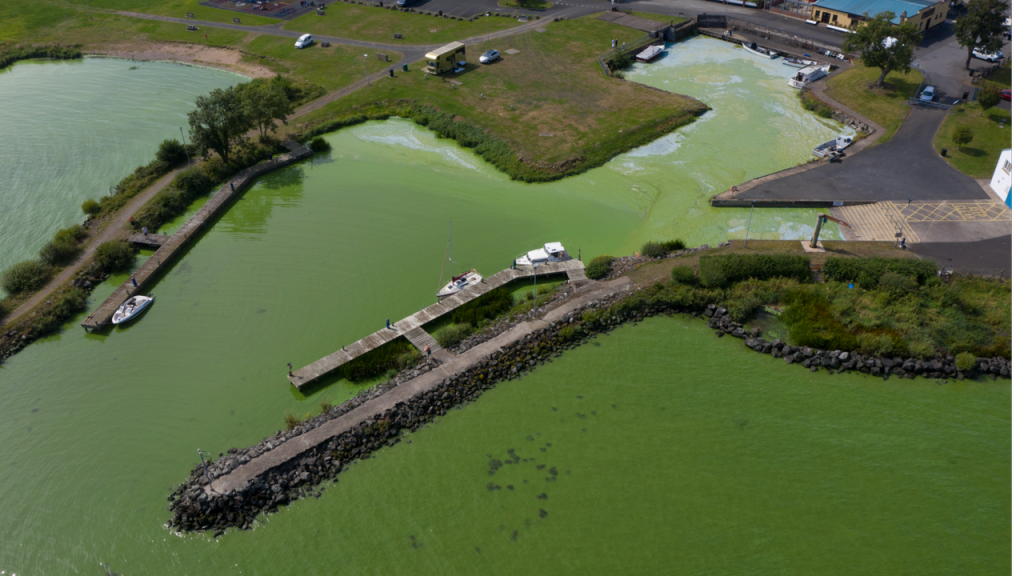
Lough Neagh in Northern Ireland, the UK’s largest freshwater lake, has also been blighted by blue-green algae for years. This “majestic landscape of water and sky”, the inspiration for Seamus Heaney’s prize-winning poetry, is “choking on recurring toxic algal blooms”, said The Guardian.
The algae feed on high levels of nutrients in the water, mainly from agriculture (farm run-off, fertiliser and livestock waste), as well as “inadequate wastewater treatment”. Global warming has also increased the temperature of the lough, encouraging the abundant blooms. Last year, there were 243 detections of cyanobacteria growths, according to Northern Ireland’s Department of Agriculture, Environment and Rural Affairs: a record.
In some places, the green sludge – “so widespread it is visible from space”, said The Guardian – forms “patterns and swirls redolent of Gustav Klimt”. But far from picturesque, the blooms “coat the surface, kill wildlife, unleash stenches and make the lake all but unusable”. The impact on wildlife and tourism is “incalculable”.
“Lough Neagh is dying in front of our eyes,” said Claire Hanna, leader of the Social Democratic and Labour Party. “Images of fish and eels gasping for life on the surface are not just shocking – they are a stark warning of total ecological collapse.”
This year, “stormy, cool and dull weather” helped to suppress growth, but once the conditions had improved, the algae returned in April, said the BBC. A spokesperson for DAERA told the BBC that the ecological and biodiversity crisis in the lough had been “decades in the making”.
Naturally occurring bacteria in water is thriving on increased nutrients from agriculture and global warming