
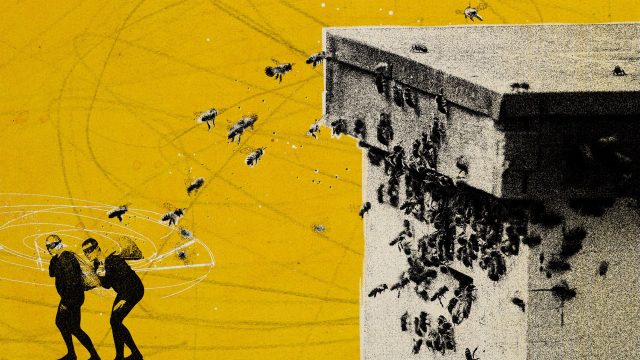
Beekeepers in Australia are “abuzz” at the news that “a series of stunning heists” caused the disappearance of 800,000 bees, said Smithsonian magazine.
The loss of the stolen insects, which are worth tens of thousands of dollars to members of the “apiary community” in and around Queensland, has also “sparked concerns” for regional food production and comes at a tricky time for the sector.
‘Completely gutted’
The thefts occurred across multiple properties and required a sophisticated operation, with the thieves taking the entire brood boxes – “the colony’s breeding system” – to avoid detection.
The culprit is thought to be from a “commercial operation” rather than a “hobby farmer”, a police detective told ABC.
Jack Laughton, a commercial beekeeper, said he was “completely gutted because the amount of work that goes in preparing beehives to a good quality, to a high standard, is quite a lot of work”. So “it’s a bit of a shock to the system” to open a hive expecting it to be full of healthy bees and “there’s just nothing”.
The apiarists don’t just lose the insects and the honey they would have produced, but the value of pollination contracts, which can be worth thousands of dollars. Many bees are used at avocado farms in Queensland to pollinate the crops, so the thefts could have a knock-on effect on other food production.
Buzzed off
Tom Bidner, an apiarist from the Atherton Tablelands, west of Cairns, said 44 colonies had been stolen from three beekeepers. The calculation of how many have been taken “isn’t over yet” because they have “so many colonies to get through” and they’re “still getting around and checking all our different sites”.
This is not the first bee theft to “rock Australia” this year, said Smithsonian. In May, around 80 hives, worth an estimated $150,000 (£80,000), were swiped from properties in New South Wales. The culprit was “definitely” a “disheartened” beekeeper, Mitch McLennan, owner of the Honey Shed in Tabulam, told The Guardian, because “what else are you going to do with them unless you’re a beekeeper”?
Police are continuing their investigation and are appealing for information that could help locate the missing colonies or identify those responsible.
Sting in the tail
To compound the “impact of lost revenue” and the “difficulty of recovering stolen populations”, a bee-killing parasite, the varroa mite, has recently been detected in the region, said Smithsonian.
In 2022, Australia was the last inhabited continent on which varroa was detected and just over a year later, the parasite had become “so widespread” that the government “abandoned its eradication efforts” after it had spent more than $100 million to try to prevent varroa’s spread. This decision has “shifted additional expenses and burdens onto apiarists”.
Surge in thefts comes as a bee-killing parasite spreads