
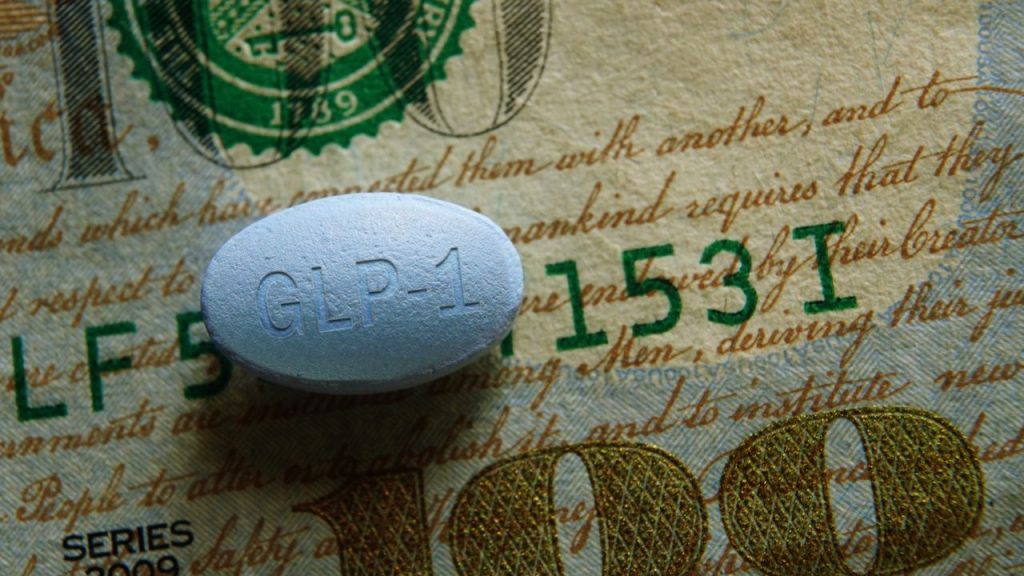
Weight-loss drugs like Ozempic have undoubtedly made their mark on healthcare. But they have also begun to shape the broader economy.
While there are those “salivating at the prospect of where AI can go in the years ahead,” perhaps the “bigger leap in the near term” is the “technological miracle that is stopping us salivating at all,” Jim Reid, the global head of macro and thematic strategy at Deutsche Bank, said in a commentary. Perhaps the GLP-1 is the “real short-term general-purpose technology for a wider range of consumers, especially in the U.S.” In other words, the age of the Ozempic economy has arrived. These are some of the ways you might feel the impact.
Restaurants
People on GLP-1s have shifted how they spend money on eating out. People taking the drugs go to restaurants and order out half as often as they did before, according to a survey by Deutsche Bank, though they spend slightly more each visit. Brands with “differentiated, healthier offerings or more occasion-based demand” are likely to be more competitive, said Investopedia.
Still, restaurants in the U.S. appear to be “going through a rough period,” and some attribute the difficulty to the “growing use of weight-loss drugs,” said The Motley Fool. Sales are down while “inflation rages for salaries, food and other input costs.” If chains can “pivot to lighter, higher-protein meals,” demand may “bounce back in the years ahead.” But if Americans “start consuming vastly fewer calories” because of weight-loss drugs, this could be a “permanent reset for the entire sector.”
Groceries
Because GLP-1’s help eliminate “food noise,” which can “lead to bingeing and distracting thoughts about eating,” patients are “cutting back on snacks and spending more on healthy items,” said The Washington Post. Compared with non-GLP-1 households, GLP-1 users “reduced their spending by 10%” over a year across “100 categories including groceries, quick-service restaurants and tobacco,” according to data company Numerator.
The “fallout could hurt the snack food industry,” but some companies are “innovating and acquiring health food brands.” They’re focused on “high-protein items,” which “support muscle mass, are highly satiating and boost metabolism,” as well as buying more “quick and healthy frozen meals.”
Researchers increasingly see a “shift away from volume” with customers’ grocery shopping and instead note a move toward what economists call “premiumization,” Benzinga said. Consumers may eat less, but they seem willing to “spend more on nutrient-dense products,” especially protein.
Alcohol
Studies have shown that GLP-1 drugs can suppress alcohol cravings among heavy drinkers. According to NielsenIQ data, users spent “14.5% less in the category after starting the treatment,” while nonalcoholic wine and beer purchases among the group “ballooned by 1,158% and 935%, respectively,” said the Post. Meanwhile, “high-protein drinks and probiotic soda brands that promote gut health” are seeing significant growth, as they are popular among users of weight-loss drugs.
Retail
Sales of smaller-sized clothing for both men and women have increased, according to a study by Impact Analytics. Demand for women’s tops in sizes extra small and small rose by two percentage points between 2022 and 2024, while demand for large and extra large sizes was down by two percentage points. Analysts believe it will “probably be more difficult to find larger sizes in stores,” with retailers “shifting most of that inventory to online only,” said the Post.
Meanwhile, credit and debit card data, according to Consumer Edge, shows that “formal-wear sales surged 80%,” and sporting goods “jumped 24%” in the first six months of 2025 compared with the same period last year. The shift could indicate a “need [or] desire to buy new clothing and accessories after undergoing a positive life change,” said Michael Gunther, Consumer Edge’s head of insights.
There are also more “affordable and eco-friendly ways to spend on apparel,” the Post added. Consignment and thrift shop spending surged 80%, according to Consumer Edge, as “consumers look to save as they go down sizes.” Meanwhile, resale outlets are “seeing an uptick in larger sizes for donations and consigning.” They are also contributing to the “estimated $47 billion in apparel that customers send back to online retailers each year because it doesn’t fit,” said Investopedia.
Due to the risk of muscle mass loss, GLP-1 users are encouraged to exercise and strength train. They’re also spending more on items linked to a more active lifestyle, like wearable electronics, which saw sales rise 29% over six months among the group, according to Consumer Edge.
Airlines
Analysts are also predicting future winners in the Ozempic economy. The dropped pounds may have a “surprising perk for airlines too,” said The New York Times: “lower fuel costs, as slimmer passengers lighten their aircraft’s loads.” The four largest U.S. carriers, “American Airlines, Delta Air Lines, Southwest Airlines and United Airlines,” could save upwards of $580 million a year altogether in fuel costs, according to a study by financial firm Jefferies.
Lower passenger weight could “reduce fuel use by 514 million gallons annually,” according to an analysis by Michigan State University, Benzinga said. The amount saved by the airlines would be “approximately $2 billion dollars a year,” MSU economist Bill Knudson said.
Workforce
This shift is not so much about consumer spending, but it has an economic impact linked to changes in workforce potential associated with GLP-1 use. For nonworking women, those who use GLP-1s are 27% more likely to start a job within 18 months of their weight loss than those who aren’t using GLP-1s but want to, according to a study published by Harvard economics professor Rebecca Diamond.
These weight-loss treatments may also “influence broader factors tied to workplace performance,” including “energy, focus and long-term productivity,” according to research published in The New England Journal of Medicine and analyses from organizations such as the World Economic Forum and McKinsey & Company, said Forbes.
The popularization of drugs like Ozempic is shifting the way consumers spend and forcing businesses to adapt