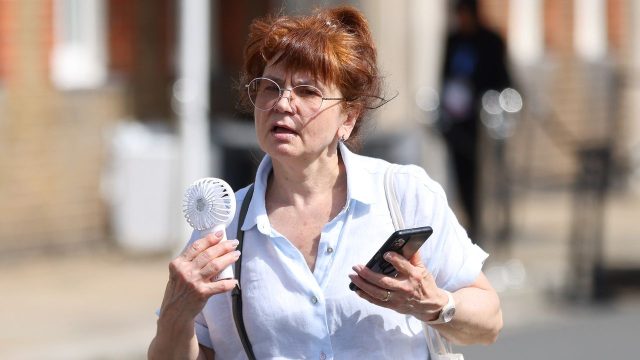
The series of heatwaves “afflicting” Europe this summer have been the “worst ever”, said The Guardian. Cities have become practically “unliveable” and higher temperatures are “further exacerbating” socioeconomic and economic divisions.
The unfortunate consequences of the current heat for many in the UK are “disturbed sleep and sticky days in the home office”. But around the world, high temperatures often exacerbate gender inequality, and women, particularly in low-income families, are “at the sharp end”.
Why are women more affected?
Women are more at risk of health complications during a heatwave for two main reasons, Dr Nighat Arif, an NHS GP who specialises in women’s health, told the BBC. First, women respond differently to men in the heat – they sweat less and start sweating at a higher temperature. These thresholds make it harder to “quickly shed heat” and fewer visible indications mean women can find it hard to judge how much their “bodies are under burden”.
The second reason is hormone regulation. Levels of oestrogen and progesterone shift “most substantially” during the menstrual cycle, perimenopause, menopause, pregnancy and while breastfeeding. This can knock the brain’s temperature regulation systems “out of kilter”, said Dr Arif.
Periods may feel more uncomfortable, while hot flushes and night sweats are more likely for perimenopausal and menopausal women. A recent study published by The Lancet suggested that heat stress may “increase the likelihood of adverse outcomes for the mother and child, particularly in higher-risk pregnancies”, said the BBC.
How does this present itself socially?
“How people experience heat is often gendered” and “socially and culturally determined”, said researchers Febe De Geest and Sergio Jarillo on The Conversation. In domestic settings, particularly across Africa, Asia and Oceania, women are forced to spend more time indoors in “poorly ventilated homes”, acting as primary caregivers. In Bangladesh, Cambodia and Nepal, heatwaves have also been linked to increases in child marriages: “struggling families force unions on their daughters to ease financial stress and reduce household costs”.
In workplace settings, research shows that women are sometimes required to wear more clothing for religious reasons and tend to receive “inadequate sanitation”. So they are likely to drink less to “avoid using unhygienic toilet facilities, leading to dehydration and further health problems”. These factors are not “trivial inconveniences; they compound heat exposure in ways that shape how women experience hot weather”.
Even in countries typically associated with better provisions for the heat, there is a “seasonal upswing in violence associated with hot weather”, said The Guardian. This could be due to the “temperature-aggression theory”, where hot weather increases “discomfort, frustration, impulsivity, and aggression, all of which make violence more likely”, or could be linked to greater alcohol consumption, which in turn “increases the opportunities for interpersonal conflicts and subsequent violence”.
Depressingly, it only takes “fairly small shifts” in temperature to increase the likelihood of domestic violence, particularly for the most vulnerable, said the European University Institute. A 1C rise in daily temperature is associated with “approximately a 2.7% increase in domestic violence reports”.
And in disadvantaged areas the effect is “much more intense”, due to more crowded living arrangements, lower cooling capacity and lower access to outdoor spaces. “Each degree of additional temperature is associated with up to a 50% larger relative increase in domestic violence incidents compared to richer areas.”
What can be done?
In practical terms, during periods of extreme heat it is important that women drink “least six to eight cups of non-alcoholic, non-caffeinated, transparent-liquid drinks” to help with temperature regulation, Dr Anisha Patel told ITV. Above all, women should continue to take prescribed medication as normal, including HRT or other drugs designed to help with the menopause.
Across the world, women are “already adapting creatively, and often without institutional support” to improve their situation, said De Geest and Jarillo on The Conversation. In Ahmedabad, India, women have painted their roofs white and used “coconut husks and paper waste” to make the structures cooler, and in Jakarta women have “established shaded communal areas that function as informal cooling centres”.
Policymakers need to realise that women suffer on many fronts, not just in biology but across “culture, power and intersections of class, caste and migratory status”. Their suffering is “largely invisible” to those heading climate responses.
Making sure women can cope with the heat is “not a woman’s problem”, Dr Arif told the BBC. “This is a societal problem. If we get it right for women, we get it right for everyone.”
High temperatures can bring greater medical complications and increase domestic violence incidents, with women ‘at the sharp end’