
The full title of this review by Yagnishsing Dawoor (The Guardian, 24 August 2026) is “The Disappearers by Marlon James review – a scorching exposé of homophobia in Jamaica.” Dawoor says, “This Booker-listed epic set in AIDS-era Kingston is a triumph – bitter, bawdy and ravishingly queer. Here are excerpts from The Guardian. [Many thanks to Peter Jordens for bringing to our attention this review, and others linked below.]
“A sense of sweep,” replied Marlon James, when asked what moves him most in literature. “Sweep isn’t just about external journeys, but internal as well. It can be over years and decades, or across land and sea.” If that explanation is still hazy, pick up his mighty new novel, which is longlisted for this year’s Booker prize and is tirelessly – sometimes exhaustingly – grand and peripatetic. Mounting a grisly exposé of Jamaican homophobia, this polyphonic 640-page doorstopper is an emotionally bruising narrative that roves “uptown, downtown, ghetto and gully” through Aids-era Kingston with sidetrack excursions to 1950s England and a closing leap to 2000s United States.
The novel’s defining event is a gruesome mob attack on eight queer men who have clandestinely come together to work on bringing John Herbert’s 1967 gay prison play, Fortune and Men’s Eyes, to the stage. The goal, in the words of director Havelock Titus, is to shatter “the whole fragile myth of Jamaican male sexuality”. “Because prison,” he explains, “is the ultimate male institution and yet masculine sexualities that could never happen outside in the normal world flourish in there all the time.”
The spunk and sass of these men, their banter and squabbles as they feel each other out and ease into their roles, as well as their fears, insecurities and motivations for doing the play, are relayed by one of the actors: Eddy Porteous, a “white-ish” Belgian Jamaican college student from a well-heeled family. His diary entries over the course of the month preceding the assault make up the novel’s expositional first quarter, illuminating the interplay of class, race and colourism in the experience of Jamaican queerness.
The narrative kicks into gear with the section on the attack. Now we are thrust, chillingly, into the minds of the perpetrators, among whom are a policeman, a self-loathing closet case, a deacon and a reggae singer named Streggeh Don whose hit, Batty Is Not Pussy, is the rallying-cry-cum-soundtrack for the splatterfest. Violence is James’s shtick and a hallmark of his fiction, from torture and sexual abjection in his subversive slavery epic, The Book of Night Women, and gang warfare in his Booker-winning novel, A Brief History of Seven Killings, to the near-ceaseless carnage in his ongoing Dark Star fantasy trilogy.
But here, far from the glib relish of which James has been accused throughout his writing career, one senses an unequivocal ethical purposefulness. “I think evil is a choice,” one survivor asserts, “and an ongoing one. Even in the midst of committing wickedness there are choices of how wicked one will be, which is made by the minute.” In order to grasp this statement in all its wounded, furious profundity – to see the outsize hate unleashed on these men as deeply volitional – the reader must bear witness not only from within the action, but also from within the consciousness of the perpetrators. [. . .]
For full review, visit https://www.theguardian.com/books/2026/aug/24/the-disappearers-by-marlon-james-review-a-scorching-expose-of-homophobia-in-jamaica
Also see https://www.kirkusreviews.com/book-reviews/marlon-james/the-disappearers and https://www.publishersweekly.com/9780593717202
Related interview: https://www.culturedmag.com/article/2026/08/20/literature-marlon-james-the-disappearers-interview-2026
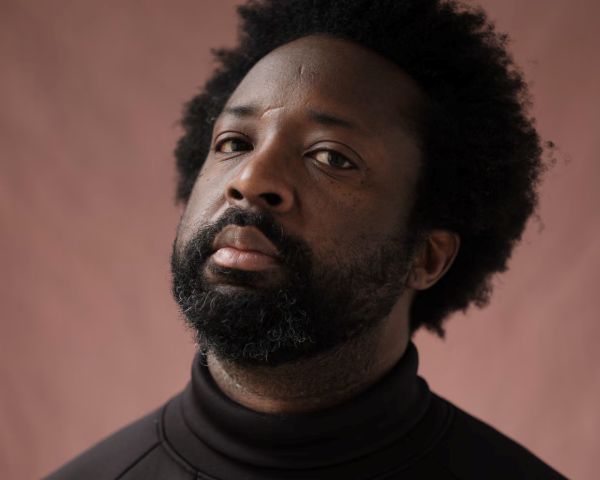
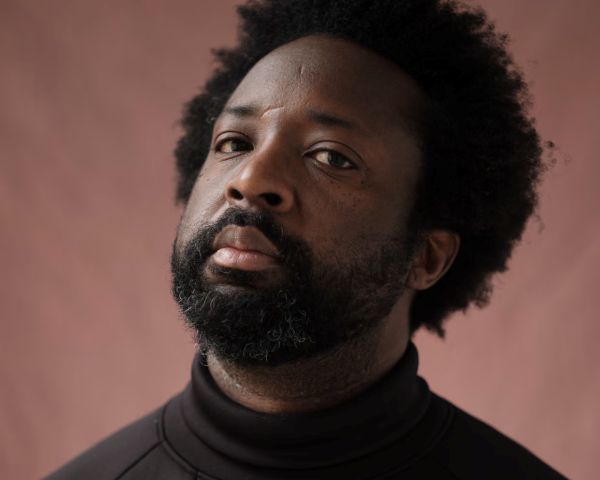
[Photo above by Rahim Fortune/The Guardian: Bleak and uncompromising … Marlon James.]
The full title of this review by Yagnishsing Dawoor (The Guardian, 24 August 2026) is “The Disappearers by Marlon James review – a scorching exposé of homophobia in Jamaica.” Dawoor says, “This Booker-listed epic set in AIDS-era Kingston is a triumph – bitter, bawdy and ravishingly queer. Here are excerpts from The Guardian. [Many thanks