
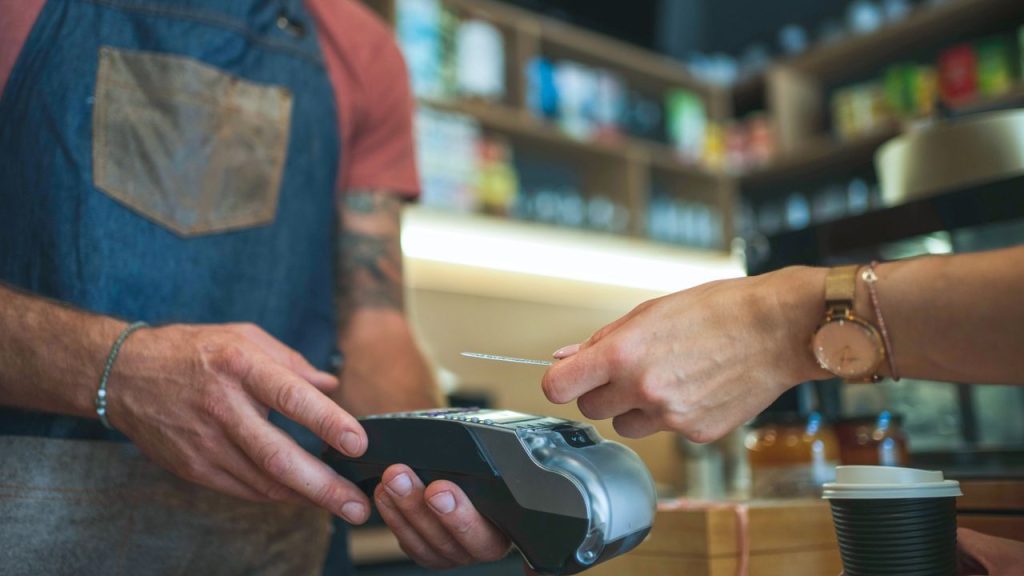
Nearly half its customers paid nothing for their food and drink after a cafe in the US stopped charging customers and asked instead for voluntary donations.
But since it switched to this curious model, the Post Modern Times cafe in Minneapolis is making a profit after mostly posting losses for years.
Defying ‘fascists’
In a statement shared on Post Modern Times’ Instagram account in January, the cafe’s owner, Dylan Alverson, said he had decided to move to a donations-only model in response to a “government occupation” in Minneapolis.
The restaurant is just four blocks from where Renée Good was killed in January by Ice agents and six blocks from the site of George Floyd’s murder in 2020. “Effective tomorrow we are done making money for the fascists that occupy our city,” he said. “We refuse to generate taxes under the guise of a functioning for-profit capitalist business aligned with government strategy.”
What was “surprising” is “what ensued in the weeks and months that followed”, said The New York Times. Post Modern Times “thrived”, even as the number of customers who don’t pay for food “hovers between 40 and 50%”. Running on donations means the cafe doesn’t have to pay tax on sales and the staff are volunteers working for shared tips and community donations.
Alverson’s cafe generated $1.3 million (£960,000) in sales last year but still lost $18,500 (£13,800), “in spite of cost-conscious measures” like paying himself just $23,000 (£17,000) a year as “manager, chef and fix-it man”.
After “fighting to make a profit for 15 years”, he had concluded that it’s not “possible” without “taking advantage of people”. But since making the change, he has “succeeded more than I ever did when I was running a conventional business employing 22 people”.
Some 42% of restaurant owners said their businesses weren’t profitable last year, according to the National Restaurant Association. So, “what started as a workaround to paying sales tax” might “offer a solution to a broken industry-wide business”.
Establishing trust
“Pay what you wish”, or “PWYW”, is a “well-known, if not exactly common”, pricing strategy whereby the buyer sets the price of a given commodity, said The Guardian.
Although paying nothing is “always a popular option”, the “underlying idea” is to “establish trust” between a seller keen to provide value or expand market share, and a “fair-minded buyer”.
The fashion retailer Everlane held a PWYW sale in 2015 and when Radiohead self-released their 2007 album “In Rainbows”, it was as a PWYW download. Although 62% of fans paid nothing for the download, and the average overall price per download was just $2.26, this was still more than the share the band would have got by selling at full price through iTunes (about $1.40).
Minneapolis venue made more money even though nearly half of its customers paid nothing