
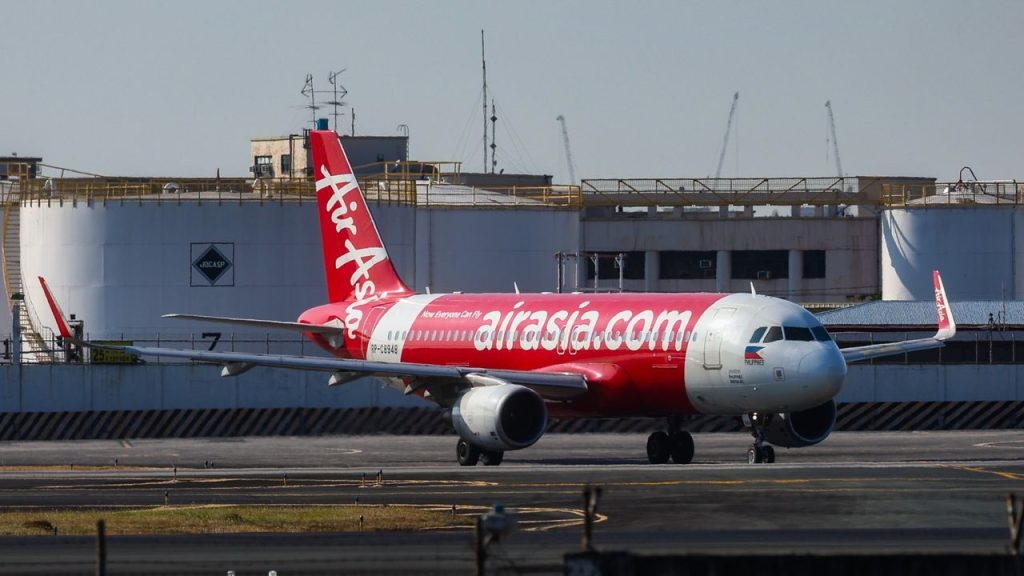
‘Asian budget carriers need help to avoid Spirit’s fate’
Juliana Liu at Bloomberg
The “jet fuel crunch is hitting Asia’s low-cost airlines much harder than their full-service counterparts,” says Juliana Liu. Asian governments “should be preparing financial or operational support to avoid further flight cancellations during the busy summer travel season — as well as outright shutdowns like the collapse of America’s Spirit Airlines.” Policymakers “must consider targeted measures in the form of loans, grants or fuel price relief,” and they “should differ by country and reflect conditions on the ground.”
‘The rush to point fingers at the Secret Service’
Mitch Price at The Wall Street Journal
After an “incident involving presidential security, a predictable cycle begins,” says Mitch Price. Media outlets “elevate instant analysis from so-called ‘experts’ eager to diagnose Secret Service failures.” In the “immediate aftermath, there’s rarely enough verified information to support meaningful conclusions,” but “confident claims emerge anyway, often from people with little experience in presidential protection.” Risk “can’t be eliminated, only managed.” Safety plans “must balance threats, resources, public access and the president’s need to remain visible.”
‘Iran’s survival is not victory’
Menahem Merhavy at Foreign Policy
Iran previously “defined victory in expansive terms: exporting revolution, rolling back U.S. power and ultimately eliminating Israel,” says Menahem Merhavy. But “today, under sustained military pressure, its leaders are advancing a far narrower claim,” as “survival itself — withstanding strikes, avoiding surrender, remaining intact — is increasingly presented as victory.” This is “more than mere wartime rhetoric. It marks a shift in how the regime understands power, success and its own purpose.” The “language of Iran’s leadership reflects this shift.”
‘Miami’s drought wake-up call: Everglades restoration is our water insurance’
Michael Berkowitz and Meenakshi Chabba at the Miami Herald
For a “region that receives nearly 60 inches of rain annually, scarcity” in Miami “felt like someone else’s problem,” say Michael Berkowitz and Meenakshi Chabba. But a “drought has shattered that sense of abundance and revealed the vulnerability of South Florida’s water supply.” Most Miami residents “think of resilience mainly as flood adaptation, leaving water security as an under-acknowledged pillar.” Florida “cannot build a truly resilient Miami without bringing its most consequential resilience plan to the finish line.”
Opinion, comment and editorials of the day