
If you are after a good cry, these films will have you reaching for the tissues. From stories of survival and life-changing decisions to heartbreak and hope, here are some of the best tragic tales brought to the big screen.
Titanic (1997)
Director James Cameron became “king of the world” in the 1990s with this “wildly over-the-top weepie romance” between Rose (Kate Winslet) and Jack (Leonardo DiCaprio) on the so-called unsinkable ship, said Peter Bradshaw in The Guardian.
Our heroine is “not suited for life in the gilded cage”, said The Hollywood Reporter, and finds herself saved by Jack, “whose joy for life and eagerness for living it to the fullest soon revitalise the young Rose”. Their love is not only tested by class boundaries, but with the “horrible outcome” of the voyage.
If the story was “made of showbiz and hype”, said Roger Ebert, “well – so was the Titanic”. The 194-minute, $200 million (£151 million) epic was “flawlessly crafted, intelligently constructed, strongly acted and spellbinding”.
It’s a Wonderful Life (1946)
Frank Capra’s Christmas classic is repeatedly voted Britain’s favourite festive film for a reason. It is an “uplifting story of family, love and hope”, said the BBC. It’s “also the story of one man’s struggle with life’s knockbacks”. George Bailey, played by James Stewart, is brought back from the brink of suicide with the help of an angel, Clarence, played by Henry Travers.
George is shown how “worthwhile his life has been and what treasures, largely intangible, he does possess”, said Bert Briller in Variety, when the film first came out in 1946. This recounting of his life is “just about flawless in its tender and natural treatment”.
Atonement (2007)
Another romance set during a tragic historical period, “Atonement”, reflects on how a single error “destroys all possibility of happiness in three lives”, said Roger Ebert. Based on Ian McEwan’s book of the same name, the film begins with a “breathless celebration of pure heedless joy”, as heiress Cecilia (Keira Knightley) falls in love with the housekeeper’s son, Robbie (James McAvoy), on an English country estate.
But the actions of Cecilia’s younger sister Briony (Saoirse Ronan) and then the couple’s separation during the Second World War force us to “think deeply about what betrayal and atonement might really entail”.
The Pursuit of Happyness (2006)
In this “truish story set in 1980s San Francisco”, Will Smith’s Chris Gardner is a “newly single dad juggling bankruptcy, childcare, and high hopes of an internship” at a stockbrokers for no pay, said Tim Robey in The Telegraph. Smith is “sublime and moving” in this “tailor-made, sweetly serio-comic, Julia-Roberts-in-‘Erin-Brockovich’ Oscar vehicle”.
Chris and his son Christopher Jr. (played by Smith’s own son Jaden) navigate poverty, eviction and homelessness, but the hope portrayed in the movie is enough to “turn even the strongest of viewers into a puddle of tears”, said Harper’s Bazaar.
Graveyard of the Fireflies (1988)
Isao Takahata’s animation about two orphaned siblings in Japan during the Second World War is “one of the greatest films to have ever been made about children in wartime”, said Robbie Collin in The Telegraph. Made at Studio Ghibli, it has a “quiet but devastating power that breaks every heart it finds”.
The film creates “magical moments of natural beauty and childish delight” that only make the tragedy of Seita and his little sister Setsuko “even more harrowing”, said Steve Rose in The Guardian. It’s a “war story as wrenching as any live-action movie”.
Never Let Me Go (2005)
On the surface, the three main characters – played by Carey Mulligan, Andrew Garfield and Keira Knightley – are embroiled in a love triangle, but “this romantic drama tells an entirely more complicated story than you might expect”, said Entertainment Weekly. Based on Kazuo Ishiguro’s “devastating dystopian novel”, the film “dives into heavy themes of mortality and ethics with striking clarity”.
The characters are “expertly acted” and played “with such conviction” that “we get caught up in their doomed romance”, said The Hollywood Reporter.
Hotel Rwanda (2004)
The first mainstream film to approach the subject of Rwanda’s genocide, “Hotel Rwanda” focused on the story of hotel manager Paul Rusesabagina (played by Don Cheadle), who sheltered more than 1,200 people.
Turning such a “brutal and heart-wrenching subject” into “entertainment” has its risks, said the BBC at the time. But director Terry George’s decision to choose the “One Man Who Made A Difference” angle, as seen in “Schindler’s List”, gave “filmmakers the freedom to inject suspense, humour and romance – all the stuff that an audience actually wants to see – into otherwise sombre material”. Cheadle offers a “thrilling portrait of ordinary heroism, a performance that’s matched only by the magnificent Sophie Okonedo as his wife Tatiana”.
Sophie’s Choice (1982)
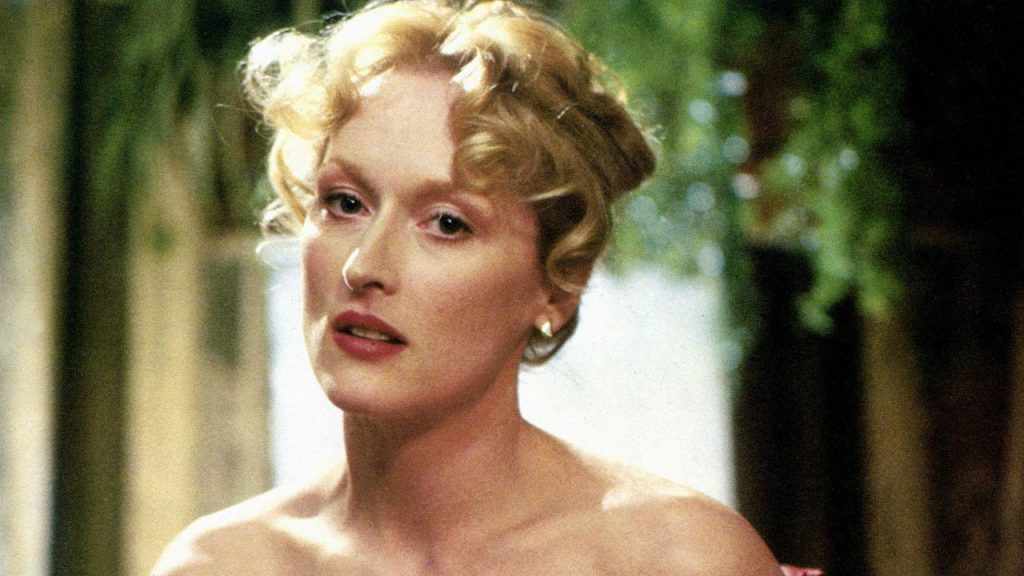
Meryl Streep delivers a performance “of such measured intensity” that encapsulates the “tragic, voluptuous” heroine of William Styron’s novel “Sophie’s Choice”, that “the results are by turns exhilarating and heartbreaking”, said Janet Maslin in The New York Times when the film first came out.
Sophie, a Polish immigrant, is forced to make an unconscionable decision which will have life-changing and haunting consequences. It’s not a flawless film, but it is a “unified and deeply affecting one” that “casts a powerful, uninterrupted spell”, thanks largely to Streep’s “bravura performance”.
Dancer in the Dark (2000)
A “dreadfully sad musical”, said Vogue, “Dancer in the Dark” is “painfully bleak, but very beautiful”. Björk stars as Selma, an immigrant mother losing her vision while trying to provide for her son.
Director Lars von Trier “pushes the limits of modern film-making”, said the BBC, combining the “extreme styles” of “hand-held documentary melodrama” and an “all-singing, all-dancing Hollywood musical shot in vibrant Technicolor-style”. There are “many moving and heartfelt scenes, if you can cope with the burst of a song or two”.
The Notebook (2004)
A romance that “transcends obstacles, space, and time”, said Marie Claire, “The Notebook” follows the romance between Allie (Rachel McAdams) and Noah (Ryan Gosling) from “youthful intoxication to old age”, said Vogue.
Switching from scenes showcasing the “urgency of young romance” to the tragedy of an older Allie “disappearing into the shadows of Alzheimer’s”, it’s a “sentimental fantasy”, said Roger Ebert.
The story builds a relationship that will make you “root for the pair to beat the odds against them”, said Stephen Holden in The New York Times.
From love on a sinking ship in Titanic to the unbreakable human spirit in The Pursuit of Happyness, these movies are guaranteed to make you shed a tear or two