What happened
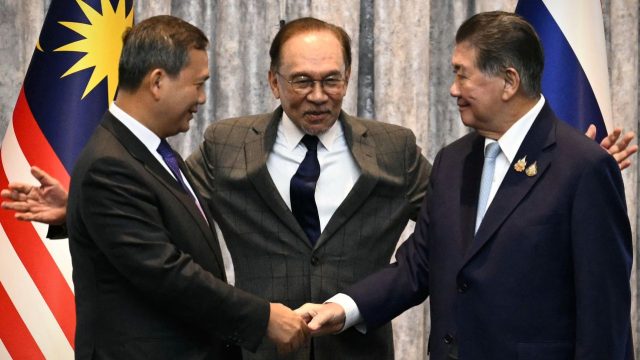
Cambodia and Thailand agreed to an “immediate and unconditional” ceasefire Monday after five days of intense fighting along their shared border. The ceasefire, negotiated in Malaysia with involvement from the U.S. and China, took effect at midnight.
At least 38 people, most of them civilians, were killed and more than 300,000 displaced in the recent violence, the worst between the two Southeast Asian nations in more than a decade.
Who said what
“This is a vital first step towards a de-escalation and a restoration of peace and security,” Malaysian Prime Minister Anwar Ibrahim said at a news conference in Putrajaya, flanked by Cambodian Prime Minister Hun Manet and acting Thai Prime Minister Phumtham Wechayachai.
Cambodia and Thailand, “which both amassed troops in their border regions, blamed each other for instigating the violence and said they acted in self-defense,” The Washington Post said. The two countries have “wrangled for decades over border territory,” Reuters said, and this skirmish, which began with an exchange of fire that killed a Cambodian soldier in May, led to a “full-blown diplomatic crisis that brought Thailand’s fragile coalition government to the brink of collapse.”
What next?
It was “unclear” if yesterday’s agreement “would lead to a genuine truce,” The New York Times said. The ceasefire announcement included no details on how it would be enforced or “who would verify if it was being upheld,” and “nationalist feelings are still running high on both sides.”
At least 38 people were killed and more than 300,000 displaced in the recent violence