There is something quietly radical happening in South Africa’s listening habits. The borders between genres that once felt rigid — jazz for the discerning, Afro-fusion for the initiated, pop for the masses — are dissolving.
Younger listeners are reaching back, curating sonic diets that include the textured, the patient, the musically dense. At the same time, older audiences are loosening their grip on what they once defined as “their” sound, welcoming reinterpretations, collaborations and new voices. It is, in many ways, a moment of convergence. A crossroads.
Into this moment arrives Take Me Home, Freshlyground’s first body of work in seven years, a project that feels less like a comeback and more like a recalibration. Not just of sound but of identity.
When I speak to Simon Attwell, the band’s manager and co-founder, there is a noticeable ease in how he situates the new chapter. He is not trying to convince anyone of its importance. Instead, he traces its evolution with the kind of clarity that comes from hindsight.
“Freshlyground looks different now,” he tells me. “Over the years the band has gone through some changes from when we first got together in 2002. We’ve had members leave and join over those years, right until Zolani went solo in 2019 and we took a break. But there was always a consistency, the core of the band was there.”
That consistency, however, is not what defines Take Me Home. If anything, the album is shaped by interruption — by the pause, the uncertainty and the unexpected arrival of a new voice.

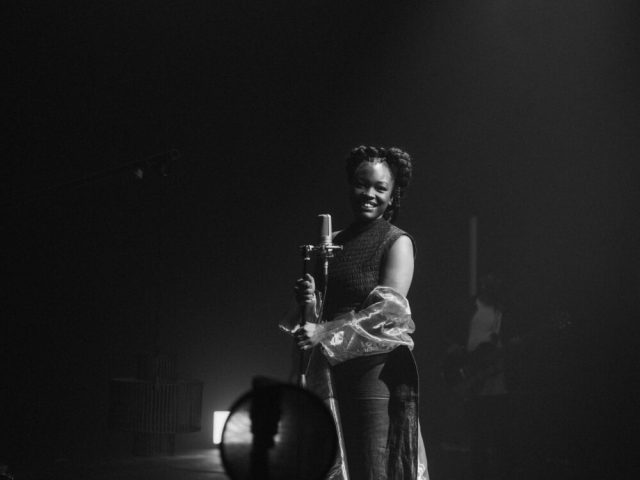
Mbali Makhoba, the band’s 20-year-old lead vocalist, was never meant to usher in a new era. At least, not initially.
“When we started performing again, the idea was just to find someone who could sing our catalogue and maybe get a few gigs here and there,” Attwell explains. “There was never an intention to write new material, to form a new entity. That wasn’t even in our consciousness.”
But something shifted, quickly and irreversibly.
“Very quickly when she joined, it became clear that she was much more interested in writing new material and finding her voice than trying to pretend she’s a replacement. And that was very cool because she not only wrote very quickly but she wrote really beautiful stuff. And in performing the old repertoire, she made it her own.”
There is a generosity in that observation, an understanding that continuity does not have to mean replication. That audiences, when invited into something honest, will meet it where it is.
The title track, Take Me Home, becomes the emotional centre of the album, not as a literal return but as a metaphorical one.“It’s about finding a safe space,” he explains. “Finding a place where one can feel at peace.”
There is something profoundly resonant about that idea in the current South African context, the notion of home not as a fixed location but as something we are constantly negotiating, building and sometimes longing for.
Other tracks move between themes of connection and disconnection, love and its absence, seriousness and play. Walk On By lingers in the space of the awareness of potential connection that never quite materialises. Songs like Rocks My Bones lean into release, into joy, into the simple act of letting go. “It’s about having fun,” Attwell says, almost laughing. “Just letting go.”
That range from the deeply personal to the delightfully unburdened is what gives the album its texture. It refuses to be singular. It understands that life rarely is.
Sonically, Take Me Home traverses a similarly expansive terrain. There are traces of pop rock, unmistakable African rhythms, moments of acoustic softness, bluesy undertones. It is, as Attwell puts it, “a nice range of styles, something for everybody”.
But perhaps what is most compelling is not just what the album sounds like but how it came to be.
Though much of the writing happened in Cape Town, the recording process took the band into Zimbabwe, a return of sorts for Attwell, who grew up there.
“We wanted a place where we could escape from the day-to-day,” he explains. “A lot of the guys have kids, families, just getting everyone together in the same place at the same time is always a mission.”
What they found was a studio that functioned almost like a retreat, self-contained, immersive and designed for focus.
“It’s like a compound but in a positive way. Everything’s on site. You sleep there, they cook for you. It’s a really hard place not to feel comfortable and focus on your music.”
In that space, the album took shape with remarkable speed. “We did a track a day with the band,” Attwell recalls. “Then spent some time on vocals and overdubbing, brought it back and mixed it down here.”
There is something almost old-fashioned about that process. Musicians in a room, creating in real time, resisting the fragmentation that often defines contemporary production. It speaks to the band’s enduring commitment to collaboration, even as its composition evolves.
“It’s always been a collaborative process,” Attwell says. “It’s not always easy, there are a lot of opinions. But we generally have good communication in the room.”
That collaboration, however, requires structure and sometimes, intervention.
“That’s why you bring in a producer,” he adds. “Because you can lose perspective. You play things over and over and you don’t know if you’re making the right decisions.”
The result is a carefully curated selection of eight tracks, even though the band wrote far more. A reminder that what is left out is often as important as what remains.
If there was any uncertainty about how audiences would receive the new iteration of Freshlyground, it was not without reason. Zolani Mahola’s voice is, for many, synonymous with the band’s identity, her departure marking the end of an era.
“We were very nervous,” Attwell admits. “I think Zolani holds such an important place in people’s minds, it’s hard for people when you say: ‘We’re going to release new music with a new singer.’”
Yet, the response has been unexpectedly generous.
“It was incredible to see how open and embracing South Africans have been,” he says.
“Within the first 24 hours, there were over 300 comments and 90% of them were positive. People were just open.”
That openness speaks to something larger, a willingness to allow artists to evolve, to let music exist beyond nostalgia. It also signals the emergence of a new audience.
“What’s really amazing is that there’s a new generation responding to us,” Attwell notes. “A much younger crowd identifying with Mbali which I’m not sure we would have been able to speak to before.”
This is where Take Me Home finds its place within the broader musical moment, not just as a return but as an entry point. A bridge between generations, between sounds, between ways of listening.
Makhoba herself seems acutely aware of this responsibility. “She kept saying she wants to make music that is timeless,” Attwell shares.
“Music with integrity. She has an old ear, she references stuff from the ’80s and ’90s, South African music and says: ‘This is what people want to connect with.’”
It is a striking observation that in a time often defined by speed and disposability, there is a hunger for depth, for continuity, for sound that feels rooted.
Perhaps that is what Freshlyground has always offered, even if we did not always name it as such. A sense of home, not fixed but evolving. Maybe that is what Take Me Home ultimately becomes: not a destination but an invitation. To listen differently. To remember. To feel.
Seven years on, Freshlyground return not to reclaim their past, but to reshape it, finding new voice, new audience and a softer more expansive sense of home