The Euros might feel a little quieter after Sweden was knocked out at the quarter-final stage by England’s Lionesses last night.
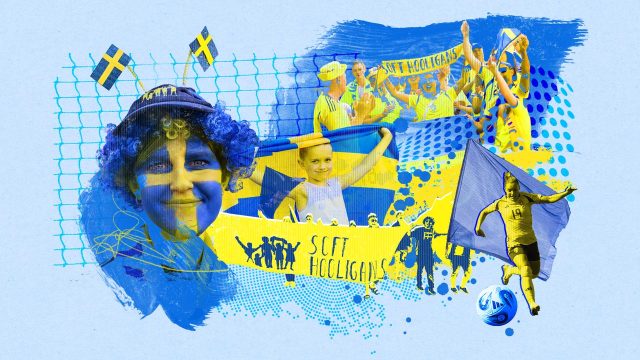
A group of Swedish football fans have been bringing colour, noise and a party atmosphere to the Uefa Women’s European Championship in Switzerland.
The “Soft Hooligans” were formed after the 2017 women’s Euros. We wanted to do something to “create a loud and inclusive culture around women’s football”, the group’s founder, Estrid Kjellman, told London’s The Standard. And, despite the use of “hooligans” in their name, the group is all about “good vibes and good vibes only”.
‘Like we were completely crazy’
Soft Hooligans have been “creating an atmosphere that’s worlds away from past women’s Euros”, using “marching, drumming, and cheering, with boisterous show tunes” to support their team, said Jezebel.
Kjellman and her family were shocked at how “incredibly dead” the stands were at Euro 2017. When we cheered on the Swedish team, people “looked at us as if we were completely crazy”, she told France24. “We joked that we were hooligans. And then we were like, ‘But we’re not like other hooligans, we’re soft hooligans.'” And so the group was born, with a Facebook post soon recruiting others.
The group now has more than 5,000 members and, although it is not formally organised, the members come together under the same goal of loud and colourful support of the national team. You can spot them by their “drums, megaphones, banners and flags”, including huge tifo displays featuring portraits of Swedish players, said The Guardian. The group’s “core values”, said France24, are that “everyone should feel welcome”.
‘A long way to go’
Soft Hooligans has not been without its detractors, facing “mockery online over its name” as well as being “ridiculed for not following the so-called norms of supporter culture”, said The Guardian. But the group’s swelling ranks mirror the rising interest in women’s football, with a “record-breaking number of applications for tickets from Swedish fans for the Euros”, up 70% from the last tournament in 2022.
There is still some way to go before interest in women’s football reaches parity with men’s football, though. Only between 11% and 20% of people surveyed across a selection of six European countries said they were interested in women’s football, according to a recent YouGov poll, compared with between 32% and 40% who said they had an interest in football in general.
Kjellman agrees that women’s football is “still very marginalised” but she remains “optimistic about younger generations”, said France 24. “Women’s football is much more accepted today,” she said, and the “culture in the stands is also a big part of making it more and more interesting to go to women’s football matches”.
Formed to create a fun fan atmosphere, the Swedish football supporter group has been bringing the party to the championship