
What happened
The Supreme Court last week struck down President Trump’s attempt to radically curtail birthright citizenship, a policy pursued by Trump for more than a decade, but greenlit other major elements of his hard-line immigration agenda. In a 6-3 vote, the court ruled against an executive order signed by Trump on the first day of his second term, which declared that future children born in the U.S. to undocumented migrants and most visa holders would not be considered citizens. Conservative justices John Roberts and Amy Coney Barrett joined the court’s three liberals in declaring that the order violates the 14th Amendment, ratified in 1868, which grants citizenship to nearly all children born on U.S. soil. Justice Brett Kavanaugh said the order was constitutional but violated federal law. In a 91-page dissent, Justice Clarence Thomas said the 14th Amendment was intended only to grant equal rights to freed slaves; Justice Samuel Alito called the ruling a “mistake that will seriously affect the country’s future.”
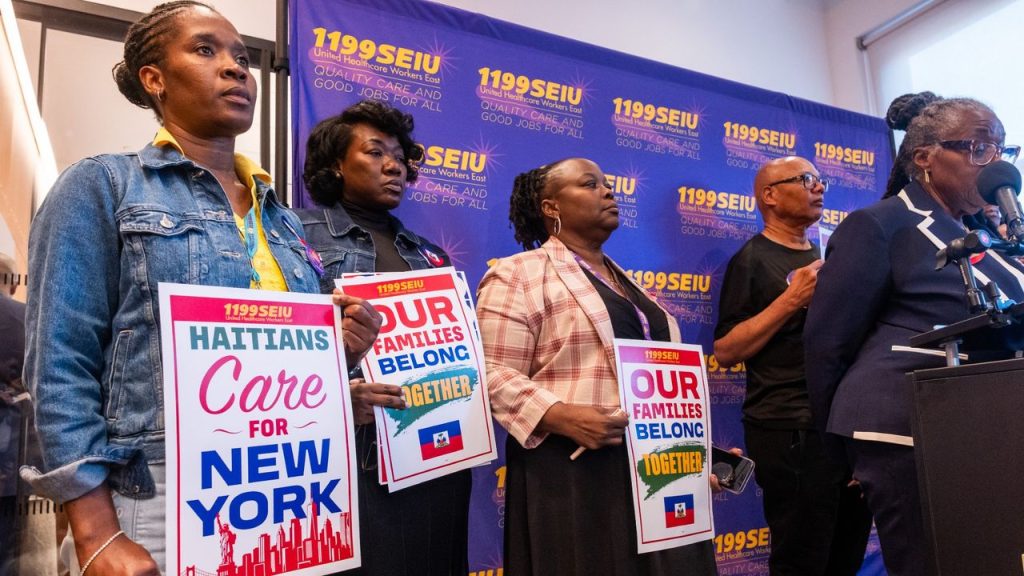
Days earlier, the court ruled the administration could strip Temporary Protected Status from more than 350,000 Haitians and 6,100 Syrians, setting the stage for mass deportations. That status lets migrants live and work in the U.S. if their home countries are deemed unsafe due to war or natural disasters. The administration tried to end TPS for both groups last year, drawing lawsuits that argued it had not followed proper procedures and was motivated by racial animus. In a 6-3 vote, the conservative majority said the TPS statute bars courts from reviewing the administration’s actions; on the discrimination issue, Alito wrote there was “insufficient” reason to believe Trump—who has said Haitian migrants are “poisoning the blood” of the U.S.—was driven by racism.
The ruling sowed panic among Haitians and Syrians in the U.S. Many people deported to gang-violence-wracked Haiti “are going to needlessly die,” said Geoff Pipoly, an attorney for the Haitian plaintiffs. Republican Ohio Gov. Mike DeWine urged the Trump administration to reconsider, saying his state would lose valuable workers in manufacturing and especially health care. White House aide Stephen Miller, the architect of Trump’s immigration crackdown, dismissed such concerns, saying if he had “a loved one in the hospital” he’d want “a licensed American nurse, not the illegal alien from Haiti.”
What the editorials said
The birthright decision was “a welcome, necessary defeat” for Trump, said the South Florida Sun-Sentinel. But the court “could have reached no other logical result.” The 14th Amendment is crystal clear: “All persons born or naturalized in the United States, and subject to the jurisdiction thereof,” are U.S. citizens. But that win “doesn’t ease the human tragedy” of the TPS decision, which will allow a president driven by “seething racial bigotry” to uproot people who’ve worked and raised families here—forcing them back to places the State Department deems unsafe.
We oppose ejecting immigrants “who have put down roots and contribute to the country,” said The Wall Street Journal. But this was “an open and shut case.” The TPS law Congress passed in 1990 says there will be “no judicial review” of the administration’s determination of whether a country’s citizens qualify for the program, even if there are “procedural errors.” Justices’ job is “to interpret the law as written, not to impose their policy preferences.”
What the columnists said
Haitian communities “from Florida to Ohio” are bracing for what comes next, said Maria Sacchetti and Lauren Kaori Gurley in The Washington Post. Distraught immigrants “began making plans to sell or rent their homes, secure bank accounts, and figure out thorny issues like child-custody arrangements.” Factory and nursing-home owners steeled for the loss of key workers, and longtime residents reeled at the thought of being forced back to “conflict-ridden homelands they barely know.” It’s “the sickest and most evil thing somebody could do,” said Harlaine, a 38-year-old Florida nurse who left Haiti at age 7.
It’s also rank racism, said Adam Serwer in The Atlantic, and it’s astounding Alito would claim otherwise. Administration officials “have made no secret of their desire to purge the United States of nonwhite immigrants.” In her forceful dissent, Justice Elena Kagan cited Trump’s own words: that immigrants have “bad genes,” that Haitians “all have AIDS” and eat household pets, that America doesn’t take in enough “people from Norway and Sweden.” All this damning evidence was presented to the court, “yet the right-wing majority shrugged it off.”
While he’s faced the occasional setback, Trump is “winning the immigration wars,” said Adrian Carrasquillo in The Bulwark. In a second ruling last week, the court ruled that the administration can block asylum applications from outside the U.S., further limiting the ways people fleeing violence and repression can enter the country. And now it has “license to take away in an instant” the legal status of 1.3 million people living under TPS, all of whom “followed the rules to get here.”
The birthright decision was “a relief,” said Mark Joseph Stern in Slate. But the fact that the ruling was 5-4 and not 9-0 is “nothing short of stunning.” To judge Trump’s order unconstitutional “is the only remotely plausible reading of the 14th Amendment and its historical record.” Yet four justices ruled otherwise. That “shocking development” should “upend all expectations that this court can be trusted” to protect “the most basic constitutional guarantees.” If Trump came within a single vote of rolling back a constitutional amendment, then “everything is on the table.”
Ruling opens the door for mass deportations