What happened
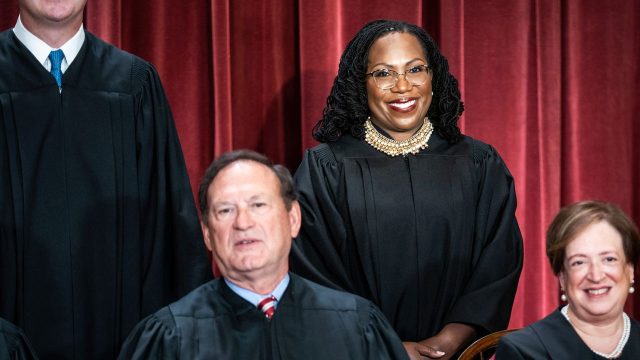
The Supreme Court on Monday agreed to put last week’s ruling overturning Louisiana’s congressional map into immediate effect, waiving its customary 32-day waiting period. The unsigned order removed a legal obstacle to Louisiana Republicans redrawing districts for the 2026 midterms to eliminate one or both of the state’s majority Black districts. Liberal Justice Ketanji Brown Jackson issued a pointed dissent, prompting pushback from conservative Justice Samuel Alito and exposing “tension” that was “more notable” than the “technical decision itself,” CNN said.
Who said what
Gov. Jeff Landry (R) moved to pause Louisiana’s May 16 U.S. House primaries right after the court’s Louisiana v. Callais ruling at the end of April, but early voting began May 2 and thousands of voters have already cast ballots. Under the Supreme Court’s “Purcell principle,” federal courts aren’t supposed to interfere with voting rules too close to an election. But this court has shown an “inconsistency” in applying that rule that “has the remarkably coincidental effect of benefitting Republicans,” Georgetown Law Professor Steve Vladeck said on his Substack page One First.
By helping Louisiana “rush to pause the ongoing election” to pass a new map, the court’s conservative wing discarded “principles” for “power,” Jackson wrote. “Not content to have decided the law, it now takes steps to influence its implementation.” Jackson’s quibbles are “trivial at best,” Alito said in a concurrence joined by Justices Clarence Thomas and Neil Gorsuch, and her charge of “an unprincipled use of power” is “groundless and utterly irresponsible.”
What next?
Florida Gov. Ron DeSantis (R) on Monday signed a GOP-boosting gerrymander and Alabama’s GOP legislature began a special session to redraw its 2026 maps; Tennessee is following suit.
The decision came amid apparent in-fighting between the justices