
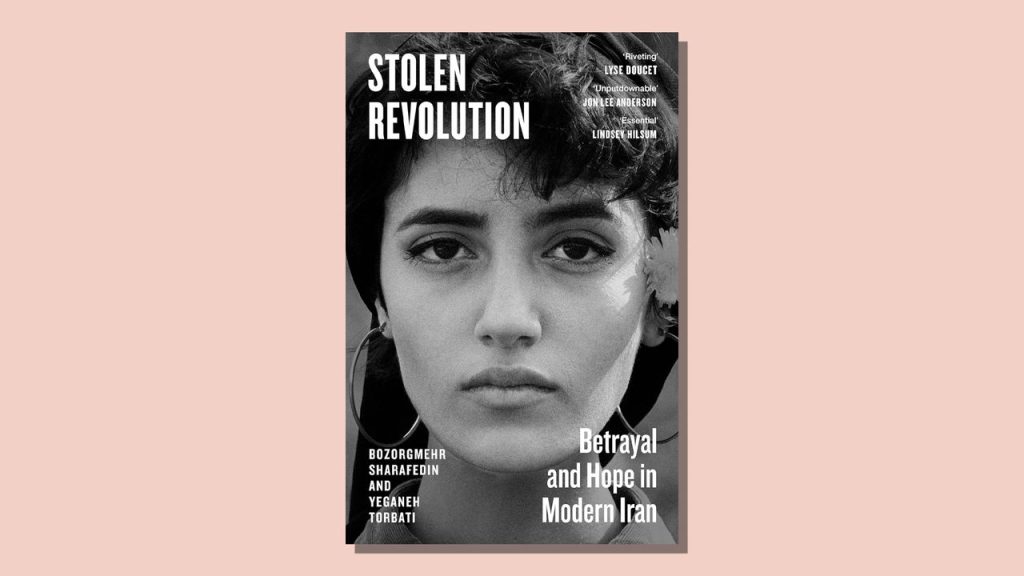
When a coalition of “clerics, leftists, students, nationalists and secular intellectuals” launched the Iranian Revolution in 1979, they were united less by a shared vision than “a shared rejection” of the Shah’s rule, said Reza Aslan in The New York Times. And as Bozorgmehr Sharafedin and Yeganeh Torbati observe in “Stolen Revolution”, “egalitarian ideals and immense hopes” were snuffed out as “the religious regime hunted, expelled and jailed its former allies”.
That is the story of this “quietly devastating” book, which charts Iran’s transformation over the past half century into a “mafia state”. The authors tell it through the lives of six Iranians, including a revolutionary ideologue, a tech entrepreneur, and two women at the forefront of the 2022 Woman, Life, Freedom protests.
“The result is one of the most perceptive books on modern Iran in years, capturing not only the machinery of repression, but the fragile forms of hope that survive beneath it.”
Once in power, Iran’s first supreme leader, Ruhollah Khomeini, swiftly “abandoned his revolutionary promises”, said Dina Nayeri in The Guardian. All talk of prosperity ended (our saints “gave up their lives for Islam, not for economics”, he intoned). Conservative dress codes were enforced, and a new military police force – the Islamic Revolutionary Guard Corps – was entrusted with preserving the revolution.
While the presidency of Mohammad Khatami (1997-2005) marked a more liberal, “reformist era”, the hardliners regained control when he left office and have ruled the country ever since.
“Stolen Revolution” is both an “unwavering account of the regime’s absurdities” and a “meticulously researched primer on modern Iran”.
Parts of it will “move some readers to tears”, said Justin Marozzi in The Times. The authors describe the fates of Kosar Eftekhari and Rozhin Yousefzadeh, who joined the “protests that erupted after the death in custody of Mahsa Amini”, a young woman arrested for not wearing her hijab properly. “Eftekhari had her right eye shot out by a smirking plain-clothes officer”; Yousefzadeh was thrown into the “filthy and dangerous Qarchak women’s prison”.
It was ostensibly in the hope of ending such tyranny that the US and Israel launched their war against the regime. This “blistering” book suggests that, on the contrary, the conflict will only entrench its most hardline elements further – and that it will prove to be “yet another US blunder in the Middle East, [and] one that will cost Iranians, and the rest of us, dearly”.
Bozorgmehr Sharafedin and Yeganeh Torbati’s ‘meticulously researched’ book is ‘quietly devastating’