
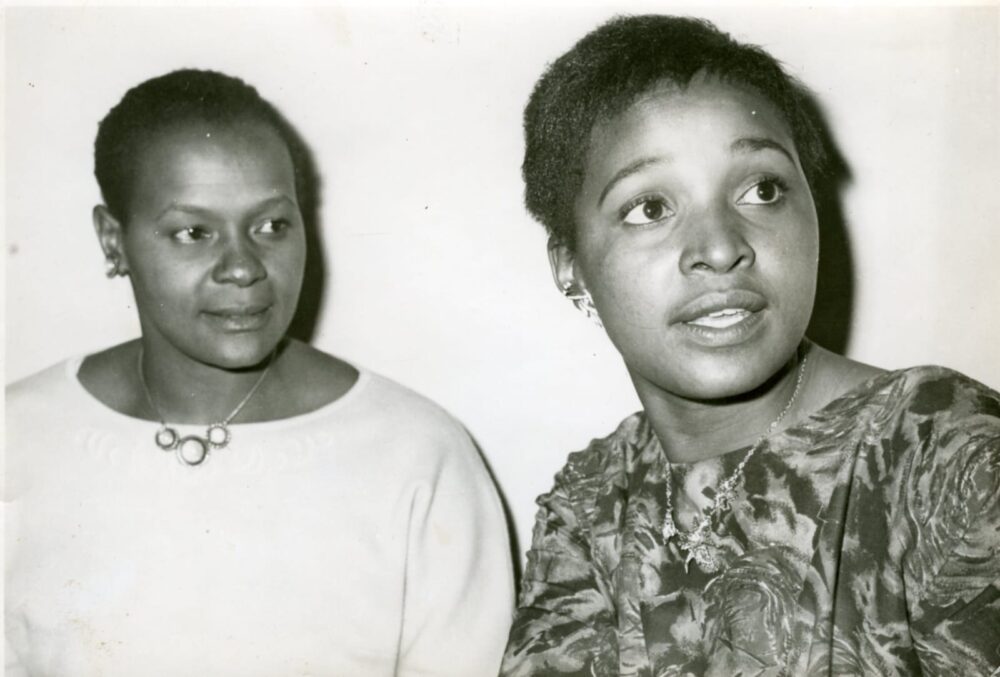
One of the sure-fire ways to attract the ire of feminists is to refer to them as the wives of their spouses.
They will insist on their own identity. Always. They were individuals — with rights and privileges — before they were wedded.
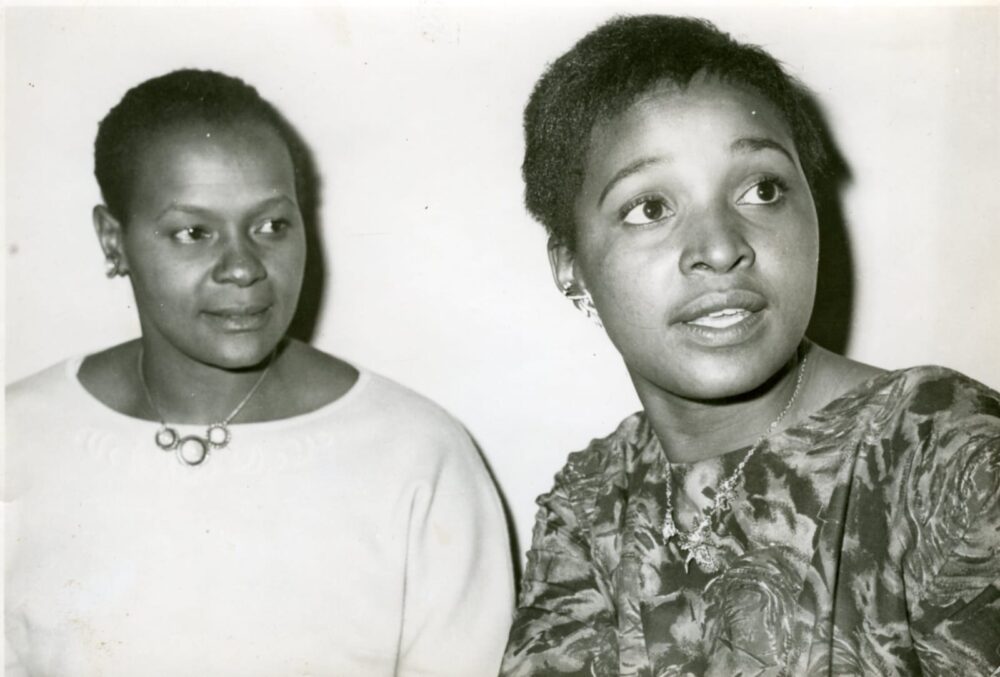
My posthumous apologies go out to the late Sally Motlana who, apart from her sterling role as head of the Black Housewives League and Number Two at the South African Council of Churches, I’ve always known as the wife of Dr Nthato Motlana.
Growing up in the 1980s, one was aware of the civic role of the Committee of Ten led by Nthato. When the jackboot of apartheid cruelly morphed into mowing down black schoolchildren, apart from Abu Baker Asvat, for whom Albertina Sisulu worked as a nurse, the other physician who treated police victims without cost was Nthato.
Perhaps Nthato’s stay in the civic and political limelight was as a result of the adage that behind every successful man stands a resolute woman.
Mrs Motlana was the proverbial woman in the saying.
After Nelson Mandela was arrested in Howick, KwaZulu-Natal, he was swiftly moved to jail in Pretoria. Thus captured, he did not ask to see Winnie, his wife. Instead, the Black Pimpernel asked for Nthato’s wife.
On her way from Johannesburg to the capital, Nthato’s wife was stopped by security police. When they asked who she was, she responded: “I am Sally Motlana.”
After reading Mukoni Ratshitanga’s book, I now know that Sally was a political powerhouse in her own right, bringing impeccable struggle credentials.
Before Mandela went on the lam, which culminated in the arrest at what has now become known as the Nelson Mandela Capture Site in Howick, KwaZulu-Natal, he checked in at a house in Dube, Soweto — the Motlana household, dressed in rags. The woman of the house thought the man at the door was of the riffraff bent.
It was only when he opened his mouth to speak that the penny dropped: it was Mandela. “Sally, vula maan! (Sally, just open!)”
Looking at the anecdotes in the book, it is difficult to imagine how Sally Maunye’s boyfriend couldn’t have married her.
Among the guests and friends at their wedding was one Oliver Tambo.
Like many of her generation, she trekked to Johannesburg with her mother to join their father and husband. Just in time too because they were to be estranged.
Their destination, Sophiatown, would open her eyes to the brutality and vulgarity of apartheid.
This was the Kofifi of the likes of scribes Bloke Modisane and Can Temba, hoodlums like George Kort-Boy Mpalweni; politicians like Robert Resha; beauty queens like Dolly Rathebe; Don Mattera, who switched from the blade to the pen; and the pious colossus called Father Trevor Huddleston.
It was the self-same Huddleston who’d take the young Sally under his wing and urge her to enrol for a teacher’s diploma. He did not stop there; he pressured her to study further, for a university degree. She nearly went to study in England but the boyfriend proposed and she stayed put.
At the Grace Dieu College where she arrived as a 17 year old, “very tiny” in her words, she followed in the footsteps of elite alumni-like painter Gerard Sekoto, who made his name in France when this reviewer came to know of him; poet Peter Abrahams, who never intended to work as a teacher and was aggrieved by the fact that he took the place of another student who’d have gladly become a teacher; and Leabua Jonathan, who became the strongman of Lesotho, as prime minister of the Mountain Kingdom.



Grace Dieu was also the alma mater of Lucas Manyane Mangope, the Bantustan leader who warned his people against ANC politicians returning from exile to lord over them in the new South Africa.
Sally returned to teach in Kofifi but was quickly spirited away, at Huddleston’s behest, to Fort Hare.
In her childhood, she’d seen her father return home after being beaten to a pulp. His crime? Crossing the robot before a group of white people could.
She arrived in Alice with a fierce antagonism towards apartheid. Fort Hare was where her politics gained traction. During her time studying for a BA, which she did not complete but planned to finish at Unisa, Fort Hare was a melting pot of young political exuberance where she rubbed shoulders with the likes of Mangosuthu Buthelezi.
In the book, the author quotes the late IFP leader saying this about his campus mate: “She was very blunt and very passionate — absolutely very blunt. She didn’t hesitate to speak truth to power. She really stood out.”
The woman I nearly mistook as merely the wife of her husband “stood out”!
Fort Hare was a gallery of stars, a galaxy. The teaching staff included the highly decorated Professor ZK Matthews, Dr Naledi Pandor’s grandfather. DDT Jabavu was also on the staff, as was Godfrey Pitje who left to make a name for himself as a lawman.
In her days on campus, the branch chairperson of their ANC Youth League was one Frank Mdlalose, who’d etch his name in politics as IFP chairperson in later life.
A Kofifi mol, she dismissed fellow student (Dr) Ben Ngubane as a moegoe.
She is storied. She was among the first group of teachers who resigned in protest when Bantu Education was promulgated into law in 1953.
When the 1976 coterie, among them the Principal of Morris Isaacson, Lekgau Mathabathe, resigned, they were following the example of the 1950s pathfinders
like Sally.
The story of how a young Winnie Mandela did not break when her husband was taken away from her is framed as an illustrative narrative of a strong woman.
But if we’d bother to look at the pillars in the background Winnie leaned on, Sally’s name would leap to the fore.
It was Mandela himself who implored Sally to “please look after Zani (Madiba’s term of endearment for his wife)”.
Lilian Ngoyi sold blouses. One day she came to collect due monies from Sally and found her in the company of Winnie. Ngoyi, a bully who was always ready to beat up white women, was not aware the two women knew each other.
It was at the insistence of Sally – a devout Christian taught at missionary schools — that Mandela’s young children were baptised.
Her general dealer store in Mofolo, Soweto, which later included a butchery, wasn’t just a place of trade. It hosted clandestine meetings of the then-banned ANC.
Her palatial Dube home was open to the children in the neighbourhood, Tokyo Sexwale being among them.
Yours truly is not aware whether what ails him is a medical condition but I often think I could have had a better life had it been in the 1950s. I am a great fan of the era.
Maybe, just maybe, I could have made friends with Nthato and Sally, a couple Mandela counted among his true friends.
Like Mangosuthu Buthelezi, I could perhaps have trod campus grounds in Alice and made friends with her. Maybe I could thus have learnt not to think of her as Dr Nthato Motlana’s wife.
Read this book and discover for yourself why I’m gaga over the 1950s and its people, politics and passion.
Kudos, Mukoni Ratshitanga.
You’ve done black history a good turn.
Faith & Defiance: The Life of Sally Motlana is published by Seriti Sa Sechaba Publishers
This reflective review revisits the political courage and quiet influence that made Sally Motlana indispensable to the liberation struggle