There is growing pressure on the government to formally name an MI5 spy who operated at the heart of the IRA for decades.
Freddie Scappaticci, known by his codename “Stakeknife”, was outed in an investigation into the actions of Britain’s security services during the Troubles.
Scappaticci was recruited by the British Army in the 1970s, working until the 1990s as a mole within the IRA’s internal security unit tasked with identifying and killing informers. The West Belfast man, long suspected of being a British agent, was unmasked by the media in 2003, although he denied the allegations and went into hiding. He died in 2023.
Why is this coming out now?
Scappaticci’s “alleged” activities and the efforts of MI5 to protect his identity have been set out in the damning 160-page Kenova Final Report. It details the findings of a nine-year, £47.5 million investigation into Stakeknife’s alleged crimes.
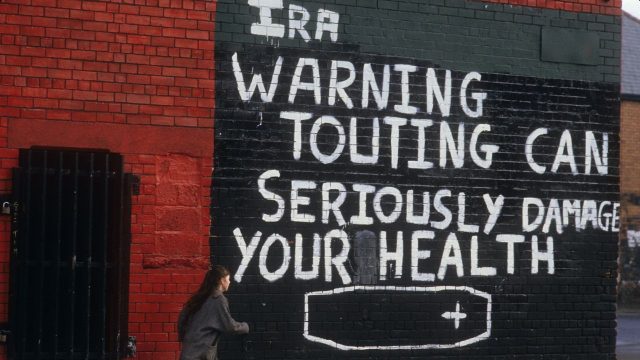
The investigation revealed evidence of Stakeknife’s involvement in “serious and unjustifiable criminality, including kidnap, interrogation and murder”, said Kenova. He has been implicated in 14 murders and 15 abductions, while working in a notorious IRA unit known as the “nutting squad”, whose aim, ironically, was to flush out spies within its ranks.
An interim report last year found that Stakeknife’s actions probably “resulted in more lives being lost than saved”. Now the full report says he was “improperly protected by the British security services because they believed him to be a more valuable asset than he was”, said Max Jeffery in The Spectator.
It is “one of the Troubles’ most macabre twists that Scappaticci was secretly working for British security services and that his handlers allowed him to act as executioner to preserve his cover”, said The Guardian.
What did MI5 know?
In the past, MI5 has said its involvement with him was “peripheral” but the report clearly states the security services were “closely involved in his handling”.
“Everything done in respect of Stakeknife was done with MI5’s knowledge and consent; and MI5 had an influential role”, a member of the Army’s agent-handling unit told investigators. They concluded that “MI5 had automatic sight of all Stakeknife intelligence and therefore was aware of his involvement in serious criminality”.
Stakeknife submitted 3,517 intelligence reports during his time under cover. He was paid hundreds of thousands of pounds for his services and even had a dedicated phone line he could call at any time to contact his handlers. Senior Army figures treated him as the “crown jewel” of British intelligence, and he had a reputation as “the goose that laid the golden eggs”.
Yet the report says protecting his identity became “more important than protecting those who could and should have been saved”.
What have MI5 and the government said?
Despite Scappaticci being outed by the press in 2003 and even telling his family his true identity, the government has “stuck to its routine practice not to identify agents, a principle known as NCND, an acronym for Neither Confirm Nor Deny”, said the BBC.
Iain Livingstone, head of Operation Kenova, has said that Stakeknife should now be named. Northern Ireland Secretary Hilary Benn told the Commons that he would respond to Livingstone’s call at the conclusion of an ongoing case in the Supreme Court, which, Benn said, had implications for NCND. “The government’s first duty is, of course, to protect national security and identifying agents risks jeopardising this.”
This stance was backed by Benn’s Tory counterpart Alex Burghart, who said guarantees would be needed that the naming of Stakeknife would not impact on current security operations.
While Burghart admitted “people within” MI5 and the Army had “absolutely crossed the line in a way that wasn’t acceptable”, ultimately, the murders carried out by Stakeknife would have been signed off by the IRA Army Council. “If one is going to start pointing fingers, the first finger should be pointed in that direction.”
Freddie Scappaticci, implicated in 14 murders and 15 abductions during the Troubles, ‘probably cost more lives than he saved’, investigation claims