
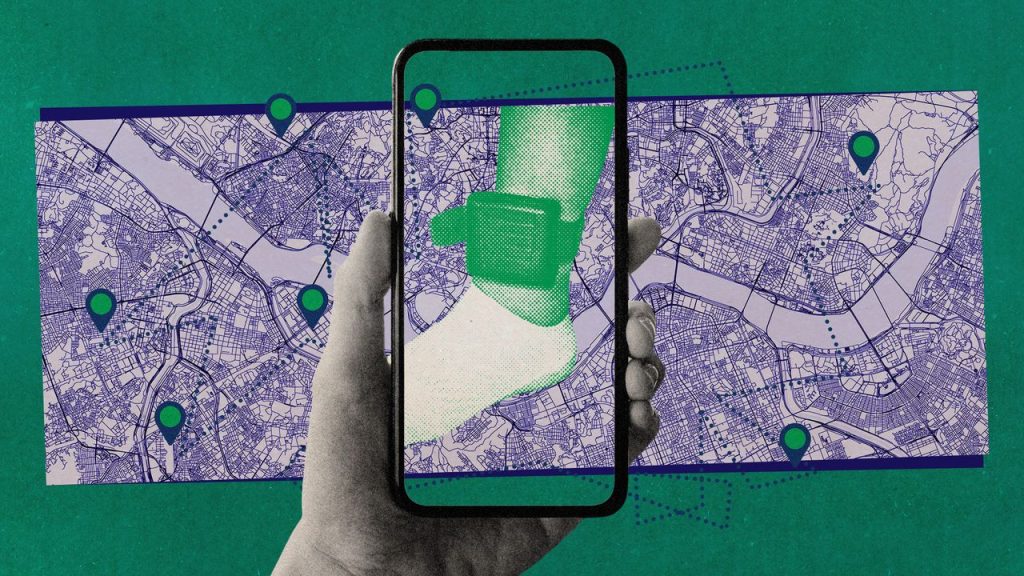
The South Korean government has launched an app which allows victims of stalking offences to be notified if their stalker comes within range. More than 400 people are enrolled in the scheme, which has been operating since June.
Control centres in Seoul and Daejeon cover more than 5,000 people under electronic monitoring, and handle 19,000 alerts a day, said The Guardian. “Most are filtered out by staff at the centres but about 300 a day are serious enough to send out a probation officer.”
Stalking cases are “on the rise” in South Korea. In the four years since a dedicated stalking law was introduced in 2021, reports have tripled, reaching 44,687 in 2025. Many South Koreans believe the government needs to do more to address the root causes behind the epidemic.
Greater visibility
Previously, survivors received a text message warning if their stalker was nearby and giving an estimated distance, said The Guardian. The new app notifies the victim if their stalker is within a 2km radius, flagging their precise location on a real-time map.
If the offender comes closer than a kilometre, the app notifies police; probation authorities will then call the victim to establish their safety and can dispatch officers to the area.
One case in particular fast-tracked the development of the app, said The Korea Times. In March, a woman in her 20s was allegedly murdered by her ex-partner, who was the subject of multiple restraining orders and was wearing an ankle monitor to track his location. The victim had been wearing a smartwatch issued to her by police for her protection. According to lawmaker Lee Gwang-hee, a member of the ruling Democratic Party of Korea, between 2021 and August 2025, 23 murders or attempted murders involved victims who had been issued emergency alert devices, said The Korea Herald.
Tracking remains contentious. Under current laws, police must apply through the legal system to force a suspected stalker to wear an ankle tracker. In 2024 and 2025, 29,404 people were arrested in stalking cases, of which only 1,187 had court applications brought against them. Only 427 of those were granted.
‘Mixed’ reactions
Though the app is “in its early days” and on a “limited scale”, it has drawn “mixed” reactions, said The Guardian. One stalking victim who spent “two weeks moving between state-run shelters for survivors of domestic violence before being given a panic-button” told the newspaper that she would have “welcomed” the detailed real-time information provided by the app.
“Knowing a perpetrator’s whereabouts can be more helpful than not knowing,” Sujeong Kim of Korea Women’s Hotline told the paper. But victims may end up “checking wherever they go” to see whether the perpetrator has entered the radius, “adding to the psychological burden of living with the threat”. Too much information on the stalker’s location “risks shifting responsibility for their safety” onto the victim.
Non-technological measures are also planned to increase victim safety. In April 2027, the government is changing the legal process to allow stalking victims to “directly petition courts for restraining orders”, instead of relying on law enforcement agencies to file requests on their behalf, said The Straits Times. In July, a new taskforce was launched to focus on “addressing gaps in laws, systems and on-the-ground responses” around stalking offences, said Korea JoongAng Daily. The country’s justice ministry has also developed a “specialised psychological treatment programme to identify risk factors for recidivism” in stalkers.
Government technology allows victims to know their stalkers’ locations in real time if they come within 2km