
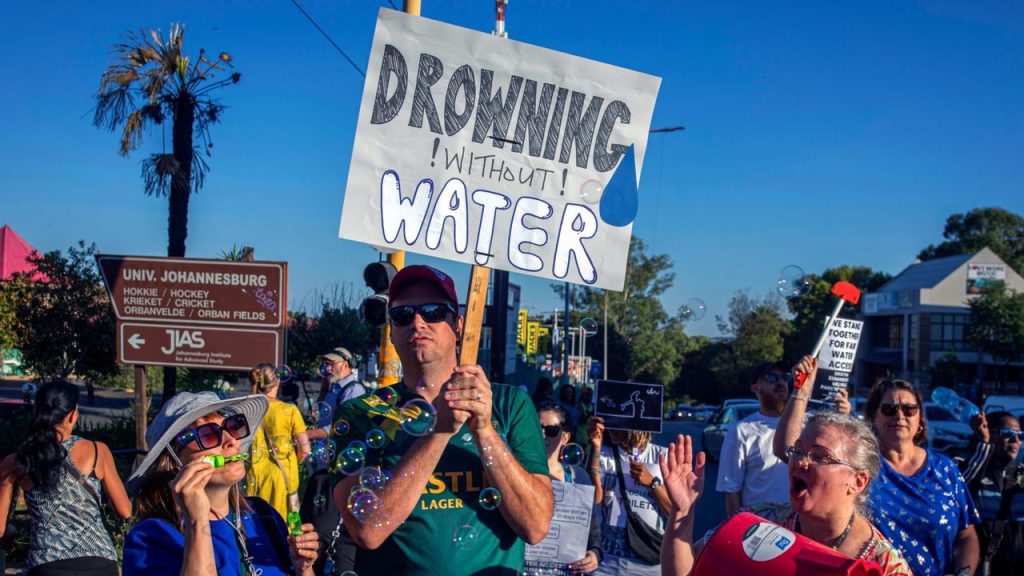
Though Johannesburg is often called the City of Gold, the residents of South Africa’s largest city aren’t feeling very fortunate amid a significant water shortage. The dearth has left many residents without water for several weeks, and some throughout the city have begun to speak out against Johannesburg’s infrastructure.
Why is there a water shortage in Johannesburg?
It is due to factors that have plagued South Africa, and specifically Johannesburg, for years. This includes “municipal neglect, corruption and well-documented mismanagement,” said NPR. The confluence has led to hardships in getting clean water to the 6.6 million people in the Johannesburg metropolitan area.
While Johannesburg has long had trouble maintaining its water system, the last couple of years have seen a “tremendous infrastructure collapse” that has “shifted from a maintenance backlog to full-scale system failure,” said South African business website BusinessTech. The issue has become so pervasive that it “might eventually be cheaper and easier to start from scratch, building another city, than to rescue the current one,” William Gumede, a public policy professor at Johannesburg’s Wits University, told BusinessTech.
Some Johannesburg residents “haven’t had a drop of water for more than three weeks straight: forced to travel to get water from municipal tankers and washing with buckets,” said NPR. Many have taken to the streets in protest.
As the crisis continues, Premier Panyaza Lesufi of the city’s Gauteng province took a different tack to reckon with the slow drip. “In some instances, I had to go to a certain hotel so that I could bathe,” Lesufi said in a press conference, leading to angry commentators and political cartoons describing him as tone deaf. Others were “quick to compare Lesufi’s remarks to Marie Antoinette’s apocryphal ‘let them eat cake’ comments,” said NPR.
What can be done about this?
The South African government is taking steps to abate the crisis. Officials recently gave Africa’s largest bulk water supplier, Rand Water, an “urgent license to take more water from a key river system that feeds its richest province,” said Bloomberg, with the intention of sending this extra water to Johannesburg. The goal is to help “rebuild reservoir levels.”
Rand Water will be allowed to extract an additional 7 billion cubic feet of water from the river for the next four months, South Africa Water and Sanitation Minister Pemmy Majodina said in a statement. But this is “not a long-term solution to the water supply challenges being experienced,” Majodina said. Officials have pushed for more systemic fixes, including the “removal of illegal connections by the municipalities” and “improved communication between the municipalities and the public.”
Meanwhile, water taps “remain dry across large parts of Johannesburg,” said local newspaper the Daily Maverick. Local leaders have pressed for additional changes, but there has been a “long history of commitments without delivery, and a proliferation of task teams has not inspired confidence,” said a spokesperson for South Africa’s People’s Water Forum. There must be “concrete action that reaches every community, especially the most marginalized.”
“Hundreds of thousands of people” on the city’s margins live in “informal settlements” despite Johannesburg’s wealth, said NPR. While the city is scrambling to get water to people who previously had it, there are others who “have never had running water at all.”
This comes despite Johannesburg being Africa’s wealthiest city by GDP