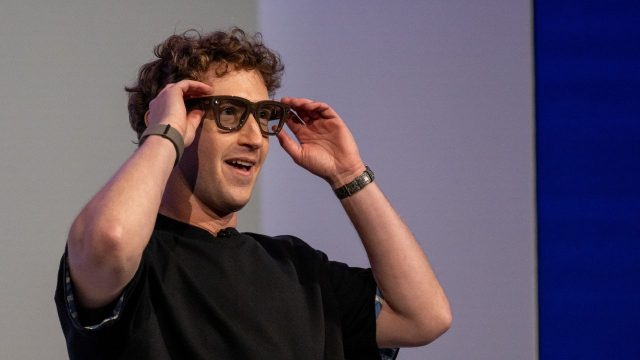
“Did Meta just accidentally prove that smart glasses are a liability?” asked James Pero in Gizmodo. CEO Mark Zuckerberg recently drew a stern rebuke from the judge in a landmark trial about social media harms for strolling into court “rocking Meta’s smart glasses.” Ever the salesman, his cute “little stunt” was not an ignorant mistake. His team is “fully aware of the Ray-Ban Meta AI glasses’ capabilities,” which include a built-in camera that can record anything the wearer is viewing. Smart glasses are getting increasingly popular, but their rise “comes with some important questions” for society. They “make it easier to record people without their knowledge,” even if Meta’s offering features a tiny LED indicator on the front that lights up when recording. Zuckerberg’s attempted courtroom ambush didn’t make it past a judge, but for the rest of us “it comes off as one giant red flag.”These days, “to be in public is to risk being filmed,” said Luke Fortney in The New York Times. Meta sold more than 7 million pairs of smart glasses in 2025, which is paltry compared with the 240 million iPhones sold last year that also have filming capabilities. But the sleek newer versions of the glasses are harder to spot, turning bystanders into “captive participants.” Servers and bartenders say they have increasingly noticed food influencers “filming in restaurants, cafés, and bars, capturing warped, eye-level video of drive-through pranks” and sit-down meals without notification, then posting the recordings on social media. Men have taken to “filming themselves trying to pick up women,” said Sophie Tanno and Ivana Scatola in CNN.com. Unbeknownst to the women—the LED light is often blocked with tape—they are being recorded, and the videos are then posted on platforms like TikTok and X, where they “attract misogynistic comments.” Filming in public spaces is protected by the First Amendment, but cases involving smart glasses haven’t been tested yet.Now Meta wants to take the privacy intrusion a step further, said Dave Lee in Bloomberg, by introducing facial recognition to its smart glasses. The company claims this is a feature that people want, especially those with visual impairments. “Get real.” Meta has “never built tech for the niche case.” And if there’s anything the immigration protesters in Minnesota proved, it is “the realization for everyday Americans that the ‘I have nothing to hide’ school of thought on privacy has expired.” Meta’s already “wretched privacy reputation” means this current smart glasses “renaissance is fragile,” said Victoria Song in The Verge. “Smart glasses aren’t inherently evil.” But “glassholes haven’t gone anywhere,” and we can’t expect Meta to suddenly become “proactive in protecting consumer privacy.” It won’t take much for these devices to destroy public trust and “once again return to the realm of science fiction.”
Meta sold 7 million glasses last year