When you make a purchase using links on our site, The Week may earn a commission. All reviews are written independently by our editorial team.
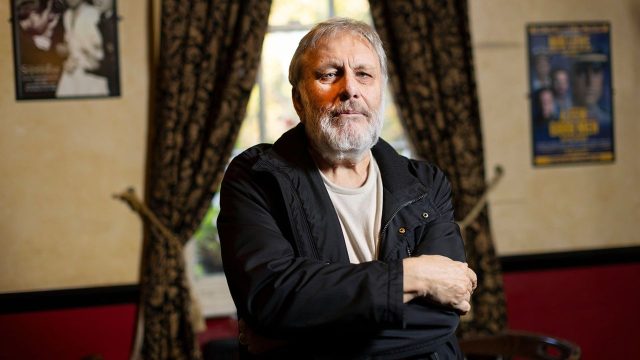
Philosopher Slavoj Zizek is the author of more than 50 books, including Liberal Fascisms, a new essay collection that explores authoritarianism packaged as freemarket capitalism. He credits the novels below with presenting catastrophe in ways that changed his thinking.
‘The Drowned World’ by J.G. Ballard (1962)
Ballard depicts a postapocalyptic future in which global warming has rendered much of the planet uninhabitable. In a flooded London, several characters take advantage of societal collapse to fulfill unconscious urges. The idea that a mega catastrophe could create an opportunity to experience jouissance—surrender to bliss—profoundly influenced me. Buy it here.
‘The Three-Body Problem’ by Liu Cixin (2008)
In Liu’s masterpiece, Earth is confronted with a planet whose unpredictable suns cause severe temperature shifts. I see it as Earth in the near future: Are we facing something for which the only appropriate term is “the end of nature”? Buy it here.
‘Never Let Me Go’ by Kazuo Ishiguro (2005)
This is arguably the most depressing novel I’ve ever read, presenting a society in which human clones are created solely to produce a supply of healthy organs, a practice that requires a major shift in public morals. Is this not our situation today? We cope with new threats by reshaping our ethical principles. Buy it here.
‘I Who Have Never Known Men’ by Jacqueline Harpman (1995)
Perhaps even darker is this novel about a girl and 39 women held prisoner in a bunker. When the male guards flee, the captives emerge into a barren plain, and the girl, the last to survive, writes about her life. Existentially, I feel like the girl: Even in a crowd, I am totally alone. My words will probably never reach their addressee, someone who will read them properly. Buy it here.
‘The Ministry for the Future’ by Kim Stanley Robinson (2020)
Socialist realism at its most noble and convincing. In the near future, a global heat wave that begins in India kills millions and spreads around the world. But humans decide on cooperation and gradually cope with the threat. Buy it here.
‘Station Eleven’ by Emily St. John Mandel (2014)
An apocalyptic novel with a sort of happy ending. After an epidemic devastates humanity, one group, the Traveling Symphony, connects disparate survivors by performing Shakespeare. I accept that in our catastrophic predicament we need more than art to survive. Buy it here.
The philosopher recommends apocalyptic works by J.G. Ballard, Kim Stanley Robinson, and Emily St. John Mandel