
Sky’s £1.6 billion acquisition of ITV is yet another sign of the “seismic consolidation” taking place between media companies trying to compete with the major streaming platforms, said Deadline.
“This is a defining moment for British media,” Sky CEO Dana Strong said on Sky News. We are combining “two of the UK’s most loved and trusted brands” and committing to “remain a public service broadcaster at the heart of British life”.
But with its public service broadcast contract set to expire in 2034, and no guarantee this will continue, ITV’s deal could change the complexion of British commercial broadcasting.
‘Territory of hypotheticals’
Sky, and its US owners Comcast, will now have access to the 21 million households reached by ITV, as well as a greater share of advertising spend at a time when broadcasters are “facing an uncertain future”, said the Financial Times. Of the £1.6 billion acquisition, around £1.2 billion will be paid up front in cash, and Sky will pay an additional £200 million subject to advertising targets being hit in 2027.
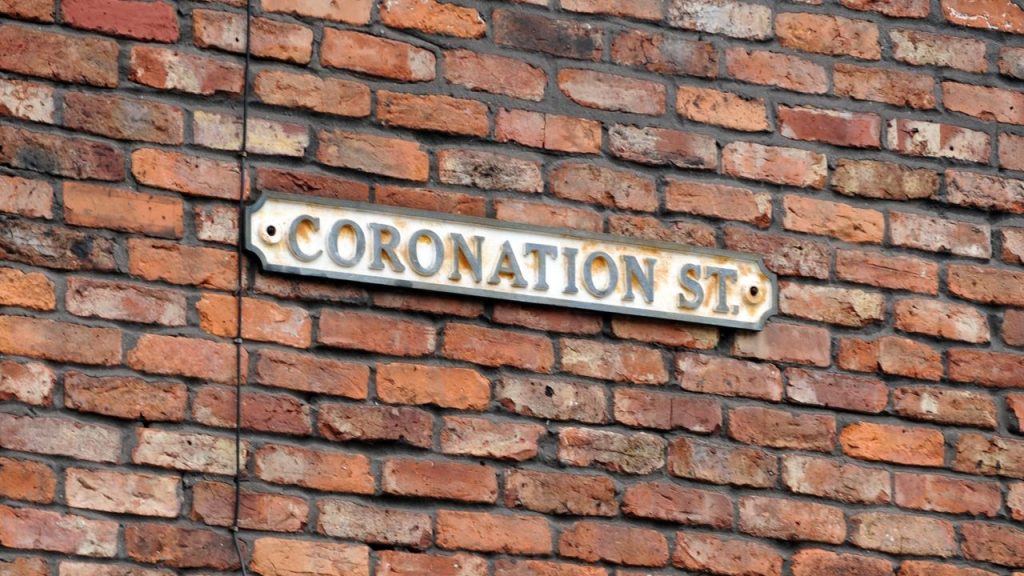
ITV’s “thriving production arm”, ITV Studios, will not be part of the Sky deal, said Deadline. It will become its own publicly listed company and “benefit from the transaction” by acquiring Sky’s Love Productions, the studio that produces “The Great British Bake Off”, in a £200 million side-deal. ITV Studios will also receive £2.1 billion in additional funding from Sky, meaning there will be “certainty” that “hit series” such as “Love Island” and “Coronation Street” won’t move behind a paywall.
However, there are concerns whether ITV Studios will win as much business from ITV. It has “consistently landed a significant number of total commissions” in recent years, “much to the chagrin of independent players”. But in the hands of Sky and its “swashbuckling growth” mindset, deconsolidation may have made the landscape a “more level playing field” for rival studios.
Sky and ITV are required by law to continue free-to-air service until at least 2034. Sky will also have to commission a proportion of programmes made outside London, and honour the contract for ITN’s news bulletins for ITV until 2031.
This status does bring some benefits. As a public service broadcaster, Sky could also bid for “‘listed’ crown jewel tournaments” – shown on free-to-air channels – such as the Olympics and the Grand National, said Katie Razzall on the BBC. Sky is also guaranteed a “prominent position” on TV home screens, and in an “ever more competitive world, prominence matters”. But in eight years’ time, the “media landscape may look very different”.
‘Last stand’ against streamers
This long-rumoured deal unites the UK’s two largest commercial broadcasters in an attempt to “bulk up” against the streaming giants, said the FT. The British media industry has experienced a “period of radical change” in the last 20 years, and companies such as YouTube and Netflix pose an “existential threat”.
The agreement also “raises politically sensitive questions” about the American ownership of a major British broadcaster, said The Hollywood Reporter. ITV is a “key part of the country’s cultural landscape”, with obligations to provide national and regional content for the UK.
The deal, which is not likely to be completed until next year, will “inevitably face close scrutiny” from industry regulators, said Forbes. Given its scale, questions around “competition, advertising concentration and media plurality are entirely appropriate”.
But whatever the outcome of the final approvals, the “direction of travel” for the media space is becoming “increasingly clear”. No longer will there be a binary “broadcast versus streaming” battle, but a series of “connected ecosystems that combine premium content, intelligent data and measurable commercial outcomes”. In future, successful media organisations will not just have the largest audiences, but build mutually beneficial, “strategic alliances and partnerships”.
But this deal looks “less like a monopoly and more like a last stand”, said The Drum. For years, the British media market maintained a “stable” competition between its three biggest players: BBC, ITV and Channel 4. But with the arrival of “better-capitalised” generalist streamers like Netflix, YouTube and Disney+, not only was the structure disrupted between the old broadcasters, suddenly “they weren’t even one of the three” leaders. This deal represents a “belated acknowledgement” that there should have been “shared strategy, shared technology platforms” and “shared deal-making many years ago”.
The £1.6bn acquisition of ITV’s broadcast arm reflects growing fear of streamers who are dominating the media landscape