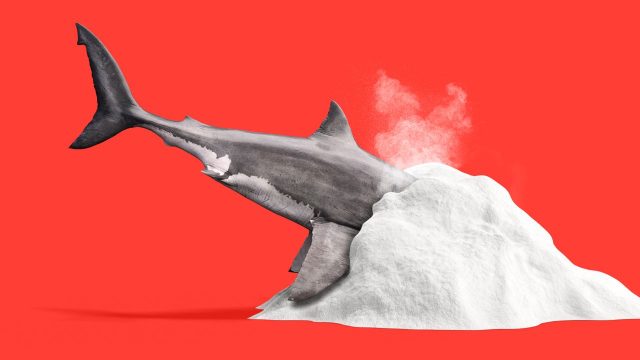
Rather than blood in the water, sharks are finding drugs in the water. The aquatic predators have tested positive for both legal and illegal drugs in parts of the Bahamas. These substances have the potential to cause behavioral changes in the sharks and indicate that humans have a stronger hand in ecosystem changes than expected, even in isolated places.
Drugged and dangerous
Scientists found cocaine, caffeine and painkillers in sharks around Eleuthera Island in the Bahamas, according to a study published in the journal Environmental Pollution. The blood of 85 sharks in the region was tested for several drugs. Twenty-eight of those sharks from “three species had caffeine, anti-inflammatory painkillers or other drugs in their blood,” and some even tested positive for multiple, said Science News. “Caffeine was the most common, followed by acetaminophen and diclofenac,” the active ingredients in Tylenol and Voltaren, respectively.
This is not the first time cocaine has been found in sharks. A study from 2024 found the drug in Brazilian sharpnose sharks in waters near Rio de Janeiro. But this is the “first report of caffeine and acetaminophen detected in any shark species worldwide and the first report of diclofenac and cocaine in sharks from the Bahamas,” said the study. “We are talking about a very remote island,” said Natascha Wosnick, the 2024 lead study author and a biologist at the Federal University of Paraná, to Science News.
While the Brazil study found sharks’ exposure to cocaine, the scientists only “tested the liver and muscle tissue of sharks,” said Smithsonian Magazine. In the 2026 study, the researchers tested blood, which “reflects more recent exposure to drugs.” The sharks were captured in popular areas for diving and cruising. The exposure is “mostly because people are going there, peeing in the water and dumping their sewage,” said Wosnick.
Fins of the future
While cocaine sharks are concerning, the “widespread presence of caffeine and pharmaceuticals in the blood of many analyzed sharks is equally alarming,” said Wosnick to CBS News. “These are legal substances, routinely consumed and often overlooked, yet their environmental footprint is clearly detectable.”
The Bahamas sharks’ blood also had “changes in some biological markers, which can point to how tissues are functioning,” said Smithsonian Magazine. These markers “might be leading to higher stress and higher energy use as the aquatic predators’ bodies work to detoxify their systems,” said Science Alert.
The study findings are a “reminder that coastal infrastructure, tourism and marine food webs are tightly connected,” said Tracy Fanara, an oceanographer who helped produce the documentary “Cocaine Sharks,” to Science News. Researchers are still unsure about how detrimental the blood changes could be to the sharks’ health.
“Our primary concern is not an increase in aggression toward humans but rather the potential implications for the health and stability of shark populations,” said Wosnick. “Chronic exposure to these anthropogenic compounds, many of which have no natural analogue in marine systems, may lead to negative effects that are still poorly understood.” These effects could be the subject of research in the future.
The animals can experience behavioral changes as a result