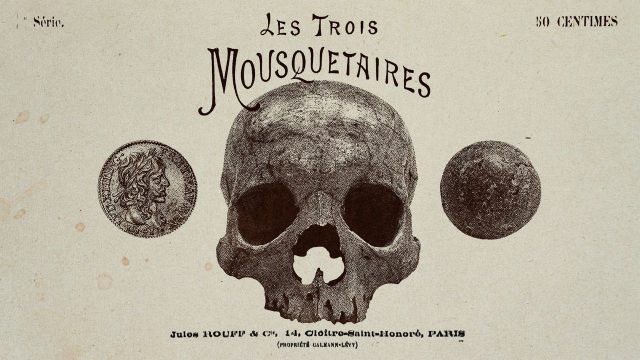
People across Europe were enraptured when the potential bones of the soldier Count d’Artagnan — the inspiration for the legendary fourth musketeer from Alexandre Dumas’ iconic 1844 novel, “The Three Musketeers” — were unearthed in the Netherlands in March. But genetic testing to prove the bones belong to d’Artagnan has run into several problems that could make getting a definitive answer difficult.
Where were these bones found?
The completed skeleton was found under the chapel floor of St. Peter and Paul’s Church in the Dutch village of Wolder. Potentially finding d’Artagnan’s remains here wasn’t exactly unexpected, as the church for “centuries was rumored to be the final resting place” of the fourth musketeer, said The New York Times.
The bones were “buried with a 17th-century coin and a musket ball,” and the discovery has drawn a “deluge of unaccustomed attention” to the village, said the Times. The count was a “close aide to France’s Sun King Louis XIV” and later “killed during the Siege of Maastricht in 1673,” said the BBC. D’Artagnan’s life and legacy were “immortalized in the adventure stories” of Dumas as a “friend of the Three Musketeers.”
Why has confirming the identity been a problem?
Since the bones were found, there has been a push to confirm their identity using DNA testing. But “genetic verification to prove whether the skeleton is that of d’Artagnan has run into bureaucratic troubles,” including a potential illegal excavation and a slew of “scientific obstacles that cast doubt on whether the bones’ identity will ever be known,” said National Geographic.
Also, the “first samples collected from the skeleton were too degraded to be used,” according to several reports, which forced scientists to use different samples, said National Geographic. And the municipality of Maastricht, where the church is located, alleges that the “initial excavations were improper,” because “under Dutch law, the church is a heritage site.” The municipality “intervened to ensure that the situation was handled in accordance with applicable archaeological standards,” said a spokesperson for the local government to National Geographic.
However, factors are working in the archaeologists’ favor. The skeleton, for example, does “match history,” said Nat Geo. D’Artagnan was killed when a “musket ball struck him in the throat,” and the grave “contained fragments of a musket ball near the skeleton’s chest,” said National Geographic.
And yet despite the history lining up, genetic testing could be difficult. D’Artagnan has living descendants, but “French nobility often had extramarital affairs,” so it’s “at least possible that they are not biologically related to the musketeer,” said the Times.
Scientists are striving for a definitive answer. At least one “sample taken from the skeleton’s jawbone is on its way to Germany for DNA sequencing,” and anthropologists will “examine the skeleton for clues about how old the person was when they died,” said Ars Technica.
Even with all the obstacles, most scientists believe there’s a “decent chance” it’s d’Artagnan buried under the church, said Ars Technica. “I have been researching d’Artagnan’s grave for 28 years,” said Wim Dijkman, an archaeologist on the excavation, to the BBC. “This could be the highlight of my career.”
But there have been issues verifying the genetic remains