‘History tells us that school vouchers segregate and alienate’
Erykah Nava at the Chicago Tribune
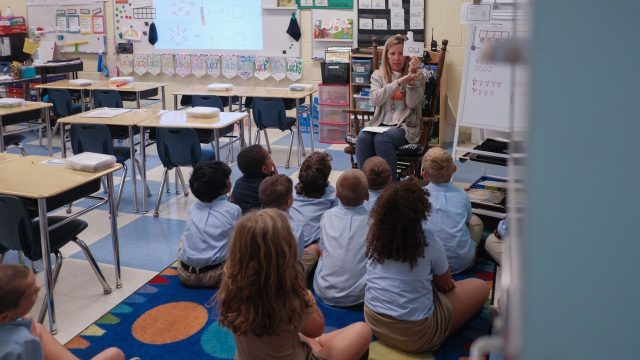
Since the “beginning of America’s education system, Black and Latino students and their families have been excluded from building a vision for their schools,” says Erykah Nava. Americans “need superintendents, school leaders and all lawmakers to unequivocally denounce school vouchers because they harm public schools by diverting critical public funds away from neighborhood public schools that Black and Latino students rely on.” If “we don’t listen to those families, history tells us that we will regret that decision.”
‘The most deadly place for women and children: a family home’
Renée Graham at The Boston Globe
There is “no more deadly place for women and children than in a family home,” says Renée Graham. When “acts of fatal domestic violence occur, especially mass shootings, law enforcement officials often call that crime ‘an isolated incident’ to reassure the public that there is no ongoing threat.” But laws are “not enough to stop this gun-fueled misogyny so long as we cling to the false belief that what angry men do to women and children is isolated.”
‘“Petro-masculinity” is destroying the planet. Can eco-masculinity help save it?’
Andrew Boyd at The Guardian
It “won’t come as news to most that, compared with women, men litter more, recycle less and leave a bigger carbon footprint,” says Andrew Boyd. What “connects the dots here is something more unhinged and tangled: a hyper-aggressive, oil-soaked version of toxic masculinity known as ‘petro-masculinity.’” This “suggests that fighting climate change is not just a technological or economic or political challenge, but also a cultural and psychic struggle against an entrenched and very gendered ‘petroculture.’”
‘What if China succeeds?’
Matthew Kroenig at Foreign Policy
China’s “success would likely result in a more dangerous, impoverished, and tyrannical world for everyone else,” says Matthew Kroenig. Chinese President Xi Jinping has “railed against U.S. alliances in Asia as relics of the Cold War that should be replaced,” which means “removing the U.S. military presence in the region, and leaving regional states, such as Australia, Japan, the Philippines and South Korea, vulnerable to Chinese military coercion.” This “likely means a major war in Asia.”
Opinion, comment and editorials of the day