
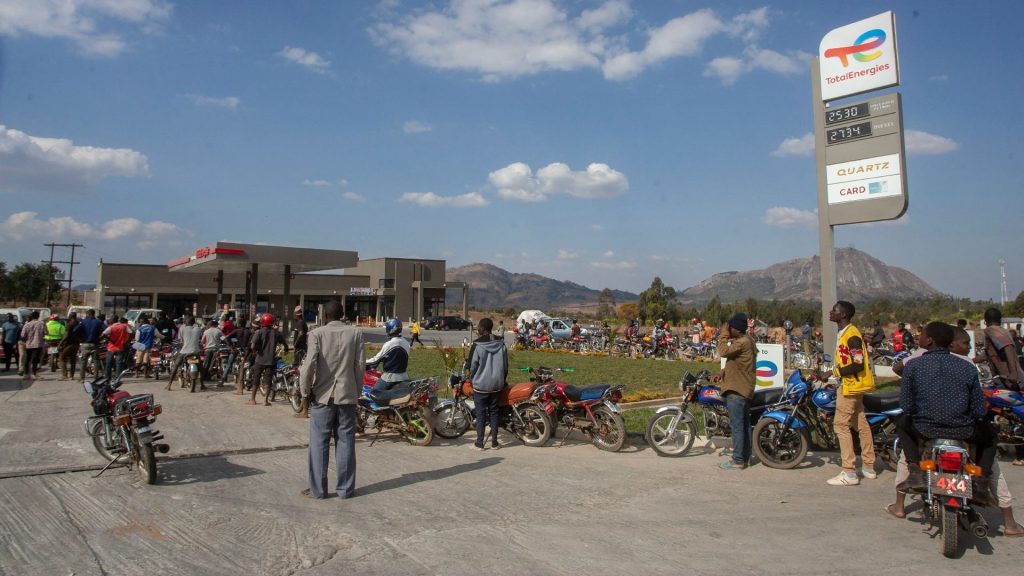
Across Malawi, filling up your petrol tank has become an endurance test. In the past four weeks, fuel shortages have become a “national emergency” across the southeast African country, said The Guardian.
Drivers wait for hours at empty forecourts for deliveries, while one has morphed into a “makeshift village” where some camp out for days. At Mount Meru petrol station in Zomba, the former capital and Malawi’s fourth largest city, drivers sleep “under the bellies of trucks” and “aggressively block any queue-jumpers” as the situation turns “patience into hostility” at the nation’s petrol pumps.
‘Terrifying’ atmosphere
Fuel shortages have been a “recurring problem” for years in Malawi and were a “major issue” in last year’s general election, said Reuters. There had been a temporary improvement but the onset of the Iran war has plunged the country back into crisis.
Despite being one of the poorest countries in the world, Malawi has one of the “highest fuel pump prices in Africa” at more than $3 (£2.25) a litre, said Semafor. The recent crisis has sparked a “nationwide crackdown” on stockpiling and “black market sellers”; petrol stations “caught hoarding” could risk losing their licence and unauthorised sellers face arrest.
The result is a “terrifying” atmosphere at petrol stations, where attendants face a “barrage of verbal abuse” and threats from “angry motorists”, said The Guardian. For those who rely on vehicles for their jobs, there is a particular “psychological toll”, while low-income commuters reliant on shared transport also face soaring fares.
Easing pressure
Malawi relies on imported fuel but supplies have been hit by a shortage of foreign currency, primarily US dollars.
The country has been “urgently” encouraged to “diversify its struggling economy”, said Deutsche Welle. Currently, Malawi depends on tobacco exports, but increasingly unpredictable harvests related to climate change and dwindling smoking rates across key European markets have significantly impacted revenue. Diversification into more reliable sectors, including tourism, has been floated as a means to bring in the hard currency needed to allow the nation more access to global markets.
The International Monetary Fund is making “considerable progress” on a support package that would help stabilise Malawi’s economy, said Semafor.
Pressure is also being applied on the government to “change its importation policies” to open the fuel market to more suppliers, said Malawi24. The Consumers Association of Malawi says that licensing more operators to import fuel and sell it “at prices that reflect the cost of securing supplies under the current market conditions” will ease pressure on supply, “even if consumers have to pay higher prices”.
The southeast African nation has been hit by a currency shortage – and the nation’s drivers are paying the price