Memory in South Africa does not move in straight lines. It circles back, settles in unexpected places and often resurfaces long after we have convinced ourselves that we have moved on.
The Trials of Winnie Mandela, a new documentary on Netflix understands this. It does not attempt to present a neat retelling of Winnie Madikizela-Mandela’s life. Instead, it opens something up — a conversation that feels at once intimate and national, tender and deeply unsettling.
It is impossible to watch it without feeling the generational tension it holds. For younger viewers, there is a sense of discovery, a reintroduction to a figure who has often been flattened into either myth or cautionary tale. For older generations, it is something else entirely. It is confrontation. It is the reopening of wounds that never fully healed, only learned how to sit quietly beneath the surface.
The seven-part documentary does not try to resolve this tension. Instead, it leans into it.
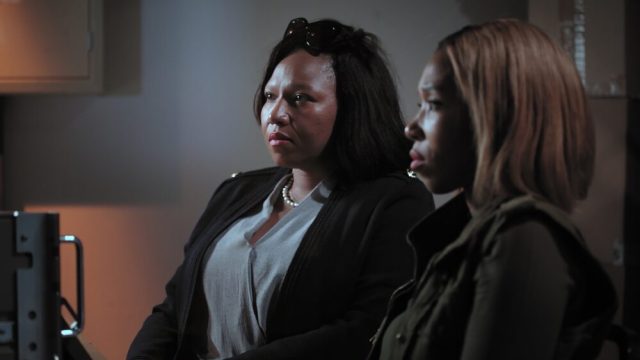
At the centre of this telling are her granddaughters, HRH Princess Swati Dlamini Mandela and HRH Princess Zaziwe Mandela-Manaway, who guide the narrative not as historians but as children trying to understand the adults who raised them.
Their voices move in and out of the story, sometimes gentle, sometimes probing, often uncertain. There is a vulnerability in the way they ask questions, not as public figures but as family members navigating the weight of inheritance. It is this framing that gives the documentary its emotional core.
Because beneath the politics, beneath the public spectacle, this is ultimately a story about a grandmother. About two young women trying to reconcile the woman they knew, the one who loved them, held them, raised them — with the woman the country debates endlessly.
And in that, it becomes deeply familiar.
Many of us grew up in homes where certain conversations were never had directly. They existed on the edges, in hushed tones, in passing comments, in the way adults fell silent when children entered the room. Truths were not offered freely; they were overheard. Gathered in fragments. Pieced together over time.
There is a particular intimacy in the way the documentary mirrors this experience. The granddaughters do not present themselves as all-knowing narrators. They are searching. They are eavesdropping in real time. They are asking questions that, in many families, take years to even form, let alone voice.
And when Winnie Madikizela-Mandela responds, she does so in a way that feels entirely consistent with the figure history has preserved — stern, unwavering and rooted in her own truth. There is no softening here, no attempt to reshape herself for comfort. Her answers are not always satisfying but they are resolute.
This refusal to bend is perhaps what has always defined her and divided opinion so sharply.
The documentary does not shy away from this division. It presents the many versions of Winnie that exist in the public imagination: the freedom fighter, the controversial figure, the mother of the nation, the woman accused of unimaginable hardness. Each perspective is allowed space but none is given full authority.
Instead, the film asks a quieter question: what does it mean to hold all these truths at once?
There is a moment or, rather, a feeling that lingers throughout, that speaks to the cost of the struggle, not in abstract terms but in deeply personal ones. The generation that fought apartheid did not emerge unscathed. They carried trauma, grief and loss in ways that often had no language at the time.
For many families, that pain did not disappear. It was passed down.
You see it in the silences. In the harshness that sometimes replaced tenderness. In the absence of emotional vocabulary. The documentary does not state this outright but it hums beneath the surface.
It is here that the figure of Winnie begins to shift.
She is no longer just a political symbol. She becomes something more recognisable, a stand-in for a generation of women who stayed behind, who held families together under impossible circumstances, who navigated violence and surveillance while raising children in a country designed to break them.

In this sense, she becomes almost archetypal.
She is the mother who did what she could with what she had. The one who was present, even when presence came at a cost. The one who was never afforded the luxury of softness.
And yet, when the men returned from exile or from prison it was often their narratives that were elevated, their heroism that was cemented. The labour of those who remained was harder to quantify, easier to overlook.
The documentary gestures toward this imbalance without needing to overstate it.
There is a quiet but persistent question running through it: what recognition is owed to those who endured the struggle differently?
At the same time, the film is careful not to romanticise. It does not ask the viewer to excuse or overlook the more troubling aspects of Winnie’s legacy. Instead, it presents them alongside everything else, refusing to separate the personal from the political.
This is where it becomes most uncomfortable and most necessary.
Because the truths it uncovers are not neat. Some of them feel dangerous, even now. There is a sense that, if handled carelessly, these revelations could reopen fractures within the country. The documentary seems aware of this, but chooses transparency over protection.
And perhaps that is its most radical act.
To suggest that healing is not found in silence but in the willingness to confront what has been buried.
Still, it never loses sight of its central relationship. For all the history it navigates, for all the complexity it holds, it returns again and again to the bond between grandmother and grandchildren.
There is love there. Undeniable, steady, uncomplicated in a way that the rest of the narrative is not.
It is this love that ultimately anchors the documentary.
Because even as the country debates who Winnie Madikizela-Mandela was, these two young women are trying to understand who she is to them. And in doing so, they offer a way of seeing that moves beyond judgment into something closer to recognition.
You begin to realise that this is how many of us come to understand our elders. Not through official histories but through conversations, through questions, through the slow and sometimes painful process of piecing together who they were before we knew them.
The documentary does not provide closure. It does not attempt to resolve the contradictions it presents. Instead, it leaves you with a sense of ongoing dialogue.
Perhaps that is the point.
That the story of Winnie Mandela, like the story of South Africa itself, is not something that can be neatly concluded. It is something that must be continually revisited, re-examined, and, most importantly, spoken about.
And in watching her granddaughters ask the questions many of us are still afraid to ask in our own families, there is a quiet invitation.
To listen more closely.
To speak more honestly.
To sit with discomfort rather than turning away from it.
Because in the end, this documentary is not just about understanding one woman.
It is about understanding the legacy of a generation and what it has left behind in all of us.
Refusing neat conclusions, The Trials of Winnie Mandela invites viewers into an uncomfortable but necessary confrontation with history, legacy, and generational trauma