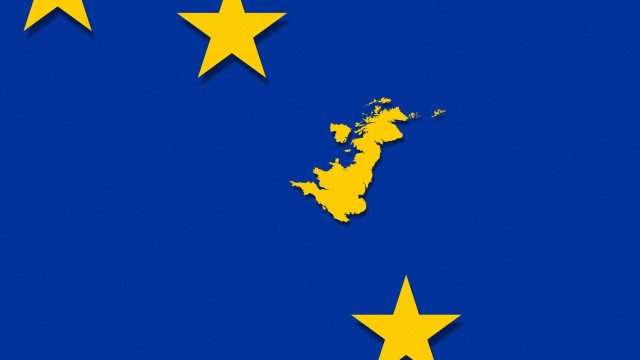
Wes Streeting has dropped the “bombshell” that he’d like Britain to “one day” rejoin the European Union, said The Times.
The former health secretary and Labour leadership hopeful has “put the Europe question firmly back on the political agenda”. However, the process of reversing Brexit and rejoining the EU would be far from straightforward.
Is it possible?
Yes. Although no country has ever left the EU and then rejoined, it is possible. If the UK decided to seek membership again, it would need to apply through the framework set out in Article 49 of the Treaty on European Union.
However, the UK would need the support of all member states to “open and conclude accession talks”, and the UK’s “historical reluctance to integrate fully with the EU” could remain a “concern to the bloc”, according to the Institute for Government.
What would the process be?
First, the UK would submit an application to the Council of the European Union. All existing EU member states would then need to agree unanimously to begin accession talks with London. At this stage, member states could decide to impose stricter eligibility criteria.
If the UK cleared that hurdle, it would enter negotiations over alignment with the EU’s legal and regulatory framework across a wide range of policy areas, including trade, fisheries, immigration and borders, environmental standards, and competition law.
Britain’s application would ultimately need unanimous approval from the Council of the EU, as well as the backing of a majority in the European Parliament. Realistically, the entire process would likely take several years at a minimum. Even relatively straightforward accessions can take close to a decade.
What would the UK have to agree to?
Although the UK previously enjoyed favourable terms within the EU, those concessions might not be available if it sought to rejoin. For example, the opt-out that kept Britain outside the Schengen border-free travel zone would probably not apply a second time.
Rejoining could also involve a commitment to adopt the euro. In addition, Britain would return without the 1984 rebate negotiated by Margaret Thatcher, which refunded roughly 66% of the UK’s net contribution to the EU budget. In 2020, the UK’s net contribution stood at £12.6 billion; any future contribution would likely be significantly higher.
Knut Abraham, a senior MP from Germany’s ruling Christian Democratic Union party, told The Times that, from a regulatory standpoint, the UK should have a relatively straightforward path back into the bloc because its laws remain largely aligned with Brussels. “I don’t foresee that many complications,” he said.
However, a senior European foreign ministry official predicted a less straightforward process: “I think we would welcome the UK with open arms – just not on their terms.”
Previous concessions and favourable terms for the UK might not be on the table again