
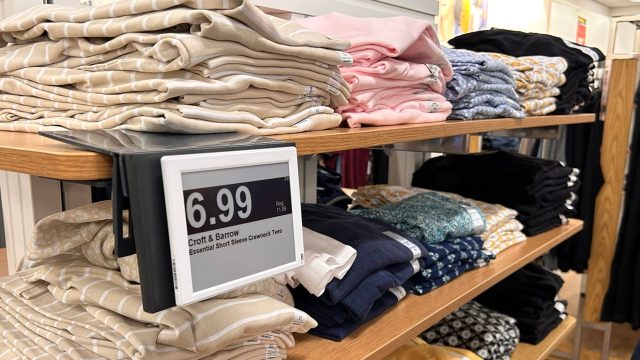
“Americans don’t trust price tags anymore,” said Kim Bhasin in The New York Times, and with good reason. Retailers are increasingly adopting new pricing tactics, including digital shelf labels that change moment by moment; surveillance pricing, “in which personal indicators and location data are used to adjust prices based on what an individual may be willing to pay”; and surge pricing, “where rates rise in response to high demand.” Last month, the Federal Trade Commission, along with 20 states, sued Dollar General, the nation’s largest dollar-store chain, for allegedly charging more at the register than what was displayed on price tags, shelves, and advertisements. The FTC has also demanded that nine other major companies (Delta, JetBlue, United, Lyft, Uber, DoorDash, Instacart, Target, and Walmart) divulge the methodology behind their use of customers’ personal data to set prices. Lawmakers in several states— including New York, Maryland, and Georgia—have also introduced legislation to ban surveillance pricing and electronic shelf labels. With inflation already sending costs up, only 32% of U.S. consumers trust retailers to offer “fair” prices on their purchases.
Regulating personalized pricing would be a “mistake,” said Mary Sullivan in The Wall Street Journal. Opponents use the sinister term “surveillance pricing” to make the practice sound “unfair or deceptive” and potentially harmful. But so far, only one study, from 2022, “has directly examined it with a pricing field experiment” rather than hypotheticals. Researchers from the University of Chicago found that, while the method did raise prices for some shoppers, 60% received “individualized offers that were lower than the previous uniform price.”
Personal pricing has also “been occurring long before AI or computers existed,” said Josh Pauzé in Reason. Think of old-fashioned bartering or haggling—what was that if not setting prices based on what a customer could pay? Algorithms simply help companies “meet customers at their willingness to pay more efficiently.” Banning data-based pricing would actually “risk banning beneficial discounts and loyalty programs” that similarly rely on data collected from consumers.
This isn’t about the price, said Ashlie D. Stevens in Salon. It’s about transparency. Customers fear that “one side can examine the other in exquisite detail, while the other can barely see the rules.” It was “nice to hear” Walmart’s CEO John Furner assuring customers that their income, shopping history, or urgency won’t determine what items cost in the chain’s stores. But the fact that a supermarket “feels obliged to assure us it won’t charge extra because we seem hurried or financially comfortable suggests how strange our expectations have become.” There’s something “reassuringly stupid” about seeing a low-tech, paper price tag beneath a box of cereal—and knowing that the shopper who comes along 10 minutes later will see the same number.
Companies are adjusting prices based on individual data, raising controversy