
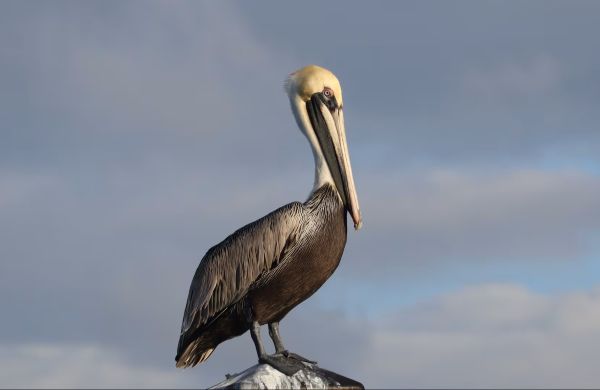

[Many thanks to Roberto Ráfols, AKA Capitán Pelícano, at Crash Boat Experiences, for bringing this item to our attention.] According to Génesis Ibarra Vázquez (El Nuevo Día) this is “the first evidence of morphometric sexual dimorphism” in the brown pelican (Pelecanus occidentalis) which is considered endangered locally. Here are excerpts from El Nuevo Día.
For the first time, research conducted in Puerto Rico allowed scientists to determine the sex of the brown pelican (Pelecanus occidentalis) without the need for invasive genetic studies, an advance that could be key in conservation efforts for this native species, considered endangered locally.
“Given their ecological role as top coastal predators and their sensitivity to environmental changes, pelicans serve as valuable indicators of ecosystem health. Establishing sex-specific biometric profiles across the entire genus Pelecanus would strengthen both ecological knowledge and practical conservation planning,” highlights the study article, led by Dr. Antonio Mignucci, director of the Caribbean Manatee Conservation Center [Centro de Conservación de Manatíes del Caribe].
This research, published on October 15 on the BioOne Digital Library platform, found that the length of the brown pelican’s beak – or culmen – can be used to distinguish between sexes, which represents “the first evidence of morphometric sexual dimorphism” – measurable differences in shape and size between males and females of the same species – in this animal, which was removed from the federal endangered species list in 2009 due to its recovery.
“The study determined the pelicans’ sex by measuring the length of their beaks,” Mignucci summarized. “In population studies, to understand how they interact and the population dynamics of a group of pelicans in a colony, a municipality, etc., it’s important to know how many males and how many females there are. This basic data, which is studied in any population, couldn’t be obtained for pelicans because it wasn’t known whether they were male or female. But now you can determine what percentage of the population you’re observing, the one being affected, is male or female,” he elaborated.
The study sample consisted of 77 brown pelicans rescued or rehabilitated from 27 municipalities between 2018 and 2025, as part of the wildlife protection efforts of the Caribbean Manatee Conservation Center. Each individual had measurements taken of different body parts, such as wing length, tarsus (the thinnest part of the legs), and beak, as well as body mass. The researchers also took blood samples to confirm the findings.
According to Mignucci, the beak length of the male brown pelicans studied was greater than 27.6 centimeters, while that of the females was less than 27.2 centimeters. [. . .]
“As part of our work with wildlife, we not only work with manatees, but also with sea turtles and seabirds, and (the brown pelican is) one of the animals we are most frequently called to help when they are injured, sick, or have a ruptured throat sac due to entanglement in fishing line or a hook. We handle these cases on behalf of the Department of Natural Resources; they are referred to us, and then we receive them here at the center. Our veterinarians examine them, evaluate them, and treat them until they are ready to return to the sea,” he explained.
While the other two characteristics evaluated—the tarsus and wings—also showed differences between males and females, Mignucci noted that these distinctions are not visible to the naked eye. [. . .]
Excerpts translated by Ivette Romero. For full article (in Spanish), see https://www.elnuevodia.com/ciencia-ambiente/flora-fauna/notas/investigadores-logran-determinar-el-sexo-del-pelicano-pardo-de-puerto-rico-a-traves-del-largo-de-su-pico/10
[Photo above from Shutterstock: The brown pelican was removed from the federal endangered species list in 2009, but remains on the local endangered species list.]
[Many thanks to Roberto Ráfols, AKA Capitán Pelícano, at Crash Boat Experiences, for bringing this item to our attention.] According to Génesis Ibarra Vázquez (El Nuevo Día) this is “the first evidence of morphometric sexual dimorphism” in the brown pelican (Pelecanus occidentalis) which is considered endangered locally. Here are excerpts from El Nuevo Día. For