
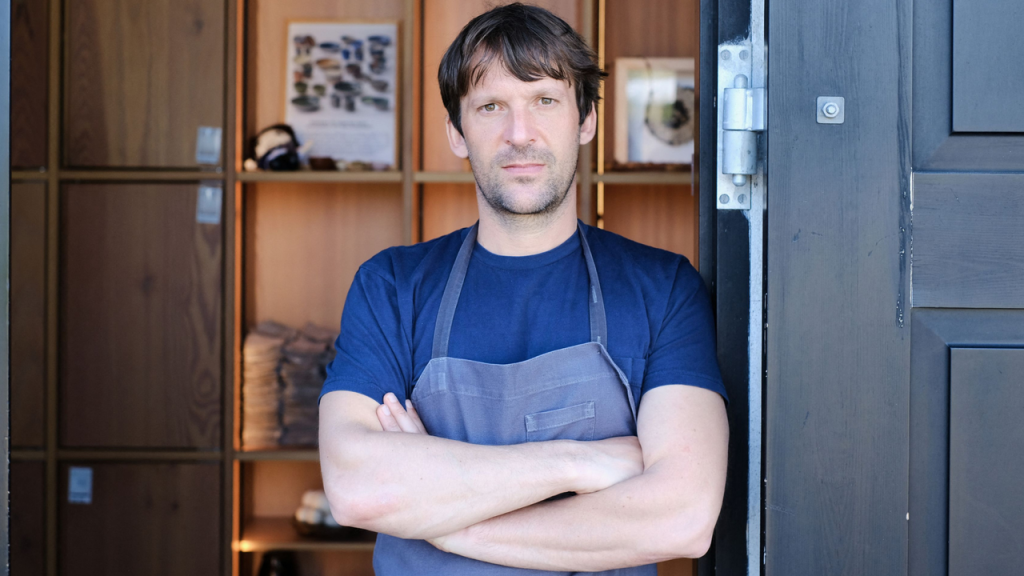
Long-standing claims of verbal and physical abuse at world-renowned Copenhagen restaurant Noma have finally “come back to haunt” its founding chef, René Redzepi, said The Times.
The “culinary god” has stepped down after shocking details of his “toxic” kitchen culture were revealed by a damning new investigation. “An apology is not enough,” Redzepi said in a statement on Instagram. “I take responsibility for my own actions.”
Empire built on ‘pain’
Redzepi has been “rewriting the rules of fine dining” since Noma opened in 2003, crafting “jewel-like plates” from sustainable and foraged local ingredients, said The New York Times. His innovative approach scooped him three Michelin stars, and Noma has topped the World’s 50 Best Restaurants list on five occasions. He became a revered figure in the culinary world: in 2013, Anthony Bourdain proclaimed he was “without a doubt, the most influential, provocative, and important chef in the world”.
In 2024, Noma transitioned from restaurant to “full-time food laboratory”, developing new dishes and running fine-dining pop-ups in different locations around the world. But an upcoming residency in Los Angeles, with a tasting menu priced at $1,500 (£1,300) a head, “sparked a public conversation” about Redzepi’s treatment of his staff, some of whom came forward to claim his “empire” was built on their “pain”.
Thirty-five former staffers, employed between 2009 and 2017, gave accounts of serious abuse, alleging that Redzepi “punched employees in the face” and “slammed them against walls”. Several claimed he would “crouch under the counters” and “jab them in the legs with his fingers or a nearby utensil, like a barbecue fork”. They also described verbal threats, including to have staff members “blacklisted” from other restaurants or to “have their families deported”. Until 2002, Noma had over 30 unpaid interns, working 16-hour days and covering their own living costs. The restaurant’s “one-woman human resources department” also “happened to be Redzepi’s mother-in-law”.
‘Signs’ were all there
This will come as no surprise to “anyone who has followed modern restaurant culture”, said former restaurateur Richard Crampton-Platt in UnHerd. I visited Noma a decade ago and found it “suffocatingly self-regarding”. It developed a reputation as an “enlightened kitchen” and the “progressive future of fine dining” but the “signs of what was really going on” were all there. Redzepi was filmed “screaming at chefs” in the 2008 documentary “Noma at Boiling Point” and, in 2015, he wrote an article in a food magazine admitting that “I have been a bully for a large part of my career”.
“The backlash was inevitable,” said US chef Andrew Gruel in the New York Post. But it’s “ironic” that a lot of the “outrage is coming from the same elite food world that helped build a culture of abuse”. For years, fine-dining kitchens have been “run like military brigades”, with long hours, unpaid or poorly paid workers and a culture of harassment. The tacit “bargain” aspiring young chefs accept is to “endure the brutality, work the hours, and maybe one day earn your place in the hierarchy”. The price of the excellence that food critics and “elite diners” demand is professional kitchens marred by exploitation, burnout and alcohol and drug abuse.
“It’s dehumanising” and it’s been going on for too long, French food journalist Nora Bouazzouni, author of “Violence in the Kitchen”, told CNN. Her work “exposing the extent of physical, emotional and psychological abuse” in professional kitchens across France “has helped spark a national reckoning” that’s “reached the ears of the country’s lawmakers”. Last year, a motion to create a commission of inquiry into violence in professional kitchens was tabled in the French National Assembly.
Undoing this entrenched “French system” that kitchens around the world have “replicated” won’t be easy. But a 2021 paper which drew on 47 interviews with elite chefs, and was published in the Journal of Management Studies, offers one “compelling, but simple solution: create more open kitchens”. A shift away from the “isolated, closed, hidden spaces” where “regular rules don’t apply” could help to establish a healthier work environment.
Before Redzepi’s resignation, tickets for Noma’s LA pop-up had sold out. This only demonstrates, said The Times, that there are “plenty who can happily separate the art from the artist” as long as “the kitchen is thoroughly soundproofed”.
Abuse allegations force Noma head chef to resign, as brutality of fine-dining kitchens exposed