
What happened
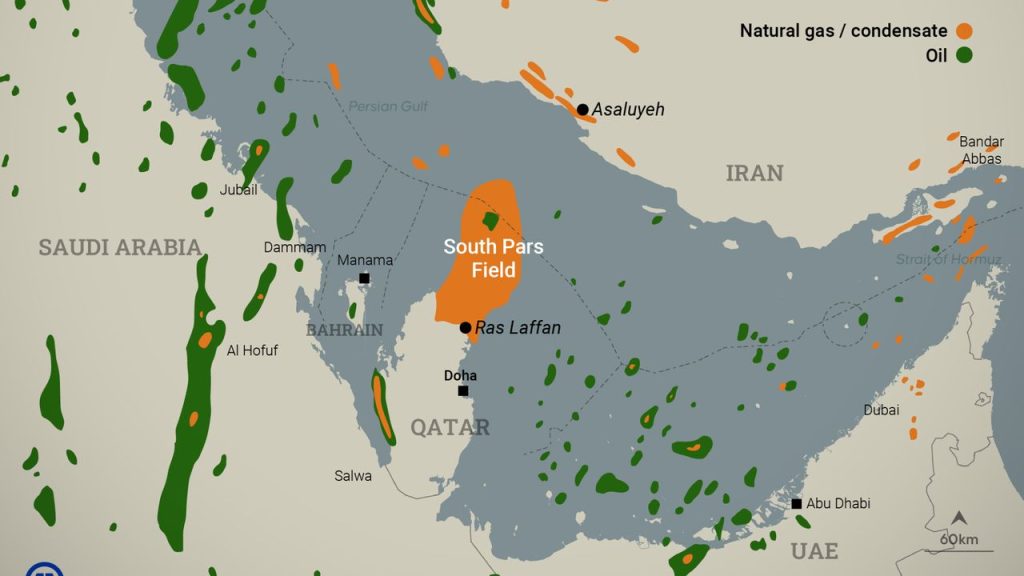
Israel on Wednesday struck Iran’s part of the massive South Pars/North Dome natural gas field it shares with Qatar, prompting two Iranian ballistic missile strikes on Qatar’s main energy hub, Ras Laffan Industrial City. Qatar condemned both Israel and Iran, while Iran’s Islamic Revolutionary Guards Corps warned other Gulf Arab neighbors that the U.S.-Israeli strikes on South Pars made their refineries and gas fields legitimate targets as well.
The attacks and counterstrikes, combined with Iran’s ongoing blockade of the Strait of Hormuz, sent oil and natural gas prices soaring on global markets. The U.S. and Qatar “knew nothing about this particular” Israeli attack, President Donald Trump said on social media, but if Iran strikes again, the U.S. “will massively blow up the entirety of the South Pars Gas Field.”
Who said what
“NO MORE ATTACKS WILL BE MADE BY ISRAEL” on South Pars “unless Iran unwisely decides to attack a very innocent, in this case, Qatar,” Trump said. His comments “seem to be an effort to de-escalate the situation,” but Trump “green-lit the Israeli strike,” Axios said, citing U.S. and Israeli officials. “While Qatar didn’t know about the Israeli strike in advance, Trump did,” having coordinated it with Israeli leaders.
“Trump approved of the strike” to “pressure Iran to unblock the Strait of Hormuz,” The Wall Street Journal said, citing U.S. officials. But Israel “struck at the crown jewel of Iran’s energy industry” to quash “an important source of revenue” for the country. While Israel hit oil tanks in Tehran earlier, striking South Pars was “orders of magnitude more alarming,” the Journal said. And Gulf Arab states, which had “aggressively lobbied the Trump administration” to prevent escalatory strikes on Iran’s energy infrastructure, were “furious about Israel’s attack and the U.S. failure to head it off.”
What next?
Iran’s ongoing ability to damage U.S. interests “evokes a decades-old pattern of unrealized expectations for American interventions” in the Middle East, The New York Times said. “Air power is the U.S. drug of choice — we love to believe that it can achieve big political effects and also big military effects,” Caitlin Talmadge, a Gulf security expert at MIT, said to the Times, but the “historical record doesn’t support that.” Trump is reportedly “considering deploying thousands of U.S. troops to the region,” Reuters said, as the Pentagon “prepares for possible next steps” against Iran.
Iran has warned nearby countries about continuing US-Israeli strikes