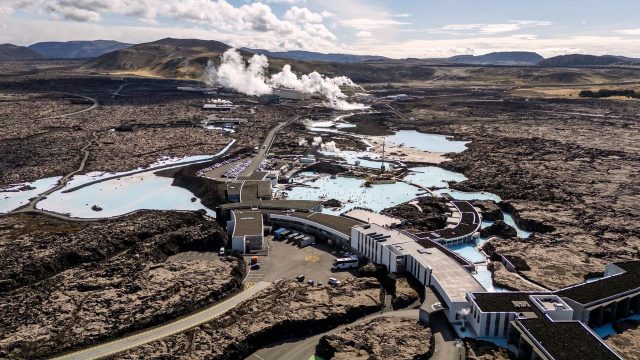
Humanity’s energy needs could be revolutionised by a source created during the very formation of the planet.
Geothermal power plants use energy stored in the form of heat beneath the Earth’s surface. They are built where there are underground reservoirs of water around fault lines in the Earth’s tectonic plates and use the power of the planet’s natural heat to generate electricity.
Pro: environmentally friendly
Geothermal energy has a low carbon footprint because it produces minimal greenhouse gases when compared to fossil fuels.
Once a plant is up and running, there’s effectively no emissions produced and ground source heat pumps for the home, which use heat from water underground, require very little maintenance, with the capacity to heat properties for more than 80 years.
Con: greenhouse gases
But drilling into the ground to build geothermal power plants can mean that greenhouse gases are released from underground. Although these gases are also released into the atmosphere naturally, the process is accelerated near geothermal plants.
That said, the amount of gas released “pales in comparison with the number of pollutants pumped into the atmosphere when we burn fossil fuels”, said The Eco Experts.
Pro: renewable
Geothermal energy is a source of renewable energy that “will not run out”, said the BBC, because the hot reservoirs within the planet are “naturally refilled, making it both renewable and sustainable”.
It is widely regarded as a reliable, constant power source with the potential to help stabilise grids and it’s seen as a viable alternative to fossil fuels. It is also not dependent on weather conditions.
Con: location-specific
These sorts of power plants “can’t be built everywhere”, said the BBC. It’s easiest to set them up near fault lines, but they “become more expensive and difficult to set up the further down you have to drill to reach hot water”.
There’s a high concentration of these plants in western US states, such as California, due to their location along the Pacific Ring of Fire. Iceland is a world leader due to its location on the Mid-Atlantic Ridge.
Pro: job creation
Geothermal plants have operational lifespans of up to 80 years, so they can offer stable jobs for a long time. They bring employment to rural areas where opportunities otherwise may be particularly scarce.
The energy the plants produce is the renewable energy that generates the most employment per unit of installed capacity, according to a report by the World Bank in 2023, said Enel.
Con: expensive
The typical cost of building a small one-megawatt (MW) power plant is between £1.7 million and £6.1 million, said The Eco Experts. A 500 MW power plant would cost around £2.5 billion to get started.
The initial cost of building these plants in the UK would be high because the pipes might have to reach hundreds of metres or more underground to reach sources of hot water.
Renewable source is environmentally friendly but it is location-specific