
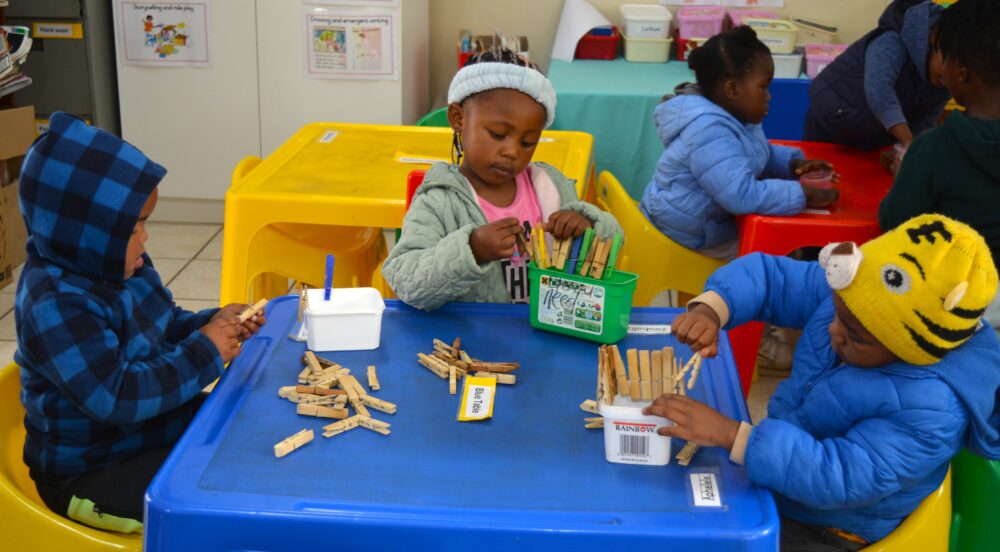
‘They just sat there. Some were so trussed up in their thick winter jackets that they could barely move.”
These are the heartbreaking conditions related to me about a crèche for children in Makhanda.
No outdoor play was allowed, donated toys remained behind lock and key. Working parents had entrusted their children to the care of someone running an ECD centre, but it would probably have been better for the children to be playing at home or in a neighbour’s yard.
At least they would have the freedom to explore and learn.
But picture this instead: In a modest shack behind a Makhanda nursery school’s swings, 12 mothers sit in a circle laughing as their toddlers explore handmade toys on dusty floors. The mothers are learning something profound: that playing with children can change everything.
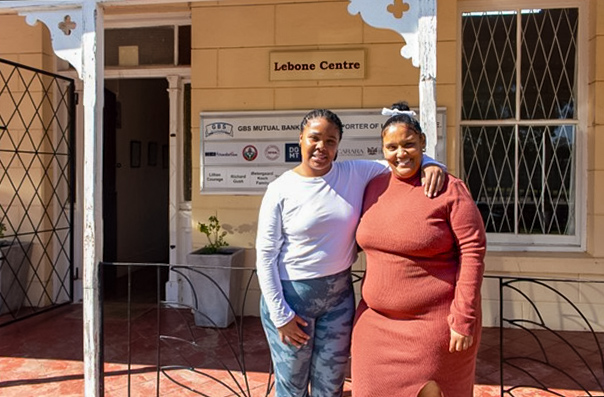
The Playmat session is facilitated by the Lebone Centre’s Kaylynne Rushin and Akia Lucas.
“Playing with your child doesn’t need to be expensive; it’s all about the bond and the skills they gain from it,” Rushin says, taking out handmade plastic balls and picture books made from cereal boxes and magazine pictures they taught the parents to make.
Laughter echoes through the room as they begin to play, sing and dance.
“It has helped me love my child,” says Olwethu Mphofu. The advice and encouragement she gets from the sessions help her sustain an environment of love and support for her child. “In the next 15 years, I will see my child at Rhodes University.”
Another mother, Laurene Jackson, says: “My daughter struggled with her development; she couldn’t speak properly and then there was a stage where she couldn’t walk. But we joined the programme and everything got better. She started walking, started growing. Now she is five, and she can count to 100.”


The funding crisis
Early childhood development (ECD) is a term that is being bandied about a lot these days. Minister of Basic Education Siviwe Gwarube has allocated additional funds for ECD centres to register through the Bana Pele Mass Registration Drive and receive an increased subsidy. A good start. But much more needs to be done.
The budget figures bear this out — R332 billion was allocated to primary and secondary education this year, while another R142bn was allocated to tertiary education (plus R55bn for NSFAS and R42bn for skills and vocational training).
But ECD gets around R10bn. That means ECD gets just 1.8% of the national education budget.
It implies that pre-school children are “lesser beings” — “residual” persons without full human rights and somehow unworthy of proper developmental and educational support.
The Thrive by Five Index 2024, the largest survey of preschool outcomes in South Africa, paints a grim picture: Only 42% of enrolled 4-year-olds are on track for early learning, with children in higher-fee centres faring better (69% on track in high-fee ELPs vs. 34% in low-fee). Alarmingly, 7% show signs of moderate or severe physical stunting, linked to long-term cognitive delays.
For the 30% of 4-year-olds not enrolled in ECD centres — around 350 000 children — the risks are higher, with a sub-study revealing that just 18% are on track in early learning and 18% are stunted.
The indices confirm that hunger and malnutrition remain widespread. Equally alarming is the statistic that shows most teachers and parents were unaware that their children were falling short of learning milestones. That is not good news.

Quality varies wildly
The well-known African adage, “It takes a village to raise a child”, implies that a child is part of an ecosystem of support that various role players contribute to.
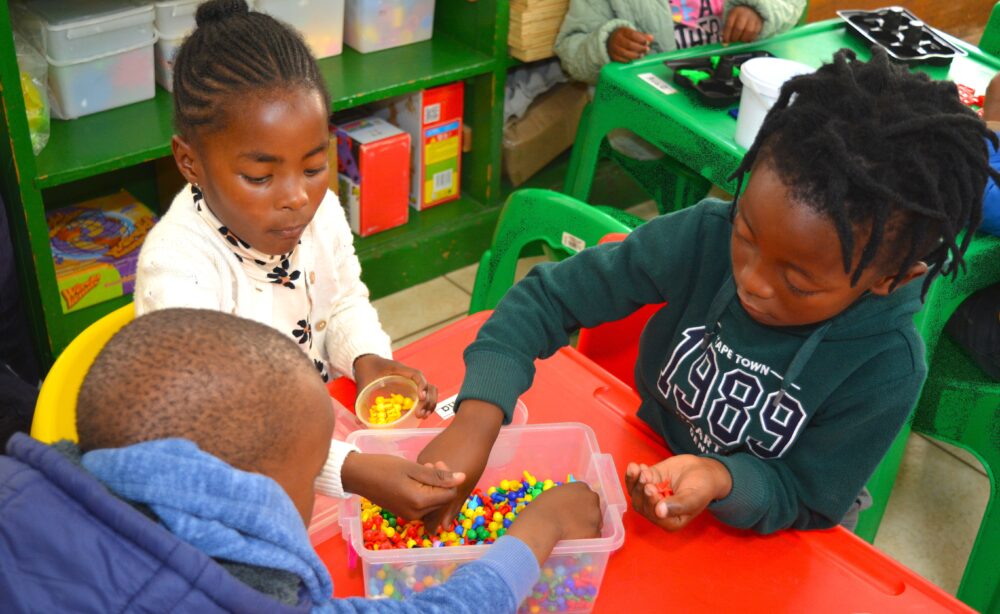
It’s bad enough that most children are not enrolled in preschools, but crèches and ECD centres also vary greatly in quality. Some are well-run facilities with good learning programmes; others are little more than holding pens.
But even some of the great ones don’t get support. Kate Kooson, an educator at the All for Christ ECD centre in Makhanda, has run her preschool for 10 years. Attempts to secure government funding have been unsuccessful.

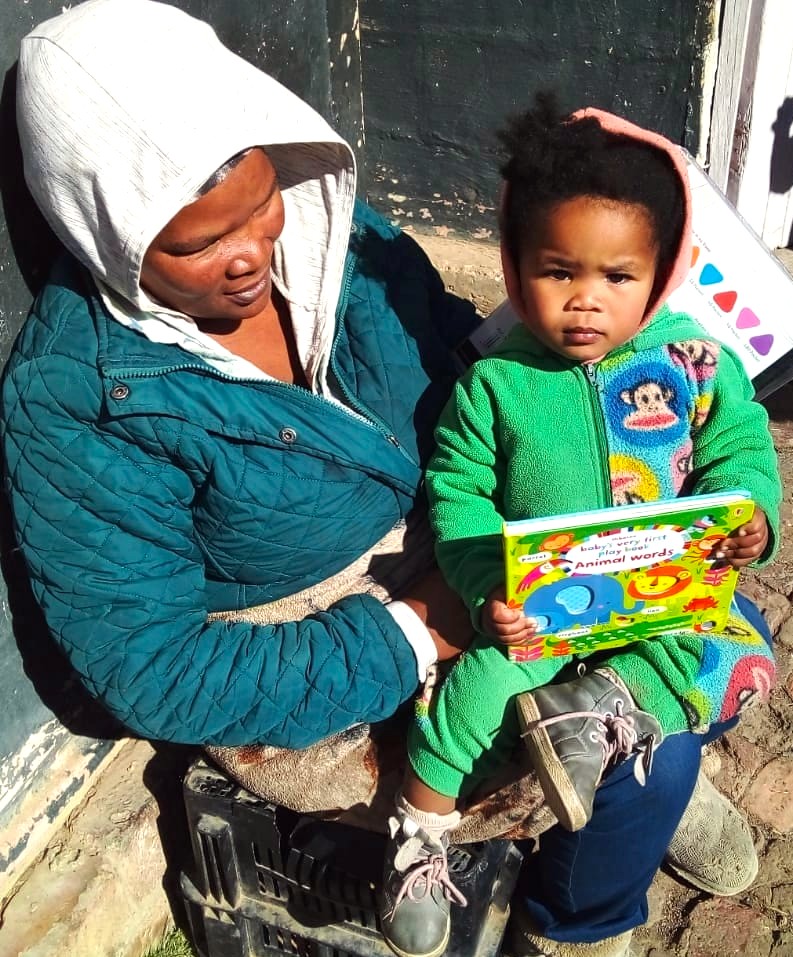
Many NGOs do their best to support ECD centres, but their resources are limited, and one of the hardest nuts to crack remains parental involvement.
Naycan Ferreira, from Rhodes University Pre-school in Makhanda, has witnessed this divide firsthand. She describes two groups of parents: those who are “eager” to know about their child’s progress, and others who consider it “insignificant”.
Perhaps the answer lies in finding new ways to communicate. Most families have cellphones. A myriad resources can be shared in this way.
Naycan says, “If we are doing a certain theme or activity at school, we share our outline with the parents so that they know we’re busy with pets now. At home, the children will take what they’re learning and apply it with the help of the parents.”
She says staff attend training sessions where they learn subject matter and pedagogy, but “what they lack is teaching us how to effectively communicate with parents”.

What good ECD looks like
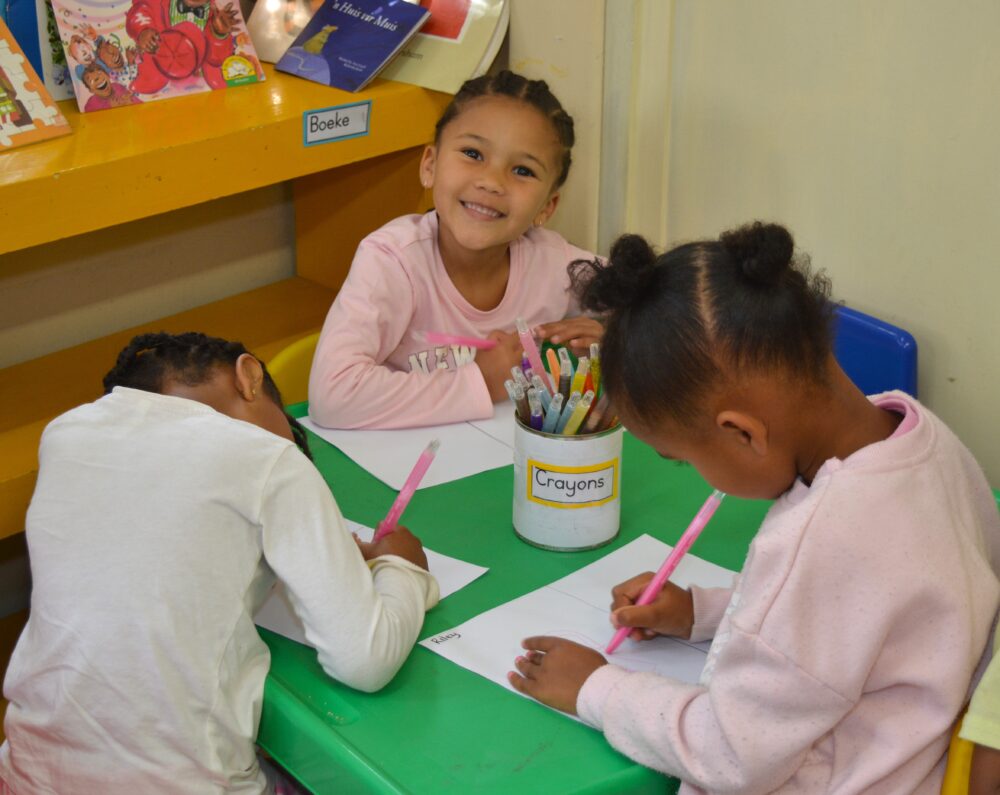
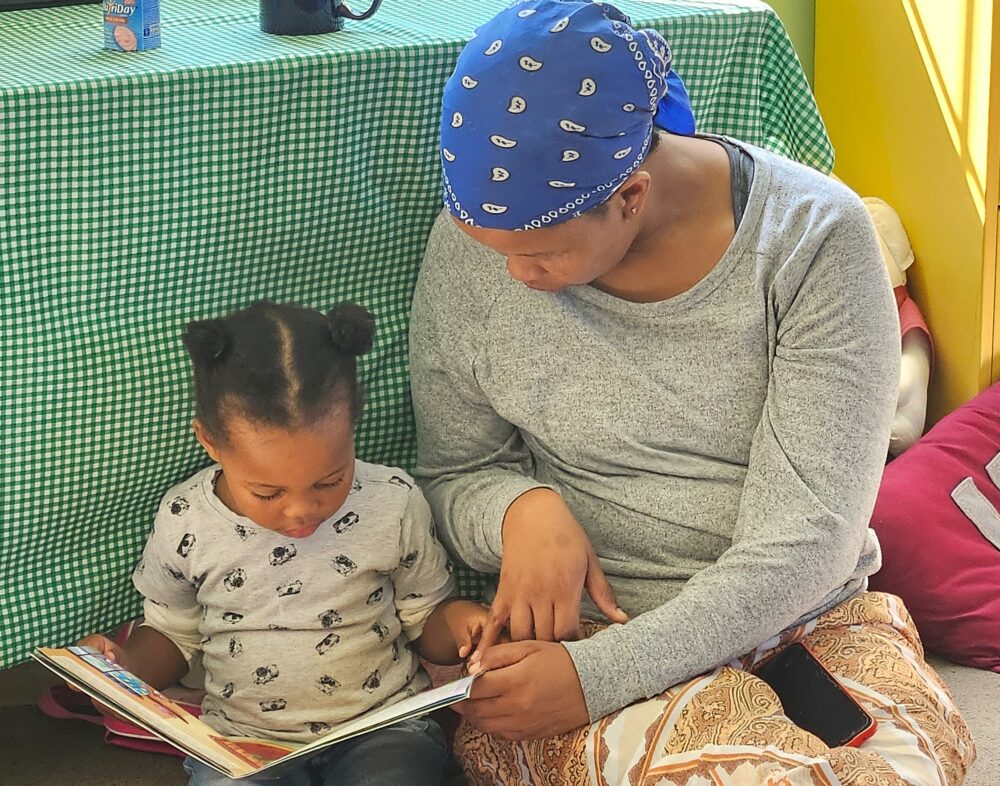
There needs to be widespread acknowledgement that learning through play is critical; that helping children to “read” their world and tell their stories is a vital step in their literacy development.
Early exposure to books, stories and language is equally important. Neuroscientists tell us that this helps lay the pathways in the brain that are needed for reading and writing. Tactile experiences such as planting and watering, and playing with wooden blocks are also crucial.
Early language development scholars talk about emergent literacy, which implies that it is a process that unfolds over time, beginning in the early years when about 80% of a person’s neural pathways are laid down. This puts an end to the idea that children suddenly learn to read and write when they start school.
Yes, it is the Foundation Phase teacher’s task to put the pieces of the puzzle together, but the building blocks need to be put in place long before.
There is growing recognition that the First 1 000 Days of a child’s life are crucial. Lebone Centre, a Makhanda NGO, is one of the organisations that has focused on this through its #EveryBabyMatters programme. Awareness-raising sessions are held at community clinics, followed by a home visiting programme that helps mothers understand and implement responsive caregiving and early stimulation.
They are assisted by the Every Word Counts materials developed by the Wordworks early literacy organisation, which aim to show parents and caregivers the importance of talking, singing, telling stories and reading to children from an early age.
Working in homes and communities to support early childhood development has largely been the remit of NGOs. Organisations like Book Dash, the Mikhulu Trust and Nal’ibali are working to promote early literacy through book access and story-sharing, but their reach remains limited without government support.
Yet, as the Thrive by Five Index 2024 reveals, non-enrolled children are missing out. A sub-study of 272 such children found that 82% fell behind in early learning, with 18% experiencing stunted growth. The children need decent pre-schools or home-based interventions more than ever, yet government support lags.
Moreover, the registration of ECD centres is primarily concerned with infrastructure and child safety, rather than quality of learning. That is a separate Directorate. Fragmentation is the enemy of our young children — the most recent example being the unspent millions that were voted for the feeding of preschool children. That didn’t happen because the School Nutrition Programme and the implementing ECD agency were unable to agree.
The largest percentage of children not attending preschool is found in the poorest communities. This means that we must find ways to reach those children where they are — in their homes and communities. We also need a mind shift in how children are viewed and what constitutes good, responsive caregiving, learning and support. And that requires major campaigns, resources, funding and political will.

A path forward
Thrive by Five offers solutions: Boost funding to fix subsidy inefficiencies, train practitioners in effective, appropriate teaching methods, integrate health and nutrition services into Early Learning Programmes, support positive parenting through book access and male involvement, strengthen Grade R as a bridging year and invest in data to track non-enrolled kids.
What would happen if ECD centres received half of tertiary education’s R200bn+ budget? What if we insisted on decent wages and good qualifications for ECD practitioners and supported them with resources and play-based curricula?
Imagine the role they could play in preparing kids for literacy and numeracy — and a fulfilling life — later on? Add support for home-based literacy practices and libraries, and we could have a game-changing foundation.
At the Makhanda Playmat session, the mothers marvel at their clever children, how their bond has increased and how they see a great future for their children.
“At home, when I sometimes struggle with something, she’s the one encouraging me,” says one mother. “That’s why I say she’s intelligent.”
When you support a mother or an ECD teacher in connecting and engaging with children in loving and meaningful ways, kids become better learners and happier individuals.
Time isn’t on our side. We can fiddle while Rome burns, but we ignore the state of our young children at our peril. — Additional reporting by Rod Amner, Kabelo Mafiri, Kearabetwe Nkadimeng and Onele Rambe
The features were made possible by the Henry Nxumalo Foundation who funded the Between the Lines series
SA spends just 1.8% of its education budget on ECD: the damage shows