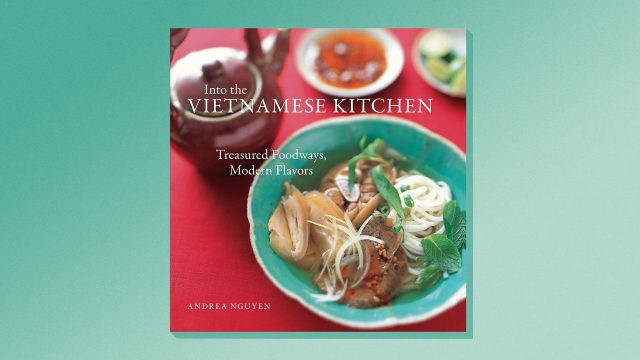
The resolute tango between the personal and the practical is a hallmark of a cookbook humdinger. Doing so merges two apertures — the narrow and the microscopic — into a wide-angle lens.
Andrea Nguyen’s 2006 debut, “Into the Vietnamese Kitchen: Treasured Foodways, Modern Flavors,” is a sublime example of that intermixture. She opens the book with the following scene: “We heard the plane coming in low and I was scared. Mom grabbed me, pulling me underneath the staircase as a bomb exploded nearby. I shrieked, believing the end was near.”
The rare turned common
The end was not quite near, but it was imminent. That opener took place on April 8, 1975, in Saigon, when Nguyen was 6 years old. A little more than two weeks later, Nguyen and her family were loaded on a plane, landing eventually in Southern California. Life, and with it, the family’s cooking, upended.
One makes do — and new traditions are born. Western noodles, like fresh fettuccine, and butter were luxury items in Saigon. Thus noodles with butter went from a rare novelty to a kitchen staple for the Nguyens. She shows the reader how to dress just-boiled noodles with umami-laden Maggi sauce, then warm garlic in melted butter, adding the noodles and tossing. The “nutty, savory caramel qualities of the Maggi sauce” come to the fore as you toss and sear the noodles.
Cabbage also receives special status in the family’s new home because “cool-season crops such as cabbage and cauliflower are difficult to grow in Vietnam.” So ribbons of the vegetables are sauteed until wilty, then fish sauce and beaten egg added, the egg lacquering the cabbage with a custardy coating. If you thought you knew all there was to know about buttered noodles and cabbage heads, you have just been shaken out of culinary complacency.
Icons, dissected
“Into the Vietnamese Kitchen” is not only a Nguyen tale. Classics from the diasporic Vietnamese repertoire are included, too, with irreproachable instructions. An exemplary version of bo kho (beef stew) is heady with lemongrass, fish sauce, ginger, five-spice powder and star anise. Salmon, shrimp, catfish and chicken all appear braised in recipes using the savory, bittersweet, burnt-caramel sauce known as nuoc mau. Pho is here; bun (rice noodles) are as well, alongside grilled pork and punchy herbs, and in comforting soups with crab or beef.
Feeling adventurous? Dive into a round of project cooking to make the charcuterie, like gio lua (silky chicken sausage), that star in banh mi, those irresistible spiky Vietnamese sandwiches. In Nguyen’s text, you will be guided by sure hands, as welcome storytelling is whispered in your ear.
A world-class cuisine gets the proper treatment