The best cookbooks can be read from multiple directions. A compendium of utilitarian recipes that can be both browsed and zeroed in on. An anthropological telescope through which you gape at a cuisine. The history of a food told through a kitchen aperture.
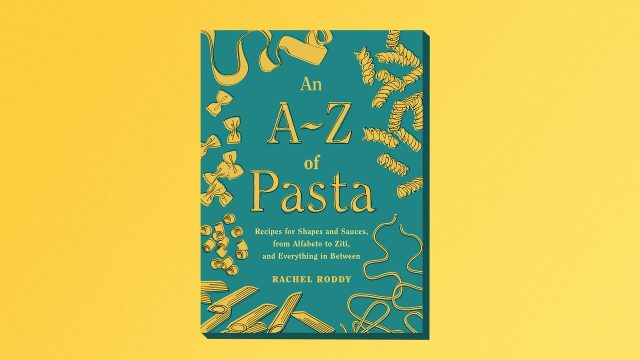
If a cookbook achieves one of those objectives, it warrants consideration. If it attains all three, the angels sing, the pots clang and the fridge door swings wide open. Rachel Roddy’s “An A-Z of Pasta: Recipes for Shapes and Sauces from Alfabeto to Ziti, and Everything in Between” is that style of cookbook.
Pasta, then and now
Roddy, a Brit who has lived in Rome for the last 20-odd years, notes that only a “genius or an idiot” would try to gather the stories of the “350 to 600, depending on who you talk with” pasta shapes used across Italy. “I am neither, at least not in this context, so I haven’t tried,” she writes.
You could wager she is instead both a genius and an idiot. With the valiant undertaking of “An A-Z of Pasta,” she does the near-impossible: She captures, across 50 pasta shapes, the lifeblood of an ever-shifting subject.
In the chapter on paccheri, those chunky, dried elongated tubes akin to rigatoni on ’roids, Gragnano, a town near Naples, is the main character. You learn that in the 18th century there were “22 mills and 97 pasta factories” in the area. Now there are “23 pasta factories,” only some of which “bear the mark Pasta di Gragnano DOC, that Gragnano is the city of pasta.” The present clings to the past, like fava bean pesto should adhere to al dente paccheri.
The entry on busiate jumps even further back, to 12,000 years ago, when wheat was first domesticated, then on to cultivated wheat’s appearance in Italy in 6500 B.C. Sumerians, Greeks, Arabs, Vikings; Greek and Roman texts, plus the Jerusalem Talmuds — all played their part in pasta’s ascendance as a commonplace food.
Flip to the “L”s, and we time-warp to the present, as Roddy sits with a pasta maker in the region of Le Marche, “examining uncooked pasta like dermatologists, admiring the pores and rugosity.” She offers a recipe for linguine, dressed in a silken sauce of thinly-sliced onion and zucchini, egg yolks and Parmesan. If this is food-history whiplash, bring on the 17-car pileup.
Bags of opportunity
Should your pasta pantry be forever stocked with an array of shapes, like a menagerie of delicious rigidity, flip through “An A-Z of Pasta” and be astounded. You might gasp and nod so much at the book’s recipes, that your jaw remains unhinged and your head frozen in descent.
Those wagon wheels, aka ruote, untouched because you cannot quite figure out how to use them? Drape them with Gorgonzola, sage and walnuts, or mascarpone and, again, walnuts. Jaded by your staple spaghetti with tomato sauce? Wander the week with nine tomato-based recipes, tripping from a raw sauce with dried oregano, to spaghetti alla Norma with eggplant, tomato and ricotta salata, to the apotheosis of leftovers, a frittata made with day-old spaghetti and tomato sauce.
Pasta will tell you how it wants to be treated in the kitchen, if you listen. Roddy, with “The A-Z of Pasta,” teaches you the foodstuff’s centuries-old language. Lend an ear, and put some water on to boil.
Enter the world of pasta possibility