
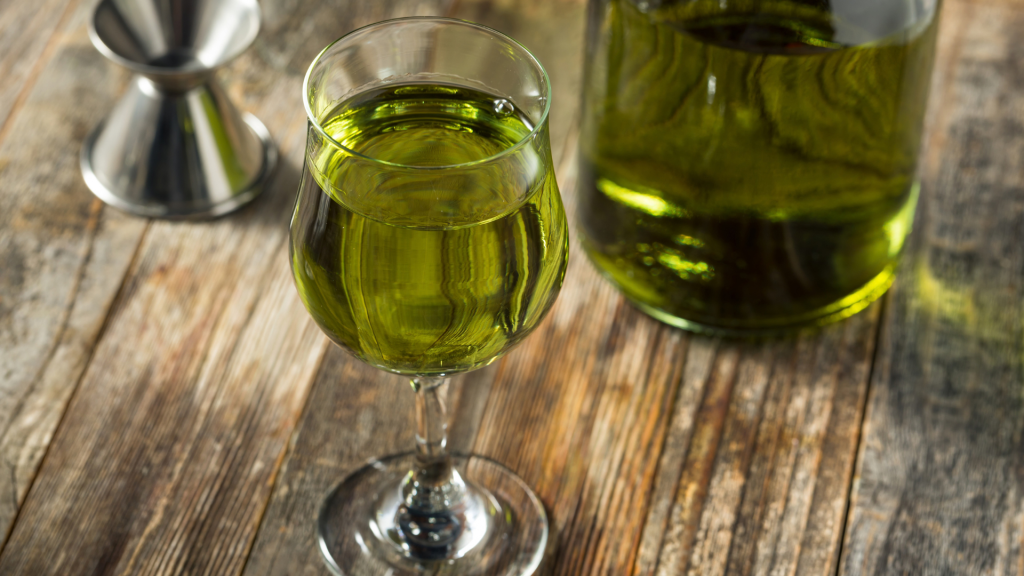
More and more Parisians have been “reaching for a glass of Chartreuse” in recent years, said Morwenna Ferrier in The Guardian. But the “intensely green” herbal liqueur isn’t always easy to find.
Chartreuse dates back to 1605 when Carthusian monks were “entrusted with the recipe” by Duke François Annibal d’Estrées. Containing 130 ingredients including plants, barks and spices, the original recipe for the so-called “elixir of long life” took the monks “over a century to decipher”. Eventually, they settled on what became the base of today’s Chartreuse – a secret recipe known by just three monks.
It’s always been “pricey” but it got even harder to find when, in 2021, the Carthusian monks “suddenly announced plans to cap production” in order to devote themselves to prayer, sparking a global shortage.
The elusive liqueur is usually found in more “ambitiously stocked” bars. Its popularity has increased since the pandemic, when a “taste for the weirder, top-shelf” alcohols. At Combat, an “edgy-cool” bar on the Rue de Belleville, you’ll find it served cold in a “crystal-cut sipping glass” or mixed with gin, lime and a maraschino cherry in a cocktail, The Last Word.
Les Cave des Papilles, Le Saint Sebastien and Cave Pur Jus are other spots in Paris where you can find the “electric-green liqueur”, said Joel Hart in Bloomberg. Chartreuse drinkers are a “motley crew” – you’ll see them everywhere from luxury hotels to “low-key cave à mangers”.
Beyond the capital, every May the annual Les Fêtes de la Chartreuse takes place in the Auvergne-Rhône-Alpes region of France. It’s a “triple celebration”: of the liqueur itself, the “verdant mountain range” after which it is named, and the “area’s natural bounty at the height of spring”, said Matt Ortile in Condé Nast Traveler.
Chartreuse comes in two main expressions: green and yellow. I like the former. “Herbaceous” and “almost overwhelming”, drinking it straight “feels like a meadow grabbing you by the throat, and saying ‘Do you like that?’ (My answer is yes)”. But the yellow version “has its charms too” – it has a lower alcohol content and feels “sweetly cosy, like a good morning kiss from a casual lover”.
The elusive herbal liqueur, made in limited quantities by Carthusian monks, is growing in popularity