
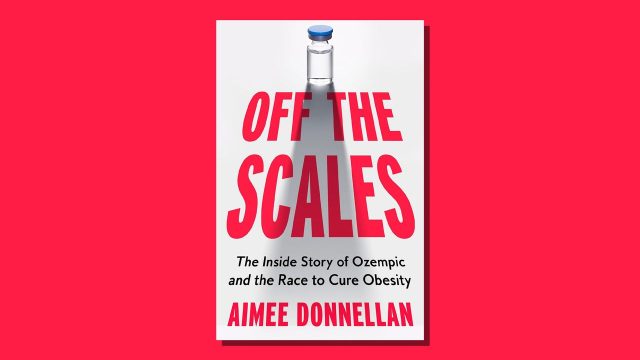
In 2024, the US Centers for Disease Control and Prevention published “what could well be the most important table in modern public health”, said Tom Whipple in The Times. For decades, American waistlines had been expanding “inexorably”. But the 2024 assessment of “how fat the country was” revealed a change: the “number of fat people was just a little bit lower than it had been”. No one was in any doubt as to why. In 2017, a Danish company, Novo Nordisk, had released a new diabetes medication called Ozempic, which listed “weight loss” among its side effects.
As Aimee Donnellan makes clear in her “meticulously reported account” of the drug’s emergence, its inventors “always realised that the ‘side effect’ would really be the main effect”. And so it proved. Ozempic and other “GLP-1 agonists” – or “fat drugs” – are starting to bring down obesity in many places. As it becomes possible to take them as pills rather than injections, and (perhaps more significantly still) when they come “off patent”, their impact could be even more dramatic.
“Like all great tales of scientific discovery, the weight-loss jabs saga is rich in serendipity, rivalry and obsession,” said Rachel Clarke in The Guardian. Donnellan recounts it all “with relish”. She highlights the role played by Svetlana Mojsov, a Macedonian chemist whose research in the 1970s into glucagon-like peptide (GLP-1) paved the way for Ozempic, which works by mimicking the hormone’s effects; and she details the starring role played by the Gila monster, a type of lizard in whose saliva a useful peptide was found. Donnellan also addresses the “fraught social and cultural context” that has helped make these drugs such a talking point. For every person who takes them as a medical necessity, she notes, there will be others who simply want to “fit into smaller dresses, or obtain the slender aesthetic social media demands of them”.
Donnellan interviews people whose lives were transformed by Ozempic, said David A. Shaywitz in The Wall Street Journal. A 34-year-old marketer named Sarah says that because she was thinner, she was “included in important meetings” and received a pay rise. Donnellan’s “verdict on GLP-1s” isn’t one of unalloyed positivity. She asks if they’re a case of “treating the symptom”, rather than the cause, and questions what it says about society that a weight-loss jab can be so transformational. Overall, she delivers “a nuanced view” of “these unsettling medical marvels”.
A ’nuanced’ look at the implications of weight-loss drugs


