
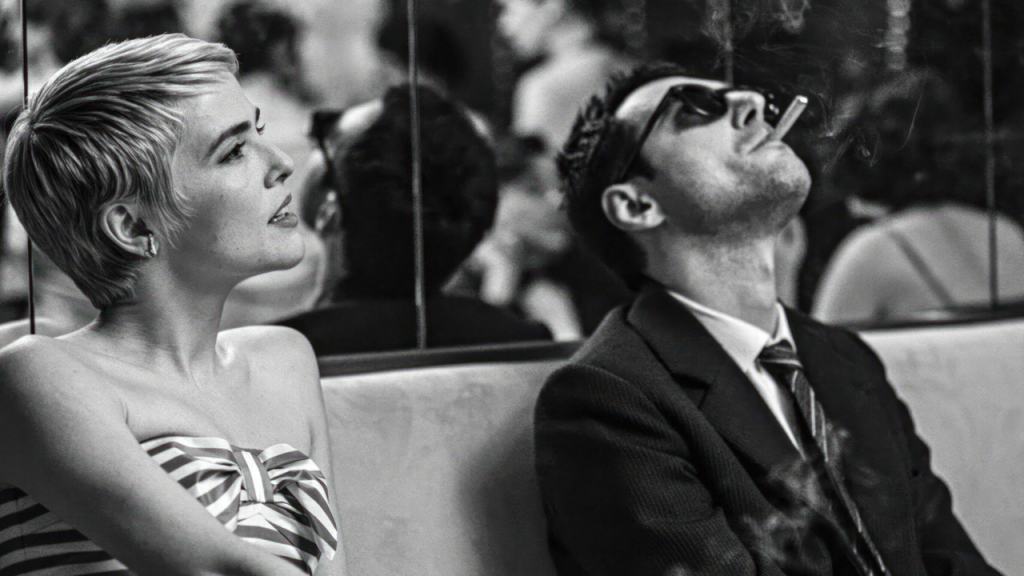
Films about films can alienate the “non-cinephile viewer”, said Kevin Maher in The Times. But happily, Richard Linklater’s “visually lush and frankly encyclopaedic account” of the making of Jean-Luc Godard’s “Breathless” (“À bout de souffle”) doesn’t depend on the viewer picking up on every reference: its “fundamental beauty” lies in “the lightness and the love that Linklater brings to the material”.
Set over the course of the 23-day “Breathless” shoot in the summer of 1959, “Nouvelle Vague” is focused on the “tense” relationship between Godard (Guillaume Marbeck) and his producer Georges de Beauregard. It also examines “the sweetly unfolding relationship between the leads”, Jean Seberg (Zoey Deutch) and Jean-Paul Belmondo (Aubry Dullin). It all builds into “a film of great passion” that is “full of unexpected tenderness” – and which shouldn’t appeal only to aficionados.
“Linklater certainly recreates the look, feel and sound” of Godard’s masterpiece, said Deborah Ross in The Spectator: as in “Breathless”, the dialogue is almost entirely in French; it is shot in black and white; and many New Wave innovations are on show, such as natural light, handheld cameras and choppy cutting. But while “Nouvelle Vague” is “intelligent and funny” and rather fascinating, it is also “far too celebratory to be revelatory”: Godard remains an enigma, and it fails to examine the old-school misogyny on display in his film and others like it. Still, the impact of the French New Wave is hard to overstate, said Robbie Collin in The Telegraph. And it seemed to me that this homage could have done with more of the movement’s “reactive, incautious, free-range” approach. Instead, “its light touch starts to feel uncomfortably like a lack of substance”.
Richard Linklater’s homage to the French New Wave