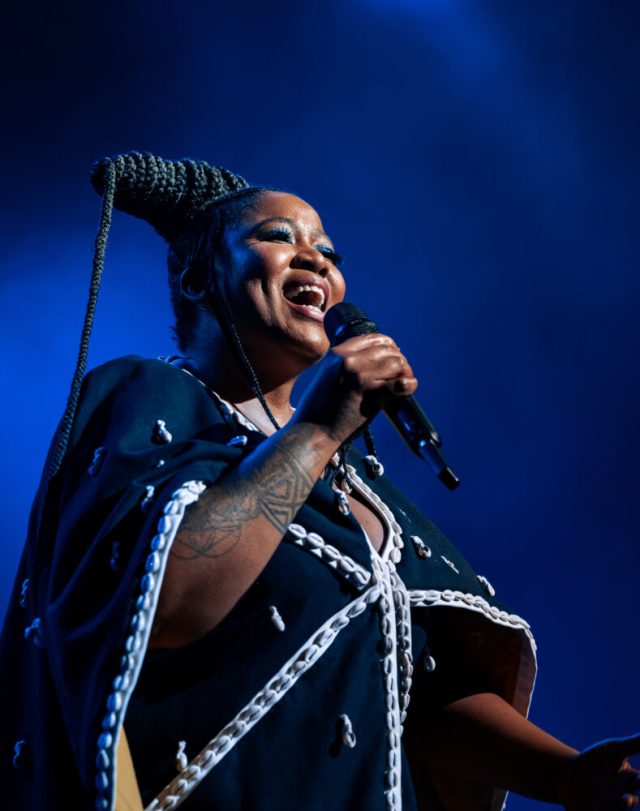
A different kind of gathering is beginning to take shape. It is less about excess and more about intention.
Less about escape and more about presence. And into that shift walks Nomsa Mazwai with something that feels both timely and necessary: Sober Fest.
Set to take place on April 26, 2026 at Soweto Theatre in Johannesburg, Sober Fest positions itself not just as an event but as a recalibration. A rethinking of what it means to celebrate freedom, to gather as family, to experience music and joy without the crutch of intoxication.
The timing is deliberate. Freedom Day weekend in South Africa has always carried the weight of reflection and release, a moment to remember the cost of liberation while indulging in the fullness of being alive.
For Mazwai, that context matters.
“Freedom, for me, is not just about what we can do but how we choose to do it,” she says. “We’ve inherited ways of celebrating that don’t always serve us. Sober Fest is about offering an alternative — not taking anything away but adding something new.”
Mazwai has never been one to follow the script. Across her career, she has occupied the intersections of music, activism and cultural critique with a kind of grounded conviction.
Whether through her work as a musician or her involvement in socio-economic development initiatives, her voice has consistently leaned toward accountability, personal and collective.
Sober Fest feels like a natural extension of that ethos.
But this is not a moral sermon disguised as a festival. It is not about prohibition or policing joy. Instead, it is about expanding it.
“I’m not interested in telling people what not to do,” Mazwai explains. “I’m interested in creating spaces where people can experience themselves differently. Where you don’t need anything external to feel connected, to feel joy, to feel free.”
At its core, Sober Fest is a family-friendly, health-conscious lifestyle event that centres music, food and wellness. Three pillars that, when stripped of the haze of alcohol-centric culture, reveal something more intimate.
Music becomes something you feel with your whole body, not just something that carries you through the night. Food becomes nourishment and connection, not just a late-night afterthought. Wellness shifts from a buzzword into a lived, communal practice.
“There’s something powerful about being fully present,” she says. “About remembering the conversations you had, the music you felt, the people you connected with. That’s what we’re trying to bring back.”


For many, the idea of a “sober festival” might initially feel unfamiliar, even limiting. South Africa’s social fabric, particularly in urban centres, has long been intertwined with alcohol.
Mazwai sees it differently.
“We’ve normalised numbing ourselves in social spaces,” she says. “And I think it’s worth asking why. What are we avoiding? What would it look like to actually be there, fully, with ourselves and with each other?”
Sober Fest leans into that question by creating a space where presence is the main currency.
“This is a space for everyone,” Mazwai says. “For parents, for young people, for people who are sober, for people who are just curious. It’s about inclusivity. It’s about saying: you belong here, as you are.”
And then there is the music.
While the full line-up signals a carefully curated blend of artists who align with the festival’s ethos, the emphasis is less on spectacle and more on experience. This is not about chasing viral moments. It is about sonic grounding. About allowing music to do what it has always done in African contexts: hold memory, carry healing and create community.
“Music doesn’t need alcohol to hit,” Mazwai says, almost laughing. “If anything, you feel it more when you’re clear. You hear the layers, you connect deeper. That’s the experience we’re creating.”
Expect tunes by Thandiswa Mazwai, Maleh and Nomisupasta. On the decks will be DJ Kenzhero and Vester Sdizo, with the host being Ntsiki Mazwai.
Food, too, plays a central role. Not just as sustenance but as a site of culture and care. Attendees can expect offerings that reflect a conscious approach to eating meals that are nourishing and rooted in local contexts.
“Food is part of wellness,” she says. “It’s part of how we care for ourselves and each other. We want people to eat well, to feel good, to leave the space feeling nourished and not depleted.”
The wellness component extends beyond the surface-level aesthetics often associated with the term. Here, wellness is framed as accessibility rather than luxury. Think guided practices, conversations around mental health, spaces for rest and opportunities for reflection.
“Wellness has been made to feel exclusive,” Mazwai notes. “Like it’s something only certain people can access. We’re challenging that. Wellness is for all of us. It’s in how we breathe, how we move, how we show up for ourselves.”
There is also something particularly resonant about hosting Sober Fest in Soweto. The township has long been a site of political resistance, cultural production and community resilience.
To bring a wellness-centred, family-oriented festival into this context is to honour that legacy while imagining new possibilities for how communities gather and heal.
Mazwai is intentional about this.
“Soweto is not just a location,” she says. “It’s history, it’s culture, it’s community. Hosting Sober Fest here is about grounding the festival in a space that already understands resilience and connection.”
Soweto Theatre itself stands as a cultural landmark, a space that has housed countless performances, dialogues and artistic expressions. To reframe it as a site for sober celebration is to extend its narrative.
Rather than importing a wellness narrative that feels detached or elitist, Mazwai situates Sober Fest within the realities of the communities it seeks to serve. It acknowledges the socio-economic pressures, the cultural nuances and the historical contexts that shape how people relate to celebration and escape.
“There’s no judgment here,” she says. “People are on different journeys. This is just an invitation. Come and experience something different.”
There is also something deeply maternal about the structure of Sober Fest. Not in a limiting or gendered sense but in its emphasis on care, protection and inclusivity.
It feels like a space designed with consideration, for the child who needs room to play, for the parent who needs a moment to breathe, for the individual who wants to feel held without being overwhelmed.
For Mazwai, that is the point.
“We deserve spaces that hold us,” she says. “Spaces that don’t require us to escape in order to enjoy ourselves.”
As Freedom Day approaches, the symbolism becomes even more layered.
In a country grappling with the legacies of its past and the complexities of its present, the question of what freedom looks like remains open-ended.
A Freedom Day weekend gathering at the Soweto Theatre, where families are invited to experience music, food and wellness, fully present and fully sober