The African Centre for Biodiversity (ACB) has formally requested Agriculture Minister John Steenhuisen to deregister and ban glyphosate and glyphosate-based herbicides (GBHs), citing new evidence that the chemical is present in staple foods and infant cereal consumed daily by millions of South Africans.
In a submission to Steenhuisen and pesticides registrar Maluta Mudzunga dated 25 February, the research and advocacy non-profit group described the continued use of glyphosate as an “urgent public health and environmental threat”.
Laboratory tests commissioned by the ACB and certified by the South African National Accreditation System (Sanas) confirmed glyphosate contamination in maize meal, wheat flour, bread and infant cereal, with two products exceeding default national maximum residue limits (MRLs).
“These findings demonstrate real, measurable and ongoing dietary exposure, particularly among infants and low-income households who rely heavily on these staples and have limited alternatives,” wrote ACB’s executive director Mariam Mayet.
In Impala special maize meal, both glyphosate and its persistent metabolite aminomethylphosphonic acid (Ampa) were detected, with Ampa exceeding the default MRL. Snowflake wheat flour exceeded the default MRL for glyphosate.
Trace amounts of both chemicals were found in Sasko premium white bread and Cerelac baby cereal contained trace glyphosate.
Glyphosate and Ampa are associated with carcinogenic risks, endocrine disruption, gut microbiome damage and other health concerns. Ampa is persistent and toxic, compounding exposure risks.
Mayet highlighted the broader context, noting that international studies now demonstrate carcinogenic, endocrine-disrupting, developmental and multigenerational effects at doses previously considered safe.
The 2025 Global Glyphosate Study showed tumours at doses that regulators had deemed safe. At the same time, she said, the 2000 industry-aligned “safety” review, historically used to justify glyphosate approvals, has been retracted due to corporate ghostwriting and ethical misconduct.
Multiple US courts have linked glyphosate exposure to serious health harms, with more than 192000 lawsuits filed against Monsanto/Bayer and more than 131000 resolved, yielding jury verdicts exceeding $6 billion since 2023.
A proposed $7.25 billion national settlement last month further underscores acknowledged harm, she said.
“These judicial outcomes highlight the global shift toward accountability and reinforce the need for a precautionary and risk-averse regulatory response in South Africa,” Mayet said.
Calls for regulatory action
The ACB urged the minister to deregister glyphosate and prohibit GBHs; implement immediate restrictions on high-risk uses; establish a national pesticide-residue monitoring programme; initiate a precautionary review of glyphosate-tolerant GM crop approvals; and support a time-bound phase-out with agroecological alternatives.
“With domestic food residue data confirming exposure, these legal duties are now clearly in effect,” Mayet said.
Premier FMCG, the producer of Impala special maize meal and Snowflake wheat flour, emphasised that its products comply with regulatory standards.
“Premier is aware of the recent report relating to glyphosate residues in certain staple food products available in South Africa,” said spokesperson Siobhan O’Sullivan. “We want to reassure our consumers that Premier’s products are safe and compliant with applicable South African regulatory standards.
“All maize and wheat used in our products are sourced from approved suppliers and are tested in accordance with strict internal quality protocols. Independent ISO 17025 accredited laboratories conduct routine residue testing, including for glyphosate, to ensure compliance with established Maximum Residue Limits (MRLs).
“In the case of the products referenced, glyphosate levels fall within internationally recognised safety thresholds. Where regulatory default limits apply in the absence of crop-specific standards, we continue to work within the framework prescribed by South African authorities,” O’ Sullivan said.
Glyphosate-based herbicides are legally registered and regulated in South Africa under national legislation and have been subject to established risk assessment processes.
Premier, she said, operates in full compliance with these regulatory requirements.
“Food safety and product integrity remain our highest priorities. We continuously monitor raw materials, work closely with suppliers and maintain internationally accredited food safety management systems across our milling and manufacturing facilities.
Premier is engaging with relevant industry bodies and regulatory authorities and remains open to constructive dialogue grounded in recognised scientific standards. “Premier remains committed to ensuring safe, affordable staple foods for South African households.”
Nestlé defended the safety of its products. “At Nestlé, the health of all babies comes first and we do not compromise on food safety and quality,” said Conny Sethaelo, corporate affairs director for East & Southern Africa.
“We strongly reject any suggestion that Nestlé Cerelac products are unsafe or non-compliant. All Nestlé Cerelac products comply with applicable local regulations and internationally recognised standards, including those for pesticides as set by the Codex Alimentarius,” Sethaelo said.
“Testing of both raw materials and finished products is conducted as part of Nestlé’s risk-based surveillance programme. We rigorously monitor a comprehensive range of pesticides, including glyphosate, with results systematically reviewed to ensure our high quality and compliance standards.”
Sethaelo said independent lab tests by accredited FDA Laboratories show results below the applicable limit of quantification, confirming compliance with regulatory and Codex standards.
“Values below this scientifically established threshold are not quantifiable and do not constitute reliable evidence of presence or regulatory non-compliance. Claims based on such values risk misrepresenting both the data and product safety.
All Nestlé Cerelac products comply with South African regulatory requirements and Codex maximum residue limits. “Nestlé remains committed to food safety, scientific rigour and transparency.”
ACB’s stance on public health Zakiyya Ismail, ACB’s pesticides research co-ordinator, emphasised the systemic risk:
“The presence of glyphosate and Ampa in our everyday staples means our exposure to these chemicals is chronic and unavoidable. It is a chemical burden that consumers did not consent to as these are products that most South Africans consume daily, often multiple times a day.”
It’s concerning that glyphosate and Ampa are present in wheat products at all, Ismail said, pointing out that there are no specific MRLs set for glyphosate in wheat. “Is this a regulatory oversight or is glyphosate being used for purposes other than those officially registered, such as spraying wheat just before harvest to speed up drying?”
The Impala maize meal that tested positive is labelled as genetically modified. “That GM trait is specifically for glyphosate tolerance. So the residue is not an accident; it is a direct consequence of the production system.”
Ismail noted that even residues that are technically “within limits” are concerning. MRLs are administrative tools based on pesticide use, not on whether those levels are safe for lifelong consumption.
“They ignore the cocktail effect of multiple pesticides, they ignore cumulative daily exposure and they completely fail to protect vulnerable populations like infants. So whether they’re ‘legal’ or not, they’re still cause for serious concern.”
Glyphosate use is widespread in South Africa, particularly on GM herbicide-tolerant maize, Ismail said, noting that pre-harvest desiccation is documented in other major wheat-producing countries.
“Our wheat results strongly suggest it’s happening here too. So we have reason to believe this contamination is widespread across the staple food system.”
The agriculture department did not respond.
The Cerelac baby cereal contained trace levels of glyphosate below the default limit. “But let me be absolutely clear: the fact that it’s ‘legal’ does not mean it’s acceptable. It does not mean it’s safe. Babies are not small adults. Their organs are still developing.
“Their detoxification systems are immature. They eat more food relative to their body weight than adults. When you put a chemical that is a probable carcinogen, that has been shown to be an endocrine disruptor and that destroys healthy gut bacteria, into a baby’s body, the stakes are infinitely higher.”
The burden should not fall on parents to “navigate a contaminated food system”, Ismail added. The government should ensure that food marketed for infants is free from any probable carcinogens and other harmful chemicals.
Several countries have restricted or banned glyphosate, including Austria, Germany, France, the Netherlands and Vietnam. Many have also banned pre-harvest desiccation – the practice suspected to contaminate wheat.
“The precautionary principle in our environmental law says lack of full scientific certainty is not a reason to postpone action. The evidence shows the threshold for serious harm has been met.”
The ACB’s submission explicitly calls for a national phase-out plan with support for farmers to transition to alternatives.
“Many countries are moving away from glyphosate. South African farmers can lead, not lag. They do need support, not just instruction. What’s the point of producing enough food if that food comes with a probable carcinogen? Food should nourish, not poison.”
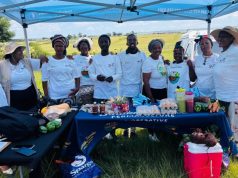
The African Centre for Biodiversity is calling for deregistration of the herbicide while manufacturers insist their products meet regulatory limits