
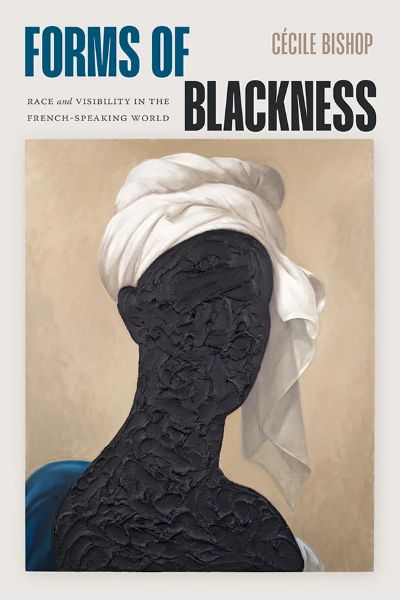
Coming soon (June 2026) is Cécile Bishop’s Forms of Blackness: Race and Visibility in the French-Speaking World (Duke University Press). As a fan of Denise Colomb’s work in the Caribbean, I can’t wait to read Bishop’s analysis of the photographer’s “gaze” in the context of sociopolitical tensions of the 40s and 50s—the book is now on my “to order” list!
Kaiama L. Glover (author of A Regarded Self: Caribbean Womanhood and the Ethics of Disorderly Being) says, “Cécile Bishop’s Forms of Blackness is an exceptional book with a compelling premise: to consider ‘blackness’ as a form of production rather than as an empirical fact, moving deftly beyond the bounds of Anglophone critical race theory. Original and elegant, Bishop posits provocative and well thought-through possibilities for meaningfully deconstructing racial categories.”
Description: Forms of Blackness examines how race can be approached as a form shaped and perceived through visual and aesthetic practices. Cécile Bishop offers a new way of thinking about the politics of visibility and presses readers to question how to interpret what they see.
Considering race as form across literature, theory, painting, and photography, Cécile Bishop’s Forms of Blackness explores the formal devices that make blackness both visible and recognizable. In keeping with black Francophone theorists like Édouard Glissant and Frantz Fanon, Bishop uses the ambiguities these aesthetic forms carry to explore a range of identity concepts like opacity, formlessness, and doubleness. Bishop puts blackness-as-race and blackness-as-form in dialogue, showing how race disrupts the concept of artistic autonomy and how the aesthetic challenges race as a self-evident visual phenomenon. When thought together, form does not isolate blackness from race but rather calls attention to the material substrate that turns race into a phenomenon that can be experienced through sense perception. Moving between careful analysis and experimental modes of critique, Forms of Blackness offers a new way of thinking about the politics of visibility and offers a pressing invitation to question the ways we interpret what we see.
Cécile Bishop is Associate Professor of Francophone Post-Colonial Literatures and Cultures at University of Oxford and Kelleher Fellow in French at Oriel College. She is the author of Postcolonial Criticism and Representations of African Dictatorship: The Aesthetics of Tyranny.
For more information, see https://dukeupress.edu/Forms-of-Blackness
For more on the author, see https://www.oriel.ox.ac.uk/people/cecile-bishop/ and https://www.mod-langs.ox.ac.uk/people/cecile-bishop
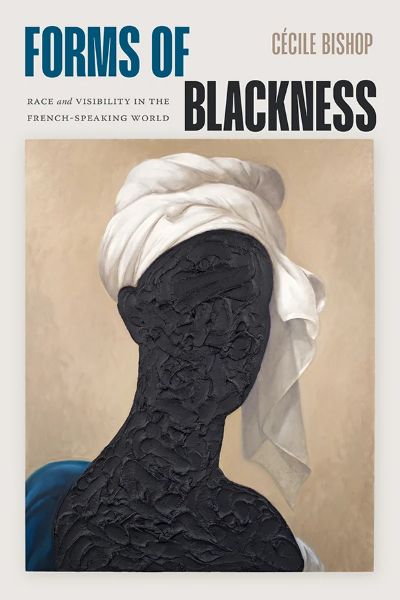
Coming soon (June 2026) is Cécile Bishop’s Forms of Blackness: Race and Visibility in the French-Speaking World (Duke University Press). As a fan of Denise Colomb’s work in the Caribbean, I can’t wait to read Bishop’s analysis of the photographer’s “gaze” in the context of sociopolitical tensions of the 40s and 50s—the book is now on